


Quick Summary: Electric Scooter Accident Claims in the Bronx
- Most New York personal injury claims must be filed within three years.
- Municipal claims may require a Notice of Claim within 90 days.
- Pure comparative negligence reduces compensation according to the rider’s percentage of fault.
- Motor-vehicle crashes may require meeting New York’s serious injury threshold.
- Compensation may include medical costs, lost wages, pain, scarring, and future losses.
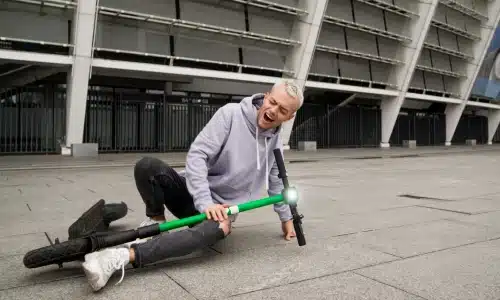 Electric scooters offer a fast, affordable way to travel through the Bronx, but crowded streets can create serious risks. Riders may encounter turning vehicles along the Grand Concourse, heavy pedestrian traffic near the Fordham Road retail corridor, and commercial trucks moving through Hunts Point Market. Potholes, dooring incidents, defective rental scooters, and congested intersections can all lead to scooter crash injuries, leaving riders with medical bills, lost income, and questions about liability.
CEO Lawyer Personal Injury Law Firm serves Bronx accident victims and helps injured riders understand their options after a crash. Some clients receive emergency treatment at Jacobi Medical Center before learning that electric scooter accident claims may involve layered insurance coverage, strict filing deadlines, rental scooter maintenance records, and New York rules governing motorized vehicle classification. By representing injured clients in the Bronx, the legal team can review the evidence, address insurance issues, and explain the steps involved in pursuing compensation.
Everyday Situations on Bronx Streets That Send Riders Looking for Answers
Electric scooter accident claims often arise from conditions riders encounter every day across the Bronx. Along the Grand Concourse, turning vehicles can strike riders at wide intersections, while suddenly opened car doors near Fordham Road shops may cause dangerous dooring crashes. Potholes near the Cross Bronx Expressway service roads and The Hub at 149th Street can also throw riders from their scooters, even when no other vehicle is involved.
Defective brakes, throttles, and other rental scooter malfunctions can cause additional scooter crash injuries, ranging from fractures to head trauma. Research by the NHTSA on e-scooter injuries also highlights the risks created by traffic and roadway conditions. A rider who is hit by a car on a scooter in a densely traveled area such as Mott Haven may suffer especially serious harm.
The First Moves After a Crash and the Missteps That Quietly Weaken a Claim
Prompt treatment at Lincoln Medical Center, Montefiore’s Moses campus, St. Barnabas Hospital, or another medical facility can document the connection between the crash and the rider’s injuries. Delayed care may give an insurer grounds to dispute that connection.
Riders should avoid recorded statements, social media posts, and early settlement offers before the full extent of their injuries is known. A legal team can manage insurer communications and protect the claim while treatment continues.
Where E-Scooters Fit Under New York Traffic and Injury Law
Electric scooter accident claims may involve several New York laws governing filing deadlines, fault, and municipal liability. Most personal injury lawsuits must be filed within New York’s three-year filing window under CPLR § 214(5). When a city-owned vehicle, pothole, or roadway defect contributed to the crash, however, a Notice of Claim may be required within 90 days under GML § 50-e, followed by a lawsuit within one year and 90 days under GML § 50-i.
New York also follows pure comparative negligence under CPLR § 1411, meaning a rider’s compensation may be reduced by their percentage of fault rather than eliminated entirely. The motorized vehicle classification of an e-scooter under Vehicle and Traffic Law §§ 114-e and 1282 can also affect where the scooter may legally operate, which traffic rules apply, and how available insurance coverage is evaluated.
How Insurance Companies Approach These Claims and Which Policies Apply
Several policies may apply, including the rider’s No-Fault insurance coverage, the at-fault driver’s policy, a rental company’s commercial policy, and underinsured motorist coverage. In No-Fault insurance e-scooter claims, access to PIP benefits (personal injury protection) often depends on whether a motor vehicle was involved and which policy applies first.
Insurers conduct their own liability determination before evaluating payment. The claim may then proceed through a documented demand letter and settlement negotiation, with medical records and other evidence affecting the outcome.
The Injury Standard That Decides Whether You Can Sue for Pain and Suffering
When an e-scooter rider is struck by a motor vehicle, New York’s No-Fault framework may limit recovery for pain and suffering unless the injury meets the serious injury threshold New York courts apply under Insurance Law § 5102(d). New York’s serious injury definition includes death, dismemberment, significant disfigurement, fracture, loss of a fetus, permanent loss of use, permanent consequential limitation, significant limitation, and an injury that prevents substantially all usual activities for at least 90 of the first 180 days after the crash.
In an e-scooter case, qualifying harm may include a wrist or ankle fracture, permanent road-rash scarring, nerve damage causing a significant limitation, or injuries that substantially restrict daily activities. Medical records, imaging, treatment history, physician findings, and documented physical limitations can help establish whether the threshold is met, particularly when an insurer disputes the injury’s severity or connection to the collision.
Building the Proof That Makes or Breaks a Case
Strong evidence can support liability determination and e-scooter injury compensation. Because some records may disappear quickly, injured riders should preserve:
- Scene photos and videos: Scooter damage, vehicles, potholes, traffic signals, and road conditions.
- Medical records: Emergency care, imaging, treatment notes, rehabilitation records, and bills.
- Witness information: Names, contact details, and statements from anyone who saw the crash.
- Rental app data: Trip time, route, speed, and scooter identification details.
- Rental scooter maintenance records: Inspection logs, repair requests, and brake or battery service history.
- Camera footage: Recordings from traffic cameras, businesses, or nearby buildings.
- The scooter itself: Defective brakes, tires, batteries, throttles, or steering components.
- Police reports: Available collision reports obtained through the NYPD or New York DMV process.
Rental companies, insurers, and businesses may control important evidence in electric scooter collision cases. A legal team serving the Bronx can request records, preserve footage, and organize documentation before it is lost.
Putting a Fair Value on Everything the Crash Took
Once liability determination is established, e-scooter injury compensation may include both economic and non-economic damages. Economic losses can cover medical bills, future treatment, lost wages, reduced earning capacity, and long-term care. Non-economic damages may address pain and suffering, permanent scarring, emotional distress, and limitations on daily activities.
Punitive damages may also be considered in rare cases involving gross negligence, such as a rental company ignoring a known safety defect. Valuing these losses requires considering both current expenses and future effects, much like bicycle collision cases in the Bronx, where ongoing treatment and reduced earning ability may have a greater impact than the initial medical bills.
When the Rental Company or the Scooter Itself Shares the Blame
E-scooter rental company liability may arise when a Bird, Lime, or Revel scooter fails because of poor rental scooter maintenance or a known defect. New York General Obligations Law § 5-326 may limit the enforceability of certain liability waivers when a company’s negligence contributed to the crash.
A defective brake, throttle, or battery may also support a product liability claim against the operator, manufacturer, or another responsible party. Maintenance records and inspection history can help identify who may share responsibility.
How the Right Legal Help Changes What Happens Next
After a legal team is hired, it may handle insurer communications, preserve evidence, complete the liability determination, calculate economic and non-economic damages, prepare a demand letter, and conduct settlement negotiation. If the claim cannot be resolved, the team may prepare the electric scooter accident claim for litigation while tracking all applicable filing deadlines.
Cases arising in the Bronx may proceed in Supreme Court, Bronx County at 851 Grand Concourse, while claims under $50,000 may fall within the Civil Court of the City of New York, Bronx County. Appeals are heard by the Appellate Division, First Department. Access to personal injury help in the Bronx may also provide support with court procedures, insurance issues, and evidence preservation while the injured rider continues medical treatment.
Legal Support for Electric Scooter Accident Claims Across the Bronx
Most personal injury claims must be filed within three years under CPLR § 214(5). If a city vehicle, pothole, or road defect caused the crash, a Notice of Claim may be required within 90 days under GML § 50-e, followed by suit within one year and 90 days under GML § 50-i. Cases may proceed in Supreme Court, Bronx County at 851 Grand Concourse, while claims under $50,000 may fall within Bronx Civil Court. CEO Lawyer Personal Injury Law Firm serves injured riders throughout the Bronx in e-scooter injury cases involving:
- Grand Concourse and Fordham Road: Turning vehicles, dooring incidents, delivery traffic, and heavy pedestrian activity.
- The Hub, Mott Haven, and the South Bronx: Congested intersections and dense commercial traffic.
- Hunts Point and the Bruckner interchange: Commercial trucks, complex turns, and traffic near I-278 and I-95.
- Cross Bronx Expressway service roads: Potholes, damaged pavement, and ramp-related hazards.
- Rental scooter failures: Brake, throttle, or battery defects linked to inadequate rental scooter maintenance.
Serving Injured Riders Across Bronx Communities
The firm represents injured clients in the Bronx after crashes near the Grand Concourse, Fordham Road, The Hub, Hunts Point, Mott Haven, and surrounding communities. The legal team may preserve surveillance footage, obtain collision reports, collect witness statements, request app and maintenance records, review insurance coverage, and document medical treatment.
These records can support liability determination and help identify whether a driver, rental operator, manufacturer, or government entity may be responsible.
Bronx E-Scooter Accident FAQ
How long do I have to file an electric scooter accident claim in New York?
The legal deadline and the practical deadline are rarely the same thing. Many claims allow up to three years, but that window can shrink dramatically when a public entity is involved, and it can pause entirely for an injured minor until they reach adulthood. The harder truth is that the evidence a case depends on, camera footage, the scooter’s condition, a witness’s memory, begins eroding within days. The real question is less about the last possible date to file than how much proof will still exist if you wait.
What types of compensation can be pursued after an e-scooter crash in the Bronx?
It helps to think beyond the bills stacking up on the kitchen table. Two riders with the same fracture can end up with very different claims, because compensation follows the ripple effects: months of lost income, a job that can no longer be performed the same way, therapy that continues after the cast comes off, and the quieter cost of an activity someone can no longer enjoy. The most overlooked losses are usually the future ones, which is why valuing a claim too early tends to leave real money on the table.
Can I still recover damages if I was partially at fault for the scooter accident under New York law?
Usually yes. New York lets injured people recover even when they share blame, but the more useful insight is how that rule gets used against you. Because your recovery drops by your share of fault, an insurer has every incentive to nudge that percentage upward, sometimes by leaning on an offhand apology or an ambiguous comment made at the scene. Fault is negotiated, not fixed, and the rider who documented conditions, preserved witnesses, and avoided guessing about blame is in a far stronger position when that percentage is decided.
Understanding Your Options After an Electric Scooter Accident in the Bronx
Every scooter crash is different, and its value depends on the specific facts. The CEO Lawyer Personal Injury Law Firm represents injured riders throughout the Bronx and can walk you through your options after an electric scooter accident, from insurance questions to deadlines that may already be running.
Understanding where you stand is the first step toward protecting your recovery.