


Quick Summary: Nassau County Pedestrian Accident Lawyer
- Most pedestrian accident claims must generally be filed within three years under New York law.
- Injured pedestrians may qualify for No-Fault benefits regardless of who caused the crash.
- Pain and suffering damages generally require meeting New York’s serious injury threshold.
- New York follows pure comparative negligence, allowing recovery even when a pedestrian shares fault.
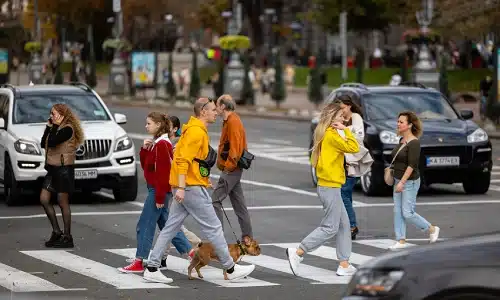 A pedestrian accident can change a person’s life in seconds. Whether someone is crossing a street, walking through a parking lot, or using a marked crosswalk, the impact of a collision with a motor vehicle often leads to serious injuries, extensive medical treatment, and uncertainty about what comes next.
The CEO Lawyer Personal Injury Law Firm is representing injured clients in Nassau County, helping pedestrians understand their rights after being struck by a vehicle and guiding them through the legal process under New York law. Many pedestrian accident claims in Nassau County arise along busy corridors such as Hempstead Turnpike, near the Roosevelt Field shopping district, and at intersections where heavy traffic and frequent pedestrian activity overlap. Victims with severe injuries are often transported to Nassau University Medical Center in East Meadow, the county’s Level I trauma center, before beginning the recovery process.
Whether the collision happened in a neighborhood crosswalk, a commercial parking lot, or on a multi-lane roadway, a pedestrian accident lawyer serving Nassau County helps clients and injured pedestrians understand how New York’s insurance and personal injury laws work, so they can make informed decisions about their next steps.
Pedestrian Accidents Can Happen Almost Anywhere
Walking is part of everyday life throughout Nassau County, whether commuting to work, visiting local businesses, shopping, or traveling between neighborhoods. Pedestrians aren’t the only vulnerable road users. Many of the same roadway conditions that contribute to pedestrian accidents also lead to bicycle collision injury cases, particularly at busy intersections and commercial corridors.
Some of the most common situations that lead to pedestrian accident claims in Nassau County include:
- Crosswalk collisions at signalized intersections.
- Drivers failing to yield while making left or right turns.
- Parking lot accidents near shopping centers and commercial properties.
- Distracted driving crashes involving pedestrians.
- Collisions involving speeding vehicles on multi-lane roads.
- Accidents caused by impaired or reckless drivers.
Many injuries occur because drivers fail to recognize pedestrians until it is too late, particularly in areas with multiple lanes of traffic, frequent turning movements, or limited visibility.
Why Pedestrian Accident Cases Are Different
Unlike occupants of passenger vehicles, pedestrians have little protection during a collision. Even crashes at relatively low speeds can result in fractures, traumatic brain injuries, spinal injuries, or other conditions requiring extensive medical care.
After a pedestrian is struck by a motor vehicle, several legal issues often arise immediately, including insurance coverage, liability, and the evidence needed to support a claim. New York law also applies unique rules to pedestrian accidents, including No-Fault insurance pedestrian benefits and the serious injury threshold of New York requires before certain damages may be pursued.
Because every accident is different, understanding how these laws interact is an important part of evaluating the options available after a serious pedestrian injury.
What You Do After a Pedestrian Accident Can Affect Your Claim
The moments after a pedestrian accident can be overwhelming, especially when injuries require emergency medical care. Even if the full extent of an injury is not immediately apparent, the actions taken during the hours and days after the collision may affect both medical recovery and the claims process.
If you have been struck by a vehicle, it may help to:
- Call 911 and seek medical attention as soon as possible.
- Report the accident to law enforcement.
- Take photographs of the accident scene, vehicle damage, traffic signals, and visible injuries if you are able.
- Obtain contact information from witnesses.
- Keep copies of medical records, bills, and other documents related to the accident.
- Notify your own insurance company when appropriate.
For accidents involving motor vehicles, injured pedestrians are generally considered covered persons under New York’s No-Fault insurance pedestrian system. In most cases, the application for Personal Injury Protection (PIP) benefits must be submitted within 30 days of the accident.
Common Mistakes Can Make Recovery More Difficult
Insurance companies often begin investigating pedestrian accidents shortly after they occur. While every case is different, certain decisions made early in the process can complicate a claim.
Common mistakes include:
- Delaying medical treatment.
- Missing follow-up appointments.
- Giving recorded statements before understanding your legal rights.
- Posting details about the accident on social media.
- Accepting an early settlement before the full extent of injuries is known.
- Waiting too long to apply for No-Fault benefits.
Keeping consistent medical documentation throughout treatment can help create a clearer picture of how the injuries have affected daily life.
Understanding New York’s Legal Framework for Pedestrian Accidents
Most pedestrian injury lawsuits in New York are governed by a three-year statute of limitations under CPLR 214(5). This means many claims generally must be filed within three years of the date of the accident, although different deadlines may apply in certain situations.
New York also follows a pure comparative negligence rule under CPLR 1411. Even if a pedestrian is found partially responsible, such as crossing outside a marked crosswalk or failing to obey a traffic signal, compensation may still be available. Any recovery is generally reduced by the pedestrian’s percentage of fault rather than eliminated entirely.
The No-Fault Benefits and the Serious Injury Threshold
One aspect that makes pedestrian accidents different from many other personal injury cases is New York’s No-Fault insurance system. A pedestrian struck by a motor vehicle is generally eligible to seek No-Fault PIP benefits for medical expenses and a portion of lost earnings, regardless of who caused the collision.
However, pursuing compensation for pain and suffering usually requires satisfying the serious injury threshold of New York, established under Insurance Law 5102(d). Whether that threshold has been met depends on the nature of the injuries and the available medical evidence.
If another party disputes liability or the extent of the injuries, insurance negotiations may involve reviewing medical records, accident reports, witness statements, and other evidence before settlement discussions begin.
Building a Strong Pedestrian Accident Claim Starts With Evidence
Every pedestrian accident presents a different set of facts, making thorough documentation an important part of the claims process. While police reports often provide an initial account of what happened, they are only one piece of the evidence used to evaluate liability and damages.
Depending on the circumstances, pedestrian accident evidence documentation may include:
- Police accident reports.
- Photographs or video from the accident scene.
- Surveillance or traffic camera footage.
- Witness statements.
- Medical records and diagnostic imaging.
- Employment records showing lost income.
- Cell phone records or other evidence of distracted driving, when available.
Gathering this information as early as possible can help preserve evidence before it is lost or becomes more difficult to obtain.
Insurance Companies May Challenge Pedestrian Accident Claims
Even when a pedestrian is struck by a vehicle, insurance companies may investigate whether the injured person shares some responsibility for the collision. Adjusters often review traffic signals, crosswalk locations, witness statements, surveillance footage, and medical records before evaluating a claim.
During the claims process, insurers may argue that:
- The pedestrian crossed outside a marked crosswalk.
- The pedestrian entered traffic unexpectedly.
- The injuries are less serious than claimed.
- Certain medical treatment was unrelated to the accident.
- A pre-existing condition contributed to the injuries.
When a driver leaves the scene, injured pedestrians may have additional insurance issues to resolve while recovering damages after hit and run collisions.
The Types of Compensation That May Be Available
The compensation available after a pedestrian accident depends on the circumstances of the collision, the severity of the injuries, and the applicable provisions of New York law.
A successful claim may include compensation for:
- Medical expenses.
- Future medical treatment.
- Lost wages and reduced earning capacity.
- Pain and suffering, when the serious injury threshold has been satisfied.
- Other economic and non-economic damages recognized under New York law.
In some situations, pedestrians hit by car compensation may begin with No-Fault benefits before additional damages are pursued through a liability claim against the at-fault driver.
Some Pedestrian Accidents Involve Municipal Liability
Not every pedestrian accident is caused solely by a driver’s actions. Dangerous sidewalks, malfunctioning traffic signals, poorly maintained intersections, or other hazardous public conditions may also contribute to a collision.
When a municipality or public entity may share responsibility, different legal rules often apply. Claims against Nassau County, the Town of Hempstead, the Town of North Hempstead, the Town of Oyster Bay, or other governmental entities are generally subject to a 90-day Notice of Claim requirement, followed by additional statutory filing deadlines.
Because these deadlines are much shorter than the New York pedestrian accident statute of limitations that applies to many personal injury claims, identifying potential municipal liability early can be an important part of protecting a person’s legal rights.
What to Expect When Pursuing a Pedestrian Accident Claim
Every pedestrian accident claim follows its own timeline, but most cases begin with an investigation into how the collision occurred and who may be legally responsible. During this process, insurance companies review medical records, accident reports, witness statements, and other evidence before evaluating liability and the extent of a person’s injuries.
Depending on the circumstances, the claims process may include:
- Investigating the accident and preserving evidence.
- Reviewing medical records and treatment history.
- Calculating economic and non-economic damages.
- Preparing a demand package for the insurance carrier.
- Negotiating toward a settlement.
- Filing a lawsuit when a fair resolution cannot be reached.
While many claims resolve through settlement negotiations, some require litigation before the Supreme Court, Nassau County, particularly when liability or the severity of the injuries remains disputed.
Representing Injured Clients Across Nassau County
Pedestrian accidents happen throughout Nassau County, but certain roads, intersections, and commercial areas consistently experience heavy traffic and significant pedestrian activity. The CEO Lawyer Personal Injury Law Firm represents injured clients throughout the county after collisions involving passenger vehicles, commercial vehicles, rideshare drivers, and other motorists.
Some of the areas where pedestrian accidents commonly occur include:
- Hempstead Turnpike: Multiple traffic lanes, frequent intersections, and heavy commercial activity create risks for pedestrians crossing the roadway.
- Sunrise Highway (NY 27): High traffic volumes and vehicle speeds can contribute to serious pedestrian collisions.
- Old Country Road: Busy retail centers, restaurants, and office complexes generate constant interaction between pedestrians and motorists.
- Jericho Turnpike: Numerous turning vehicles, commercial driveways, and signalized intersections increase the likelihood of crosswalk accidents.
- Roosevelt Field area: Shopping centers, large parking lots, and heavy foot traffic may contribute to pedestrian injuries involving distracted or turning drivers.
- Meadowbrook State Parkway service roads: Vehicles entering and exiting nearby roadways may create dangerous conditions for pedestrians at surrounding intersections.
- Downtown Mineola, Freeport, and Valley Stream: Dense commercial districts, public transportation, and busy intersections bring pedestrians and vehicle traffic into close proximity.
Many injured pedestrians receive emergency treatment at Nassau University Medical Center in East Meadow, North Shore University Hospital in Manhasset, or NYU Langone Hospital–Long Island in Mineola before pursuing a personal injury claim.
Proudly Serving Nassau County Communities
The CEO Lawyer Personal Injury Law Firm serves injured clients throughout Nassau County, including Hempstead, Garden City, Mineola, Freeport, Valley Stream, East Meadow, Westbury, Hicksville, Levittown, Long Beach, Great Neck, Rockville Centre, Massapequa, Plainview, Oyster Bay, and surrounding communities.
Whether a pedestrian accident happens in a neighborhood crosswalk, a shopping center parking lot, or along major roadways such as Hempstead Turnpike, Sunrise Highway, Old Country Road, Jericho Turnpike, or the Meadowbrook State Parkway service roads, our legal team helps clients understand the personal injury claims process and the legal options available under New York law.
Nassau County Pedestrian Accident Claims FAQ
What happens if the driver who hit me was uninsured or left the scene?
Pedestrians injured by uninsured or hit-and-run drivers may still have options for recovering compensation. Depending on the circumstances, benefits may be available through applicable uninsured motorist or supplementary uninsured/underinsured motorist (SUM) coverage. Determining which insurance policies apply often requires reviewing the available coverage and the facts of the accident.
Can a defective sidewalk or traffic signal make a government entity responsible?
Possibly. If a dangerous sidewalk, malfunctioning traffic signal, missing signage, or another hazardous public condition contributed to the accident, a municipality or public entity may share responsibility. Claims against government entities are generally subject to special notice requirements and shorter filing deadlines than most personal injury cases.
What if a pedestrian dies from injuries caused by the accident?
When a pedestrian accident results in a fatality, certain surviving family members or the personal representative of the estate may be able to pursue a wrongful death claim under New York law. These claims are separate from the injured person’s personal injury claim and involve different legal requirements and recoverable damages.
How is compensation affected if multiple parties contributed to the accident?
Some pedestrian accidents involve more than one responsible party. For example, liability may be shared between a negligent driver, a commercial vehicle operator, a property owner, or a governmental entity responsible for maintaining the roadway. Identifying every potentially liable party can be an important part of evaluating the full scope of a claim.
Understanding Your Legal Options with a Pedestrian Accident Law Firm Serving Nassau County
Recovering from a pedestrian accident often involves more than medical treatment. Many people also face lost income, ongoing rehabilitation, insurance questions, and uncertainty about how New York law applies to their situation.
The CEO Lawyer Personal Injury Law Firm is representing injured clients in Nassau County, helping pedestrians understand the claims process, evaluate available insurance coverage, and determine what legal options may be available after a serious accident.