


Quick Summary: Nassau County Slip and Fall Accident Lawyer
- Most New York slip and fall lawsuits must generally be filed within three years.
- New York’s comparative negligence rules may allow recovery even if you share fault.
- Property owners may be responsible for injuries caused by unreasonably dangerous conditions.
- Claims against government entities often require a Notice of Claim within 90 days.
 A slip and fall accident can happen almost anywhere, from a grocery store aisle to a shopping center parking lot or an apartment building entrance. What may seem like a simple fall can result in broken bones, head injuries, spinal trauma, and other conditions that require extensive medical treatment and time away from work. A slip and fall accident lawyer serving Nassau County can help injured victims understand their legal rights and determine whether a property owner’s negligence contributed to the accident.
The CEO Lawyer Personal Injury Law Firm represents injured clients in Nassau County, helping people evaluate slip and fall claims in Nassau County involving hazardous conditions on public and private property. Accidents frequently occur in busy locations such as the Roosevelt Field Mall area, along the Hempstead Turnpike commercial corridor, and throughout shopping districts on Old Country Road, where high foot traffic increases the risk of falls caused by unsafe property conditions. Many seriously injured people receive treatment at Nassau University Medical Center in East Meadow before exploring their legal options.
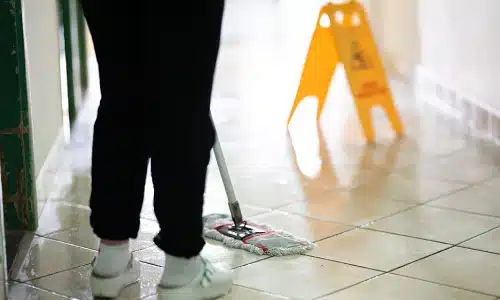
Whether the accident happens on an icy parking lot during the winter, a freshly mopped supermarket floor, or an uneven sidewalk in downtown Mineola, determining whether a property owner acted reasonably often becomes one of the central issues in the claim.
Slip and Fall Accidents Happen in More Places Than People Expect
Many people associate slip and fall accidents with wet floors inside stores, but dangerous conditions can exist in a wide variety of locations throughout Nassau County.
Common examples include:
- Wet or recently mopped floors without adequate warning signs.
- Ice and snow accumulation on sidewalks or parking lots.
- Uneven pavement and cracked walkways.
- Broken stairs or loose handrails.
- Poor lighting in parking garages or apartment complexes.
- Torn carpeting or damaged flooring.
- Spilled liquids in grocery stores and retail businesses.
- Obstacles left in walkways at commercial properties.
Some accidents occur because a hazard develops suddenly, while others involve conditions that may have existed long enough for a property owner to discover and address them.
Property Owners Don’t Automatically Become Liable
Not every slip and fall results in a successful legal claim. Simply being injured on someone else’s property does not necessarily mean the owner is legally responsible.
Many property owner negligence claims depend on whether the owner, business, or other responsible party knew (or should’ve known) about a dangerous condition and failed to correct it or provide adequate warning. Questions involving inspections, maintenance practices, cleaning procedures, and prior complaints often become important when evaluating slip and fall claims in Nassau County.
Similar negligence principles can also apply in cases involving property owner liability for dog bites, although every claim depends on its own facts and the applicable New York law.
The First Steps Can Affect Your Claim
The hours and days after a slip and fall accident can make a significant difference in how a claim develops. Medical records, photographs, witness information, and incident reports often become important evidence long before insurance companies begin evaluating liability.
If you are physically able to do so after the accident, consider taking these steps:
- Seek medical attention as soon as possible, even if your injuries seem minor.
- Report the incident to the property owner, manager, or business owner.
- Ask for a copy of any incident report if one is prepared.
- Photograph the hazardous condition before it is repaired or removed.
- Document your injuries as they develop.
- Collect the names and contact information of anyone who witnessed the fall.
- Keep your shoes and clothing in the same condition they were in after the accident.
- Follow your healthcare provider’s treatment recommendations.
Small Mistakes Can Make Recovery More Difficult
Insurance companies often begin investigating shortly after a property owner reports an accident. During that process, they may look for reasons to dispute liability or argue that the injured person contributed to the fall.
Some common mistakes include:
- Delaying medical treatment.
- Giving recorded statements before understanding the full extent of the injuries.
- Accepting an early settlement before future medical needs are known.
- Posting photographs or comments about the accident on social media.
- Failing to preserve evidence, including footwear or damaged personal property.
- Waiting too long to speak with a legal professional about potential property owner negligence claims.
Avoiding these mistakes does not guarantee a successful claim, but it may help preserve important evidence while the facts are still fresh.
What New York Law Says About Slip and Fall Claims
Most premises liability cases in New York are governed by the same legal principles that apply to other negligence claims. Generally, an injured person must show that a dangerous condition existed and that the responsible party failed to take reasonable steps to correct it or warn visitors about the hazard.
Most claims are also subject to the New York statute of limitations for personal injury, which is generally three years from the date of the accident under CPLR 214(5). New York also follows pure comparative negligence under CPLR 1411, meaning an injured person may still recover compensation even if they were partly responsible for the accident, although any recovery may be reduced by their percentage of fault.
Falls on public property may involve different rules. Claims against Nassau County, the Towns of Hempstead, North Hempstead, or Oyster Bay, local cities, villages, school districts, and other government entities often require a Notice of Claim within 90 days and are subject to additional filing deadlines. Some municipalities may also raise prior written notice defenses in response to claims of hazardous condition liability in New York.
Government-Owned Property Can Follow Different Rules
Slip and fall accidents do not only happen inside private businesses. Falls may also occur on sidewalks, municipal buildings, parks, public parking facilities, or other government-owned property.
When that happens, the legal process often differs from claims involving private property owners. Government entities frequently have shorter notice requirements, specific procedural rules, and additional legal defenses that may affect how a case proceeds. Understanding those deadlines early can be important when evaluating your legal options.
Claims against government entities frequently require compliance with General Municipal Law § 50-e, including a Notice of Claim before a lawsuit may proceed.
The Right Evidence Can Strengthen Your Case
One of the biggest challenges in proving fault in a slip and fall case is demonstrating that the dangerous condition existed long enough for the property owner to discover and address it. In many situations, the hazard has already been cleaned up or repaired by the time an insurance company begins its investigation.
Building a claim often involves gathering multiple forms of evidence that work together to explain what happened.
Helpful evidence may include:
- Photographs or videos of the accident scene.
- Incident reports completed by the property owner or business.
- Surveillance camera footage.
- Witness statements.
- Medical records documenting the injuries.
- Maintenance, inspection, or cleaning logs.
- Weather reports when snow or ice contributed to the fall.
- Evidence showing previous complaints about the same dangerous condition.
Medical documentation is especially important because it connects the accident to the injuries being claimed. As treatment continues, updated records can also demonstrate how the injuries affect daily life, work, and future medical needs.
Insurance Companies Often Challenge Slip and Fall Claims
Unlike many car accidents, liability in a slip and fall case is often disputed from the beginning. Insurance companies may argue that the dangerous condition was obvious, that the property owner had no reasonable opportunity to correct it, or that the injured person failed to exercise reasonable care.
Some insurers also contend that the accident occurred because the injured person was distracted, wearing inappropriate footwear, or ignored warning signs. These arguments frequently arise in property owner negligence claims, making evidence collected shortly after the accident particularly valuable.
Settlement negotiations often begin after medical treatment has progressed and both liability and damages can be more accurately evaluated. Depending on the circumstances, this process may involve exchanging evidence, preparing a demand letter, negotiating with the insurance carrier, and determining whether a lawsuit is necessary if a fair resolution cannot be reached.
What Compensation May Be Available After a Slip and Fall
Every accident affects people differently, so the amount and type of slip and fall injury compensation that may be available depends on the specific facts of the case.
Depending on the circumstances, compensation may include:
- Current and future medical expenses.
- Lost wages and diminished earning capacity.
- Rehabilitation and ongoing treatment costs.
- Pain and suffering damages.
- Emotional distress.
- Permanent disability or reduced quality of life.
- Property damage related to the accident, when applicable.
In limited situations involving particularly serious or reckless conduct, punitive damages may also be available under New York law. Whether those damages apply depends on the facts of the individual case.
Construction Site Falls Can Involve Additional Legal Issues
Not every slip and fall occurs in a retail store or parking lot. Construction sites throughout Nassau County can also present dangerous walking surfaces, unsecured openings, debris, and elevation-related hazards that lead to serious injuries.
Some construction site injury claims involve New York Labor Law Sections 200, 240(1), or 241(6), which may provide protections beyond those available in traditional premises liability cases. The legal issues in these matters can differ significantly depending on whether the injured person was a worker, visitor, or another lawful entrant on the property.
Because construction-related falls often involve multiple contractors, subcontractors, and property owners, determining responsibility may require a different legal analysis than other premises liability cases.
What the Claims Process Usually Looks Like
Every slip and fall case follows its own timeline, but many claims move through similar stages. After the accident, the focus is usually on obtaining medical treatment, preserving evidence, and identifying the party responsible for maintaining the property.
If an insurance claim cannot be resolved through negotiation, a lawsuit may become appropriate. Most slip and fall lawsuits arising in Nassau County are filed in Supreme Court, Nassau County, in Mineola, while certain lower-value civil cases may proceed in Nassau County District Court. Claims involving federal property may instead be heard in the U.S. District Court for the Eastern District of New York.
Throughout the process, insurance companies, medical records, witness testimony, and other evidence may all play a role in evaluating liability and damages.
Representing Slip and Fall Victims Throughout Nassau County
Slip and fall accidents can happen anywhere in Nassau County, from shopping centers and restaurants to apartment complexes, office buildings, and public spaces. The CEO Lawyer Personal Injury Law Firm represents injured clients throughout Nassau County, helping people pursue claims after injuries caused by unsafe property conditions.
Some of the locations where slip and fall accidents commonly occur include:
- Roosevelt Field Mall and surrounding shopping centers: Heavy foot traffic, food courts, parking garages, and retail entrances can create hazards such as wet floors, spills, damaged flooring, or unsafe walking surfaces.
- Hempstead Turnpike commercial corridor: Restaurants, supermarkets, shopping plazas, and other businesses along this busy roadway may present risks involving poorly maintained sidewalks, parking lots, or interior walkways.
- Old Country Road retail district: High-volume commercial properties in Westbury and Carle Place often experience significant pedestrian traffic, increasing the likelihood of accidents caused by slippery floors, uneven pavement, or inadequate property maintenance.
- Long Beach Boardwalk and Jones Beach facilities: Weather conditions, worn walking surfaces, loose materials, and heavy seasonal crowds may contribute to slip and fall accidents at these popular public destinations.
- Downtown Mineola, Hicksville, and Freeport: Busy business districts, municipal sidewalks, apartment buildings, restaurants, and mixed-use properties may present hazardous conditions that lead to preventable falls.
- Apartment complexes, office buildings, hotels, and residential communities throughout Nassau County: Property owners and managers have ongoing responsibilities to maintain reasonably safe premises for lawful visitors, tenants, employees, and guests.
Proudly Serving Nassau County Communities
The CEO Lawyer Personal Injury Law Firm proudly serves injured clients throughout Nassau County, including Hempstead, Garden City, Mineola, Hicksville, Westbury, Freeport, Long Beach, Rockville Centre, Glen Cove, Manhasset, Great Neck, Levittown, East Meadow, Oyster Bay, Syosset, Bellmore, Wantagh, Merrick, Valley Stream, and surrounding communities.
Whether an accident occurs at a neighborhood business, a large shopping center, a municipal property, or a residential complex, every case deserves an individualized review based on the circumstances of the incident, the available evidence, and the applicable New York law.
Nassau County Slip and Fall Claims FAQ
How long do I have to file a slip and fall claim in New York, and are there shorter deadlines for government property?
Most slip and fall lawsuits in New York must generally be filed within three years of the accident. However, if the fall occurred on property owned by Nassau County, a town, city, village, school district, or another government entity, a Notice of Claim is often required within 90 days, and additional filing deadlines may apply.
Can I still recover compensation if I was partially responsible for the accident?
Possibly. New York follows a pure comparative negligence system, which means you may still recover compensation even if you were partly responsible for the accident. Any recovery is generally reduced by your percentage of fault rather than being completely barred.
What evidence helps show a property owner knew about a dangerous condition?
Evidence may include surveillance footage, maintenance and inspection records, prior complaints, cleaning logs, witness testimony, photographs of the hazard, and documentation showing how long the dangerous condition existed before the accident. These materials can be important when proving fault in a slip and fall case.
What happens if I fall because another customer created the hazard?
Not every dangerous condition is created by the property owner or employees. If another customer caused the hazard, the question often becomes whether the property owner knew, or reasonably should have known, about it and had enough time to correct the condition or warn visitors before the accident occurred. The answer depends on the specific facts surrounding the incident.
Moving Forward With a Slip and Fall Accident Law Firm Serving Nassau County
A serious fall can affect far more than the first few days after the accident. Medical appointments, missed work, ongoing pain, and uncertainty about insurance coverage can continue long after the dangerous condition has been repaired or removed.
The CEO Lawyer Personal Injury Law Firm serves Nassau County by helping injured people review the circumstances of their accidents, identify potentially responsible parties, and understand the options that may be available under New York law. This may include investigating the property’s maintenance history, preserving evidence, communicating with insurance carriers, and evaluating whether a premises liability lawsuit is appropriate.