



 Being involved in an accident is a stressful situation that already takes a toll on a person’s day, but it gets worse when the at-fault driver takes off before you can meet and exchange insurance information. This kind of circumstance may make you feel lost and frustrated, but that is why our team at The CEO Lawyer is here to help.
Ali Awad and his team at the CEO Lawyer Personal Injury Law Firm understand just how difficult a hit and run can be for the victim. We pride ourselves on the family-oriented approach we take to treating our clients.
We want to serve you the way you would take care of your family because that is the level of dedication everyone deserves from their representation. We pledge to do everything in our power to seek any available forms of compensation for your medical bills, lost wages, and other damages.
If you choose to meet with us, you’ll receive a free, no-obligation consultation where we can assess the details of your case and at least help guide you in the right direction. If you have been in a hit-and-run accident, it is critical to understand what you may be missing out on by denying representation.
Reach out now to schedule your free consultation today!
How A Chattanooga Hit and Run Attorney Can Help You
One of the main reasons that representation is important for hit-and-run cases specifically is because, even if the police are unable to identify the at-fault party, you may still have a chance to recover your damages!
In some cases, you can use an available uninsured motorist policy to protect yourself from the devastating financial effects of hit-and-runs. Unfortunately, the general rule of insurance companies still stands in this case; if you file a claim with your insurance, asking for coverage, you are much less likely to receive an offer for full and fair damages if you don’t have an attorney representing you.
There may also be other parties who contributed fault to your accident. Examples include other drivers involved, a defective vehicle part manufacturer, or a public road maintenance company that created unreasonable danger for drivers.
Hiring a Chattanooga personal injury law firm also means you can save your time and stress levels by having someone to speak on your behalf, insurance representatives, and other parties along the way. Your attorney will also help you investigate your accident, potentially even identifying the person who hit you.
After a Hit and Run, Always Call the Police!
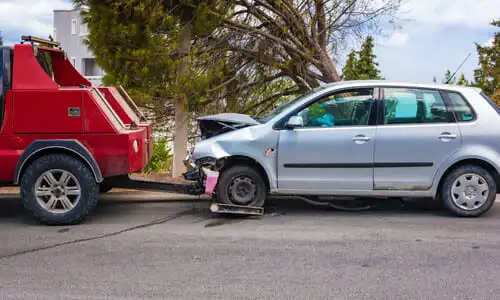 The first thing to do after someone flees your car accident scene is to alert the authorities. You need to report the accident as soon as possible so the police can begin an investigation to find the negligent driver.
Reporting your collision in a timely manner is extremely important. For one, without a police report, insurance companies and other parties may question whether the accident truly happened at all.
Further, there is a statute of limitations for filing insurance claims and court proceedings for an accident. In Tennessee, this time frame is one calendar year.
You must act quickly to try and identify the responsible party or to look to other options for seeking compensation.
One effective way to catch a negligent driver and prove that they were actually involved is through evidence provided by law enforcement investigations. These may include traffic cameras, internal vehicle GPS systems, eyewitness testimony, and many other possibilities.
Pair this with an accident reconstruction consistent with the damage inflicted on your vehicle, and you can begin filing a claim with the appropriate insurance company.
Always Go to the Doctor After a Hit and Run
The second thing to remember after you have been involved in a hit-and-run is to always visit a medical professional for a full analysis and diagnosis. Even if you don’t feel significantly hurt, remember that you may have underlying injuries that are disguised by adrenaline and stress.
You also may develop complications from conditions like whiplash in the ensuing days, so it is always critical to undergo a complete medical evaluation in every instance.
Remember that you can always visit an urgent care clinic or private practice if you do not wish to visit the emergency room. Just remember to do so promptly so any diagnosed injuries can be connected to the date of your accident.
What Are the Laws Surrounding Hit and Run Accidents in Chattanooga, Tennessee?
In Tennessee, drivers are legally required to stop after an accident. Ignoring this law can lead to some serious consequences.
By not stopping, the negligent party has no way to know if the other driver was injured. If a bodily injury is the case, the at-fault driver could face jail time, a fine, and license suspension. Not to mention a rise in insurance costs when their license is reinstated!
A hit and run involving an injury is a Class A Misdemeanor, and it is punishable by up to 11 months and 29 days in jail, as well as a potential fine of up to $2,500.
Even if no one is hurt, the act of fleeing will still be considered a Class C Misdemeanor. It is punishable by up to 30 days of jail time, license suspension, and a fine of $50. The penalty is directly assessed by the level of property damage.
Some drivers may also face felony charges, especially if it can be proven that they knew they should have stopped at the scene of an accident they knew they had caused.
Determining Fault in an Accident and When You Can File a Claim
The state of Tennessee is recognized as an “at-fault state,” meaning that the negligent driver considered at fault in the accident is responsible for paying out the other driver. This is in comparison to “no-fault,” states that require all persons involved in an accident to file claims through their own auto insurance company.
In an “at-fault” state with a modified comparative negligence procedure like Tennessee, the percentage of liability is determined for each party involved. For example, one driver can be found 20% at fault while the other driver must take responsibility for 80% of the blame.
So, in a situation like this, where total fault cannot be attributed to one party, the potential payout for the driver who is 20% responsible will be deducted from that percentage.
In Tennessee, a person is eligible to file a claim against a negligent driver if they are found to be less than 50% responsible. So, in a case where you were seriously injured in a hit-and-run accident, and the proceedings escalate to court, after hearing all of the evidence, they will decide how much of the blame falls on each party and distribute the settlement accordingly.
Steps to Take After Being Involved in a Hit-and-Run Accident in Chattanooga
The shock of realizing that the person who just hit your car has fled the scene can be overwhelming. It may leave you flustered without a clue of how to react.
As we covered in a previous section, the first thing to do is to try collecting your composure and then let the police know what happened (if you are physically capable). But now what?
If the car accident is severe, chances are there are emergency responders on their way, ready to block off the area and clean up the mess. If you are seriously injured, a first responder will take you to the hospital in an ambulance.
If you are physically stable at the time of the accident where someone has fled, exit the vehicle and immediately look for witnesses nearby. The person most likely to speak up is usually the one standing by the road with their mouth open and a flushed look of concern.
By meeting with witnesses and exchanging contact information, you are already giving the police a lead to the hit-and-run offender. Acting quickly is necessary, as most witnesses will not just stand by waiting for you and need to get along with their days.
Ask any witness you come in contact with to text or email you a statement so that you can forward it to any investigators dealing with your case.
Before any emergency responders begin to clean up the scene of the accident, make sure to take pictures or a video that captures multiple different angles of the accident and clearly documents all damage. This evidence is important to turn over to the negligent driver’s insurance company in the event that they are found by the police.
Further, immediately begin recording a statement capturing every possible detail you can think of. Remember that you not only need to be able to correctly identify the vehicle that hit you but also the specific driver.
Police will expect a physical description or some form of a distinct identifier that could help them correctly pinpoint the same person who hit you.
Contact a Chattanooga Hit and Run Law Firm and Get Your Case Into the Right Hands
Ali Awad and the team at the CEO Lawyer Personal Injury Law Firm want to help you in every way that we can. That’s why we’re not just your everyday law firm.
We strive to go above and beyond for clients, helping you find reputable car rental services, referring trusted doctors who won’t expect you to pay out of pocket, aiding in finding the right pre-settlement loan, and much more. All accidents are different, but we still take the same approach of developing a comprehensive plan for our clients every single time!
One of the main missions of our firm has always been to provide excellent service to our clients and reach victims of accidents who, otherwise, wouldn’t typically have access to legal support.
Contact us online or reach us by phone at (423) 777-8888 to schedule your FREE no-obligation consultation with a legal professional.