


Quick Summary: Manhattan Motorcycle Accident Lawyer
- Most New York motorcycle accident claims have a three-year filing deadline under CPLR 214(5).
- Motorcyclists are excluded from No-Fault insurance and may pursue direct injury claims against negligent parties.
- New York’s pure comparative negligence law allows recovery despite partial fault, with damages reduced proportionally.
- Claims against New York City require a Notice of Claim within 90 days under General Municipal Law 50-e.
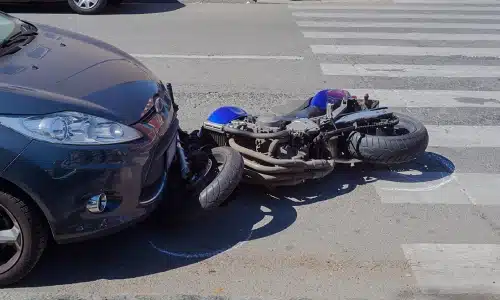 Riding a motorcycle through Manhattan means navigating dense traffic, sudden stops, and constant construction, where one driver’s mistake can lead to life-changing injuries. From the West Side Highway and FDR Drive to Midtown’s busy cross streets, serious motorcycle crashes happen in some of the city’s most heavily traveled corridors. A motorcycle accident lawyer serving Manhattan can help injured riders understand their legal rights after a collision.
Motorcycle accident claims often involve disputed liability, severe injuries, and insurance challenges that differ from standard car accident cases. Acting quickly to preserve crash scene evidence, witness statements, and vehicle damage can play a critical role in establishing fault and pursuing full compensation.
Motorcycle Crashes That Can Change Your Life
The same streets that make Manhattan thrilling to ride can also be dangerous. Many motorcycle accident claims in Manhattan trace back to a handful of predictable, high-risk situations riders encounter every day.
Where Serious Motorcycle Collisions Happen in Manhattan
Most serious motorcycle crashes follow familiar patterns, including left-turn collisions at intersections, rear-end impacts in stop-and-go Midtown traffic, and dooring incidents when a driver opens a vehicle door into a rider’s path. Hit and run crashes are another recurring risk, especially along corridors like the West Side Highway.
Other common locations include busy intersections, highway entrance and exit ramps, and congested avenues where visibility is limited, and drivers have little time to react. The New York City Department of Transportation provides motorcycle safety information and rider education to help reduce these types of crashes on city streets.
Why Riders Face Greater Injury Risks
A motorcycle offers almost none of the protection a car does, leaving riders exposed even in low-speed impacts. Riders are also harder to see, and a single missed glance at an intersection can cause a severe collision. Even with helmets and protective gear, motorcyclists remain vulnerable to traumatic brain injuries, fractures, spinal cord injuries, and other serious harm.
With little separating a rider from the roadway or surrounding vehicles, even a relatively minor crash can result in life-changing injuries. The National Highway Traffic Safety Administration encourages drivers and motorcyclists to share the road and promotes safe riding practices to help reduce serious crashes.
Building a Strong Motorcycle Injury Claim
Strong motorcycle cases are built on evidence gathered early and careful choices in the days after a crash, which often shape what the claim is worth later.
Evidence That Matters From Day One
- Police reports. The NYPD collision report documents key details of the crash, including any Vehicle and Traffic Law violations issued to the other driver. Records can be obtained through the NYPD Collision Records process or the New York DMV.
- Scene photographs. Photos of the vehicles, roadway conditions, traffic signals, and surrounding area preserve evidence that may disappear shortly after the collision.
- Helmet preservation. A damaged helmet can help demonstrate the force of impact and support the reported injury mechanism, so it should be preserved rather than discarded.
- Witness statements. Independent witnesses can clarify how the crash occurred when the parties provide conflicting accounts, making their contact information valuable.
- Medical records. Treatment at the Bellevue Hospital trauma center or another medical facility creates documentation that connects the injuries to the crash and supports the claim through consistent care.
Mistakes That Can Undermine Your Case
- Recorded statements. Insurance adjusters may request a recorded statement soon after the crash, and comments made early can be used to challenge the claim later.
- Delays in medical treatment. Skipping appointments or waiting to seek care may allow insurers to argue that the injuries were minor or unrelated to the accident.
- Social media activity. Photos, videos, or updates about the crash or recovery can be taken out of context and used to dispute the claimed injuries.
- Early settlement offers. Accepting an initial settlement before the full extent of the injuries is known may leave future medical expenses and other losses uncompensated.
Insurance Challenges After a Motorcycle Crash
Insurance is where New York motorcycle claims often become complicated, because the rules that apply to riders differ in important ways from those covering people in cars.
Why Motorcycle Claims Are Different in New York
Motorcyclists sit outside New York’s No-Fault system under Insurance Law 5102(f), which excludes motorcycles from the definition of ‘motor vehicle,’ so riders do not collect PIP benefits after a crash. The upside of this No-Fault insurance exemption is real, because riders are not forced to meet the serious injury threshold motorcycle claimants would otherwise face and can bring a direct claim from the outset.
That path differs from car collision injury representation, where occupants must satisfy the threshold before seeking pain and suffering damages.
How Insurance Companies Evaluate Motorcycle Claims
When a claim moves forward, it usually runs through demand letter negotiation, where the rider’s losses are documented, and a figure is presented to the insurer. Carriers routinely push back by questioning fault, minimizing injuries, or arguing the rider shares blame.
If the driver flees or is underinsured, uninsured motorist coverage (UM/SUM) on the rider’s own policy becomes important, and filing an uninsured motorist motorcycle claim is often central to recovering damages after hit and run.
Laws That May Affect Your Recovery
A few New York statutes quietly control how much time riders have and how fault is weighed, and understanding them early can separate a viable claim from a barred one.
Filing Deadlines and Comparative Fault
The New York motorcycle accident statute of limitations gives injured riders three years from the crash to file suit under CPLR 214(5). That timeline compresses when a government vehicle or defective street is involved, since motorcycle road hazard liability claims against New York City require a Notice of Claim within 90 days under General Municipal Law 50-e.
Missing either deadline can end a claim before the facts are weighed.
How Fault Can Change the Outcome of a Claim
New York applies pure comparative negligence under CPLR 1411, so an injured rider can recover even when partly responsible. The award is reduced by the rider’s share of fault, so a rider found 20 percent at fault still keeps 80 percent of the damages.
This matters in a lane splitting accident New York carriers often scrutinize, because riding between lanes violates VTL 1252 and gives the insurer an argument to shift fault to the rider.
Compensation Available in Motorcycle Accident Cases in Manhattan
New York places no statutory cap on compensatory damages in motorcycle cases, and a claim generally seeks both economic and non-economic damages, reflecting the full weight of a serious injury.
Financial Losses That May Be Recoverable
Economic damages cover the measurable costs a crash creates, from emergency care and surgery to therapy and income lost during recovery. When injuries require ongoing care, motorcycle injury compensation New York claims can also account for future treatment and reduced earning capacity.
Documenting these losses in detail supports a full accounting of the harm.
Long-Term Effects of Serious Motorcycle Injuries
Severe motorcycle injuries often leave effects well beyond medical bills, including chronic pain, permanent disability, and a reduced ability to enjoy daily life. New York permits recovery for these non-economic harms, and in rare cases involving egregious conduct, punitive damages may apply.
With no cap on compensatory damages, the value of a claim tracks the true severity of the injuries.
Moving Forward After a Motorcycle Accident
The period after a motorcycle crash can feel overwhelming while recovering from serious injuries, and knowing when guidance helps makes the road ahead clearer.
When Legal Guidance May Become Important
Some claims resolve without much friction, while others turn on contested liability, catastrophic injuries, or an insurer that disputes the facts. In those situations, working with attorneys who handle motorcycle cases can help even the field and identify issues a rider may not notice alone.
What the Claims Process Usually Looks Like
A typical claim begins with investigation, including the police report, medical records, and any available video. A demand package is then prepared and presented to the insurer, followed by negotiation over the claim’s value.
If the carrier will not offer a fair resolution, the case may move to litigation in Supreme Court, New York County, the trial court where Manhattan injury lawsuits are heard.
Motorcycle Accident Legal Representation in Manhattan & the Corridors Serving It
Motorcycle accidents in Manhattan often occur along busy commuter routes, major intersections, and congested commercial districts where heavy traffic, limited visibility, and frequent lane changes can increase the risk of serious collisions. The CEO Lawyer Personal Injury Law Firm represents injured motorcyclists throughout New York County and pursues claims through the appropriate court when warranted.
We assist clients with motorcycle accident claims involving locations such as:
- FDR Drive and Harlem River Drive. High-speed merging, sideswipe, and lane-change collisions along Manhattan’s busiest waterfront expressways.
- Henry Hudson Parkway and West Side Highway. Blind-spot crashes, rear-end collisions, and unsafe lane changes along the borough’s west-side commuter corridor.
- Canal Street, 34th Street, 42nd Street, and 125th Street. Left-turn collisions, dooring incidents, and crashes involving commercial vehicles and tunnel-bound traffic.
- Times Square, Chelsea, SoHo, Greenwich Village, and the Lower East Side. Low-speed crashes involving pedestrians, cyclists, rideshare vehicles, and congested city traffic.
Proudly Serving Our Neighboring Communities
Whether your crash happened on the FDR Drive, West Side Highway, Canal Street, or elsewhere in the Financial District, Chelsea, Midtown, the Upper East Side, Upper West Side, Harlem, Washington Heights, or another Manhattan neighborhood, we represent motorcycle accident victims throughout New York County.
We work to gather available evidence, request relevant records when available, evaluate the circumstances surrounding the crash, and pursue claims through the appropriate court when warranted.
Manhattan Motorcycle Accident FAQ
Riders weighing their next steps tend to ask a few of the same questions. Our motorcycle accident FAQ covers more ground for those who want additional detail.
How long do I have to file a motorcycle accident claim after a crash in Manhattan?
New York generally allows three years from the date of the crash to file a motorcycle accident claim. The deadline is much shorter when a government vehicle or a dangerous roadway maintained by a public entity contributed to the accident, because a Notice of Claim is generally required within 90 days.
Identifying all potentially responsible parties and confirming the applicable deadline early can help protect your right to recover compensation.
Can I recover compensation if I was partly at fault for a motorcycle accident?
Yes. New York follows a comparative negligence rule, so an injured rider can recover even after sharing some blame for the accident. Any compensation awarded is reduced in proportion to the rider’s percentage of fault rather than eliminated.
Evidence such as crash reports, witness statements, surveillance footage, and accident reconstruction may help determine how fault is allocated.
Why doesn’t New York’s No-Fault insurance cover injured motorcyclists?
New York’s No-Fault system, defined in Insurance Law 5102 and related provisions, applies to cars and their occupants rather than motorcycles. Because riders are excluded from Personal Injury Protection (PIP) benefits, they generally do not receive immediate No-Fault coverage for medical expenses or lost wages after a crash.
Instead, injured motorcyclists may pursue a claim directly against the at-fault driver without first meeting the serious injury threshold that applies to covered motor vehicle occupants, which can be an advantage in many cases.
Understanding Your Legal Options With a Motorcycle Accident Law Firm Serving Manhattan
Motorcycle accident claims often involve serious injuries, disputed liability, and insurance issues that differ from other motor vehicle cases. Understanding how New York law applies to your circumstances can provide a clearer picture of the legal options available to you.
Our legal team serving Manhattan can review the circumstances of your motorcycle accident, explain the applicable deadlines and legal considerations, and discuss the options available to you based on your situation.