


📋 Quick Summary: Tempe Rideshare Accident Lawyer
- Arizona law limits injury claims to 2 years from the accident date
- Rideshare insurance coverage depends on the driver app status during a crash
- Injured riders, pedestrians, and drivers may have valid claims
- Compensation may include medical bills, lost income, and pain
- Legal guidance is available for Tempe rideshare accident victims
Need immediate help? You can reach us at (520) 777-9279.
 Accidents involving Uber and Lyft in Tempe often involve complex liability and insurance issues. Whether you were a rideshare passenger, struck by a rideshare vehicle, or driving when a rideshare driver caused a crash, understanding how coverage applies is critical to recovering compensation.
A Tempe rideshare accident lawyer can help identify responsible parties, navigate layered insurance policies, and pursue compensation for your injuries. Ali Awad’s team at the CEO Lawyer Personal Injury Law Firm represents rideshare accident victims throughout Tempe and Maricopa County.
Why Do You Need a Tempe Rideshare Accident Attorney
Rideshare accident cases in Tempe are governed by Arizona law, which regulates transportation network companies and establishes how liability and insurance coverage work in these unique situations.
A rideshare accident attorney in Tempe can evaluate the specific circumstances of your accident, determine which insurance policies should respond to your claim, help address rideshare insurance coverage disputes, if any, and advocate for your right to fair compensation.
How Local Laws Affect Your Rideshare Accident Claim
Arizona regulates rideshare companies like Uber and Lyft as transportation network companies (TNCs) under state law. These regulations establish minimum insurance requirements and clarify when various insurance policies apply based on the driver’s status at the time of the accident.
Statewide traffic safety initiatives and data tracked by the Arizona Governor’s Office of Highway Safety highlight the ongoing risks posed by distracted and high-volume driving in urban areas like Tempe.
One of the most critical factors in any rideshare accident case is determining what the driver was doing when the collision occurred. Rideshare companies provide different levels of insurance coverage depending on whether the driver had the app turned on, whether they had accepted a ride request, and whether a passenger was in the vehicle.
Arizona negligence laws for rideshare crashes follow the state’s pure comparative negligence system. This means you can recover damages even if you were partially at fault for the accident, though your compensation will be reduced by your percentage of fault.
The statute of limitations for injury claims in Arizona is generally two years from the date of the accident. Property damage claims also have a two-year deadline. Missing this deadline typically means losing your right to pursue compensation through the court system, making timely action essential.
When to Contact a Tempe Rideshare Accident Lawyer
You should reach out to a rideshare accident lawyer serving Tempe as soon as possible after your accident, ideally after you’ve received initial medical treatment and your condition has stabilized.
Contact an attorney promptly if you suffered serious or lasting injuries, the accident caused permanent disability or disfigurement, or the rideshare company or insurer has denied coverage or offered inadequate compensation.
Early legal representation helps preserve critical evidence needed for rideshare accident claims, prevents harmful statements to insurance companies, and ensures you pursue claims through all appropriate channels. Rideshare accidents often involve multiple insurance policies and parties, making the claims process significantly more complex than typical car accidents.
Protecting Your Claims with our Tempe Rideshare Accident Law Firm
Taking the right steps immediately after a rideshare accident can significantly impact both your physical recovery and your legal claim. Knowing what to do in the moments and days following the collision helps preserve evidence and protects your ability to recover compensation.
A Tempe rideshare accident law firm can guide you through this process and help you avoid mistakes that could jeopardize your claim.
Immediate Steps to Protect Your Health and Rights
After a rideshare accident, seek medical care as soon as possible, even if injuries seem minor, as some symptoms may appear later. Then, call 911 to report the crash and ensure an official police report is created.
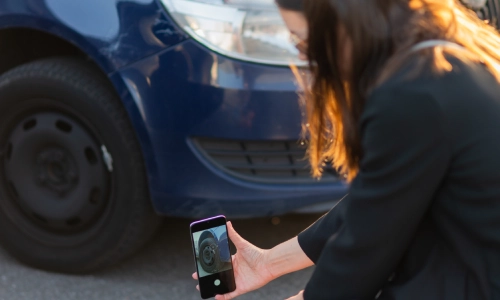
If you’re able, document the scene by taking photos of vehicles, damage, road conditions, and injuries. Gather driver and witness information, preserve rideshare trip details from the app, and note the driver’s app status if possible. Report the accident through the Uber or Lyft app, and avoid making statements about fault or accepting informal settlements.
Preserving Evidence After a Rideshare Collision
Strong evidence is critical in Tempe rideshare accident claims, as insurers often dispute liability or injury severity. Preserving documentation early helps support your case.
Important evidence may include rideshare app records showing trip details and driver status, medical records related to your injuries, theTempe police accident report, photos of the scene and injuries, witness statements, and any available video footage.
You should also keep financial records for accident-related expenses, employment records showing lost wages, and copies of all communications with insurers or rideshare companies.
Speaking With a Lawyer Before the Insurance Company
Insurance adjusters may contact you shortly after a rideshare accident seeking recorded statements or medical authorizations.
Before providing detailed statements or signing any documents, consult with an attorney. A lawyer can advise you on what information to provide, what questions to avoid answering, and how to protect your legal rights throughout the settlement process for Arizona injury cases.
Rideshare insurance disputes are common, and companies often use tactics to limit payouts, such as disputing which policy applies, questioning the driver’s app status, shifting blame, requesting recorded statements or broad medical releases, offering quick, low settlements, and delaying claims to pressure acceptance.
An attorney levels the playing field by handling communications with all insurance companies and ensuring your claim is presented effectively. For guidance on related matters, a Tempe personal injury lawyer can help you understand your rights across various types of accident cases.
Understanding Liability and Arizona Law for Rideshare Accident Claims
Determining who is responsible for a rideshare accident and which insurance policy applies requires understanding Arizona’s fault-based system and the unique insurance structures that rideshare companies use.
Who May Be Held Responsible in a Rideshare Crash
Liability in a rideshare accident may involve multiple parties, including the rideshare driver, another at-fault motorist, or shared responsibility among several drivers. Uber or Lyft’s commercial insurance may apply depending on the driver’s app status, even though drivers are classified as independent contractors.
Road design, traffic patterns, and crash data maintained by the Arizona Department of Transportation can also play a role in evaluating liability when unsafe roadway conditions contribute to rideshare accidents.
In some cases, responsibility may also extend to government entities for unsafe road conditions or to manufacturers if a vehicle defect contributed to the crash. An attorney can investigate the accident to identify all parties who may be responsible for compensation.
How Negligence Works Under Arizona Law
Arizona rideshare accident cases are proven using negligence principles. These negligence standards and liability rules are established under Arizona law, including provisions found in the Arizona Revised Statutes.
You must establish:
- Duty of care: All motorists owe other road users a duty to operate vehicles safely, pay attention to the road, obey traffic laws, and avoid conduct that creates unreasonable risks to others.
- Breach of duty: The driver violated this duty through negligent conduct such as distracted driving, speeding, aggressive driving, failing to yield right of way, or other traffic violations.
- Causation: The breach directly caused the accident and your injuries. This requires proving the negligent conduct was both the actual cause (the accident wouldn’t have occurred without it) and the proximate cause (the injuries were a foreseeable result).
- Damages: You suffered actual harm resulting in economic or non-economic losses.
Arizona’s pure comparative negligence system allows you to recover damages even if you were partially at fault for the accident, though your compensation will be reduced by your percentage of fault.
Common Defenses and How an Attorney Responds
Insurance companies and defense attorneys typically raise several defenses in rideshare accident cases:
- App status disputes: Claiming the driver was not actively using the rideshare app to avoid commercial coverage. Attorneys use app data and ride records to establish coverage.
- Comparative negligence: Shifting blame to reduce liability. Attorneys present evidence showing the rideshare driver or another party caused the crash.
- Passenger distraction: Arguing that the passenger contributed to the accident. Attorneys show drivers remain responsible for safe operation.
- Pre-existing injuries: Claiming injuries existed before the crash. Attorneys rely on medical records and expert opinions to prove causation.
- Disputed causation: Asserting road conditions or policy exclusions apply. Attorneys use evidence, expert analysis, and policy review to challenge these claims.
An experienced attorney anticipates these defenses and develops evidence to counter them effectively.
Potential Compensation in a Tempe Rideshare Accident Case
Compensation in rideshare accident cases addresses both the economic costs of your injuries and the non-economic impact on your quality of life. The value of your claim depends on injury severity, how the accident has affected your life, and the insurance coverage available.
Medical Expenses and Future Care
Injury research published by the Centers for Disease Control and Prevention shows that motor vehicle crashes frequently result in long-term medical needs and lasting physical and emotional harm.
You can seek compensation for all medical costs related to treating your rideshare accident injuries or Uber and Lyft accident injuries in Tempe, including:
- Emergency and hospital care: Ambulance transport, emergency room treatment, hospitalization, ICU stays, and surgery
- Diagnostic testing: X-rays, CT scans, MRIs, and other imaging
- Medications and pain management: Prescription drugs and related treatment
- Therapy and rehabilitation: Physical, occupational, chiropractic, and mental health therapy
- Long-term and future care: Assistive devices, home modifications, and ongoing medical treatment
Rideshare accidents can result in serious injuries requiring extensive medical care. Your attorney can work with medical experts to calculate projected future care costs and ensure these expenses are included in your claim.
Lost Wages and Reduced Earning Capacity
If your injuries kept you from working, you may seek compensation for lost wages, used sick or vacation time, reduced future earning capacity, lost employment benefits, and retraining costs if you’re unable to return to your prior job.
For rideshare drivers injured while working, lost income claims may involve documenting typical earnings patterns and demonstrating how the accident has affected the ability to continue driving for rideshare companies and earning income through the platform.
Pain, Suffering, and Other Non-Economic Losses
Arizona law also allows recovery for non-economic losses such as pain and suffering, emotional distress, loss of enjoyment of life, disfigurement or scarring, permanent disability, and loss of consortium for a spouse.
Arizona does not cap non-economic damages in most personal injury cases, meaning juries can award amounts they determine appropriate to compensate for these losses. A personal injury lawyer can help evaluate the full extent of your losses and pursue appropriate compensation.
How the CEO Lawyer Personal Injury Law Firm Helps Tempe Clients
Our firm takes a comprehensive approach to rideshare accident cases, providing personalized attention and aggressive advocacy throughout the legal process. We understand the unique challenges these cases present and have the resources to pursue justice for injured clients throughout Tempe and Maricopa County.
Investigating Rideshare Accidents and Insurance Coverage
We begin every case with a thorough investigation to establish liability and identify all available sources of compensation. Our investigation process includes:
- Accident evidence review: Police reports, scene evidence, witness statements, and available traffic or surveillance footage
- Expert analysis: Accident reconstruction and medical expert review to establish fault and injury impact
- Rideshare data review: Uber or Lyft app records showing driver status, trip details, and timing
- Driver background review: Prior complaints, accidents, and relevant driving history
- Insurance identification: All applicable insurance policies, coverage limits, exclusions, and the driver’s app “period” at the time of the crash
This detailed investigation allows us to build a strong foundation for your claim and anticipate defenses that insurance companies may raise.
Negotiating With Insurers and At-Fault Parties
Rideshare accident cases often involve multiple insurance policies and parties, creating complicated questions about which insurer should pay for damages. We handle all aspects of the insurance claim process, including:
- Identifying all applicable insurance policies from Uber, Lyft, drivers, and other parties
- Filing claims with the appropriate carriers
- Communicating with insurance adjusters on your behalf
- Responding to requests for information while protecting your rights
- Presenting comprehensive demand packages documenting liability and the full extent of damages
- Negotiating settlements that reflect the complete value of your losses
- Pursuing claims through uninsured/underinsured motorist coverage when necessary
Our goal is to maximize your recovery by identifying all potential sources of compensation and holding the appropriate parties accountable.
Preparing for Litigation When Necessary
While many rideshare accident cases resolve through settlement negotiations, some require litigation to achieve fair compensation. If insurance companies refuse to make reasonable offers, we are prepared to take your case to court.
Litigation involves:
- Filing lawsuits in the Maricopa County Superior Court
- Conducting discovery to obtain additional evidence from defendants and rideshare companies
- Deposing witnesses and parties under oath
- Working with expert witnesses to present technical evidence at trial
- Filing motions to address legal and evidentiary issues
- Presenting your case to a judge or jury, who will determine liability and damages
We represent rideshare accident victims throughout Tempe and have the resources necessary to pursue cases through to verdict when settlement is not appropriate. For related car accident matters, a Tempe car accident lawyer can provide guidance on other types of collision cases.
Tempe Rideshare Accident FAQ
How does insurance coverage work in a Tempe rideshare accident?
Insurance coverage in rideshare accidents depends entirely on the driver’s app status at the time of the crash.
Period 0 (app offline) means only the driver’s personal insurance applies, which often excludes commercial use. Period 1 (app on, waiting for rides) provides limited contingent coverage of $50,000 per person/$100,000 per accident if personal insurance denies the claim.
Periods 2 and 3 (ride accepted or passenger in vehicle) trigger Uber or Lyft’s $1 million commercial liability policy. An attorney can obtain app records and other evidence to prove the correct coverage tier and ensure you access the maximum available insurance.
Can I file a claim if I was injured as a rideshare passenger?
Yes. Rideshare passengers are rarely at fault and are generally covered by Uber or Lyft’s $1 million commercial insurance policy during an active ride. You may pursue compensation for medical expenses, lost income, pain and suffering, and other damages, regardless of whether the rideshare driver or another motorist caused the crash.
What if the rideshare driver was not logged into the app?
If the rideshare driver was not logged into the app, only their personal auto insurance applies, which often excludes commercial driving. If coverage is limited or denied, you may need to rely on your own uninsured or underinsured motorist coverage or pursue another at-fault driver’s insurance.
Determining the driver’s app status is critical because it directly affects how much insurance coverage is available.
Schedule a Free Consultation With a Tempe Rideshare Accident Lawyer Today
If you were injured in a rideshare accident in Tempe or Maricopa County, the CEO Lawyer Personal Injury Law Firm can help you understand your options and protect your rights. Our team handles the insurance and legal challenges involved in Uber and Lyft accident claims so you can focus on recovery.
Call (520) 777-9279 to schedule your free consultation.