



 To get from one place to the next, drivers make turns at red lights, yield, and stop signs. While all Atlanta drivers are taught to stop at designated places before they take a driver’s test, those rules are often broken after exams are passed.
Did someone make an improper turn that caused an accident? One wrong turn can lead to a messy and costly car accident, one leading to property damage and personal injuries that can take weeks, or months, to fully recover from.
If you are a victim of an improper turn accident, you do not need to figure out compensation alone.
Reach out to CEO Lawyer Personal Injury Law Firm today. Our team is here and ready to assist you as you look for legal counsel for your case.
You can reach us at (404) 777-8800 or contact us online to schedule a free, confidential case review today with no obligation.
An Atlanta Improper Turns Accident Attorney Knows Driving and Liability Laws
Failure to obey road rules is the fifth-leading cause of accidents in Georgia.
Georgia law intends to keep order and protect the safety of all drivers on its roadways. While many follow through with road rules, a negligent action of one person can cause serious injuries and property damage.
An Atlanta improper turn accident attorney will know exactly how to approach your case, review evidence, and build a claim that is tailored to the circumstances of your case. Choosing the right legal team is essential to achieving a successful outcome for your claim.
Even though there is no rule preventing someone from representing themselves, managing and building a claim takes energy, time, and skill – something that not all victims of improper turn accidents are ready or able to handle. Especially in cases involving serious injuries, it’s important to rely on someone you trust to manage your case.
What Are Improper Turns?
 Improper turns are made abruptly and often illegally, without a signal to other drivers on the road. Intersections and roadway designs indicate where drivers permit specific maneuvers.
Committing one of these improper turns while driving can result in a serious and potentially deadly accident.
Negligent drivers may commit these improper turns:
- U-turns – A U-turn can be limited by intersection or state law. Where a U-turn is not permitted is often clearly shown in signs at marked intersections.
- Turns prohibited by signs at intersections – Signs forbidding certain turns, such as right turns on red, at an intersection are placed to prevent accidents from happening. Sometimes, these limits can happen only for certain days of the week or specific hours of the day.
- Wide turns – In a wide turn, the driver enters the next lane to complete their change in direction. Drivers are supposed to stick to their lane and enter into the closest lane they are allowed.
What Types of Accidents Are Caused by Improper Turns?
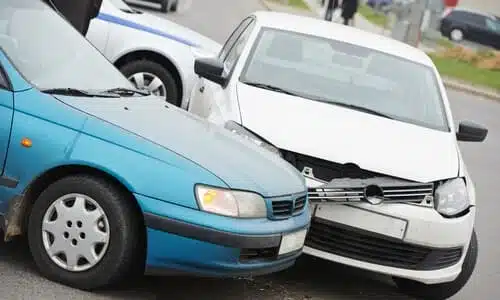
Improper turns can cause some potentially deadly accidents. The two main types of crashes seen from improper turns are broadside and side collisions.
Broadside collisions happen most often in intersections. Often referred to as a T-bone collision, the front end of a car (assuming they are going to make a right turn) strikes the passenger side of another car at a right angle.
Broadside collisions happen when the driver intending to make a left turn does not yield to oncoming traffic, proceeding into the intersection carelessly. Speeding and distracted driving are usual contributors to these kinds of crashes.
Side collisions are where the collision affects the side of the car. These crashes can happen at intersections, parking lots, and when cars are switching lanes on a multi-lane highway.
The common cause of these crashes is also reckless driving. The negligent party is likely to be speeding, driving aggressively, under the influence, or distracted.
What Injuries Are Common in Improper Turn Accidents?
The types of crashes caused by improper turns can have the most severe kinds of injuries. Passengers or drivers will face possible impacts on their sides, which is the least-protected part of the body when riding in a car.
The closer the occupant is to the point of contact with the oncoming car, the more likely they will have more injuries.
Since improper turn accidents are seen at intersections, there is a chance that the cars are both moving at the time of collision. AllOnGeorgia reports that Georgia ranks 11th in accidents resulting in death at intersections, estimating about 24 intersection accidents per day.
Victims of side accidents can see these injuries[1] when there is a side collision:
- Head injuries lead to comas, TBIs, and concussions
- Penetrating foreign objects in the head, arms, neck, and abdomen
- Spinal injuries, including paralysis
- Muscular strains and possible tears
- Damage to extremities, potentially leading to amputation
In 2020, the Georgia Department of Public Health reported that the growing number of car accidents in the state was the second leading cause of hospitalizations and ER visits.
What to Do if You Were in a Car Accident?
Car accidents are frightening. To make matters worse, the normal reaction is for one to enter a fight or flight mode.
Do not let adrenaline cloud your judgment on what to do if you find yourself in this situation. If you are in a car accident, do the following to maximize your chances of recovering full compensation for the damages you have suffered:
Call 911
Calling authorities is the first step in documenting and receiving medical attention. Request medical personnel if anyone is hurt, in pain, or could potentially be hurt.
Tell the Police What You Know
It is essential that you tell your account about what happened. Stick to the facts and do not make any assumptions.
Do not admit fault or suggest any responsibility for the accident, but do answer questions honestly and accurately based on what you know. The police will produce a police report detailing the damages and circumstances of the accident.
Document the Accident
Documenting what happened by taking videos and pictures is essential evidence to prove to insurance companies what happened and why the compensation requested is justified. Photos and video will be used as part of the evidence in your insurance claim and will be reviewed by your legal team.
Apart from photos and video of the scene, it is important to talk and get the contact information of any key witnesses who saw what happened. Their testimony may be key to solidifying your claim, especially in the chance that it goes to court.
Exchange Information With Other Parties
Before leaving the scene of the accident, it is crucial to gather the necessary information from the other party, including phone numbers, names, and insurance information.
At the scene of the accident, the officer will request that all parties involved share their insurance information. The police officer can be present if the negligent party refuses to give their information.
The negligent party’s contact and insurance information is necessary to submit a claim against their insurance policy.
Monitor Yourself for More Serious Injuries
Some injuries, like Whiplash and TBIs, are not present at the time of the wreck. Since the people involved in an accident can run on adrenaline, it is possible that these conditions will not be present until days, if not weeks, after the crash.
- Moderate TBIs[2] – A TBI occurs when there is a strong and sudden jolt to the head. With a moderate TBI, you may need ongoing medical care to recover from the condition entirely. TBIs significantly impact one’s life and carry substantial financial burdens to the victim. Moderate TBIs can be deadly, with 22% of all cases resulting in death. 48% of victims felt that they had remained the same or improved within a 5-year period.
- Whiplash[3] – This condition occurs when there is a force that pulls you forward and then quickly back to the starting position. The movement strains muscles and nerves in the neck, creating pain, limiting movements, headaches, and stiffness. Victims with this should seek medical treatment for over-the-counter medication and possibly physical therapy sessions to help reduce the symptoms of whiplash. Fortunately, most recover within a few weeks of treatment.
If you feel any of the symptoms of these conditions, it is important to seek medical attention as soon as possible.
Call Your Legal Team
Before accepting compensation, talk to an Atlanta personal injury attorney to review your case. They are experienced professionals and have spent years working on similar cases against insurers.
Your Atlanta car accident attorney can help you estimate your damages in full, document all available evidence, and use the optimal legal strategies to maximize your chances of full damage recovery. They know the ins and outs of Georgia law and are formidable against the pressuring tactics of insurance companies to accept a lower payout.
You want to work with someone who will represent you, guide you through the process, and stand up for you if your case goes to court.
Work With an Atlanta Improper Lane Changes Accident Law Firm
Whether a negligent party ran a stop sign, a red light, changed lanes suddenly, or turned into oncoming traffic, they made a mistake that caused thousands of dollars or more in medical bills and property damage. As the victim of this situation, you have the right to seek reparations for the unprecedented expenses you now have to pay.
The most effective way to obtain a fair settlement is to work with a team focused on your needs. Contact the CEO Lawyer Personal Injury Law Firm today for a full case review and initial consultation.
You can reach us to schedule your free case review today when you call (404) 777-8800 or contact us online.
[1] https://www.ncbi.nlm.nih.gov/pmc/articles/PMC3400216/
[2] https://www.cdc.gov/traumaticbraininjury/moderate-severe/index.html
[3] https://www.mayoclinic.org/diseases-conditions/whiplash/symptoms-causes/syc-20378921