




 You may have expensive medical bills when you’ve been hurt at work. You may also be out of work while you try to recover. You expect to be able to claim worker’s compensation benefits in these situations, but unfortunately, sometimes your employer’s worker’s comp insurance company will fight you on this. Having to argue with an insurance adjuster is the last thing you need while trying to recover from a severe injury, and it may also be ineffective.
When you attempt to claim worker’s compensation benefits, you need an experienced Atlanta worker’s compensation lawyer to help ensure you receive a fair amount. Ali Awad is the attorney you want in your corner. He and the CEO Lawyer Personal Injury Law Firm team will fight aggressively to secure the worker’s compensation benefits you deserve so you can focus on your recovery.
If you or a loved one has been injured at work, you should know that worker’s compensation claims may take time. Call Ali Awad for a no-obligation consultation of your case as soon as you can. The CEO Lawyer and his team work using a contingency basis, which means they only get paid when you do. You have nothing to lose by calling (404) 777-8800 or contacting us online to discuss your work injury situation options.
What to Do After An Accident At Work
If you’re hurt, your priority should be to get medical attention for your injuries. Then make sure to report the accident to HR or your supervisor. If you can, take pictures and keep good records of your injury and any symptoms you have. Then speak with an Atlanta worker’s compensation attorney who can help you file a worker’s compensation claim while you recover.
How Does Worker’s Compensation Work? Do You Need to Prove Your Employer is At Fault?
Worker’s compensation is different from a standard personal injury claim. It operates on a “no-fault” system, so neither you nor your employer has to spend any time or money proving who was at fault. This is different from personal injury claims, where often both parties have to work very hard to make a case that the other is at fault.
Essentially, the worker’s comp system protects your employer from many potential lawsuits while also allowing you to receive compensation if you’re hurt at work, no matter whose fault the accident is.
What Kind of Compensation Can You Receive From Worker’s Comp?
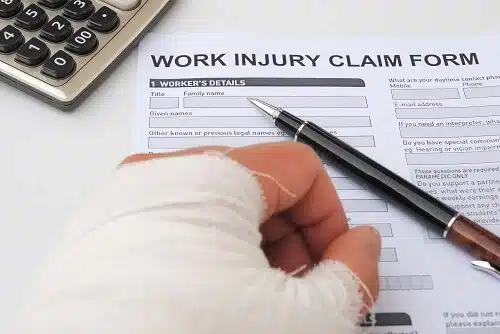 You can seek compensation for the following expenses:
- Your healthcare expenses related to the injury. As long as you see an authorized treating physician, your bills should be covered 100% for anything deemed “reasonable and necessary.” This typically includes diagnostic tests like X-rays, CT scans, MRIs, etc. Worker’s comp should also cover surgery, medication, and other treatments.
- Rehab services, including physical therapy or occupational therapy, to help you get back on your feet.
- You can also request travel expenses, including ambulance rides and gas or other costs incurred on the way to doctor’s appointments or other treatments.
- Lost income is another significant expense that worker’s compensation should cover. Whatever time you are out of work after your injury, you should receive two-thirds of your typical weekly wage. This pay is capped at $575 a week.
- You may be able to receive Permanent Partial Disability (PPD) if your doctor gives you a disability rating based on the American Medical Association guidelines. This will mean additional compensation for your injuries.
Where Does Worker’s Compensation Come From?
In the state of Georgia, employers with more than three employees are required to purchase worker’s compensation insurance that covers medical costs and part of your lost income. These benefits apply to any injury that happens while you work, whether you are at your workplace or somewhere else. For example, if you travel to another business to do something for work and are hurt there, your worker’s compensation benefits should kick in.
Although worker’s compensation is meant to replace personal injury lawsuits against your employer, you may have a claim against a third party in some situations if you were hurt while at another business for work. For example, you could sue the other company. However, as this would not be a worker’s comp claim, it wouldn’t be a no-fault situation, and you would need to prove the injury was due to the third party’s negligence. Whether or not this is feasible in your case is a question for your Atlanta worker’s comp attorney.
What If Your Worker’s Compensation Claim Was Rejected?
Often people call us because their claim was rejected. This can happen for numerous reasons:
- The insurance company disputes some aspects of the claim, most commonly that the injury was work-related. Essentially, they may say that they don’t believe the injury happened at or because of work. For example, they might say that your carpal tunnel is the result of clicking a gaming mouse or some other repetitive motion you do in your spare time and is unrelated to the manual work you do at your factory job.
- The employer or the insurance carrier might claim that your injury isn’t a big deal or that you don’t really need treatment. Not surprisingly, this is very frustrating to people in pain who need treatment.
- Worse, the employer may claim that you somehow faked your injury.
- In some cases, workers are told they can’t select a doctor for a second opinion. But you do have a legal right to choose your physician.
- Lack of appropriate legal representation. A common reason is that employers may sometimes tell workers not to consult a worker’s comp attorney. A supervisor may imply or say outright that this could result in a denial of benefits. Ironically, consulting a law firm can help reduce the risk of your claim being rejected.
What Can You Do If Your Claim Was Rejected?
Speak with an Atlanta attorney who handles worker’s compensation claims. They will review your claim and may be able to spot potential issues. They can then correct these and refile the claim. In many cases, this results in the second claim getting approved.
What If You’re Concerned About Retaliation From Your Employer?
Retaliation is another situation people frequently ask about. Under Georgia law, your employer can’t legally fire you or retaliate in any other way just because you filed a worker’s compensation claim. Of course, just because something is illegal doesn’t mean it never happens. Unfortunately, employers sometimes retaliate over these claims. They may fire the employee and make up a false reason they were fired, such as misconduct or poor performance at work. Or they may create a hostile work environment that makes you so miserable you want to quit. They might slash your work hours, so you’re not making enough money to get by or stick you with all the most unpleasant tasks. They could also give you an unfairly lousy score on a performance review or harass you with rude comments. Or they might provide a raise or promotion you deserved to someone else. Additionally, they could threaten to do any of these things if you file for worker’s compensation. This can quickly make you feel like you have no choice but to resign, but you should seek legal help first.
If you believe you’ve been the victim of such retaliation, try to document everything you can, including all threats or retaliation. Suspecting you’ve experienced retaliation is one thing, but proving it in court is another, especially since Georgia is an at-will employment state. This means they can fire you for almost any reason. The exceptions are that you can’t be fired for a discriminatory reason, like race or gender, you can’t be fired in a way that violates your employment contract (if you have one), and you can’t be fired for performing a legally protected act. This last one covers filing for worker’s compensation. However, you will need to provide some evidence to support the claim that this is why you were fired, as your employer certainly isn’t going to admit it.
How can you do this? Save copies of your termination paperwork and, if possible, anything you can use to refute claims that your work performance was poor. For example, letters from clients saying how good your work was, earlier emails in which a supervisor praised your work, copies of emails showing various tasks were submitted on time, etc… If you have copies of your work or other documents that you think might help, hang onto these. You might also make a list of any witnesses to either the retaliation (if it involved something that happened in front of others) or your work performance if you were fired. Next, contact an Atlanta lawyer for worker’s compensation claims to learn your options for protecting your rights.
The CEO Lawyer, Ali Awad, knows what it takes to be successful for himself and his clients. He has built a strong business by earning his clients hundreds of millions in collective settlements and jury awards. Contact us online or call (404) 777-8800.