

Quick Summary: Brooklyn Construction Accident Lawyer
- Most construction accident claims in New York must be filed within three years under CPLR 214(5).
- Labor Law Section 240(1), commonly called the Scaffold Law, provides significant protections for workers injured by elevation-related hazards and may impose absolute liability on responsible property owners and contractors.
- Injured workers may be eligible for workers’ compensation benefits while also pursuing third-party construction injury claims against responsible parties.
- Accidents involving public projects or government entities often require a Notice of Claim within 90 days, making prompt legal guidance especially important.
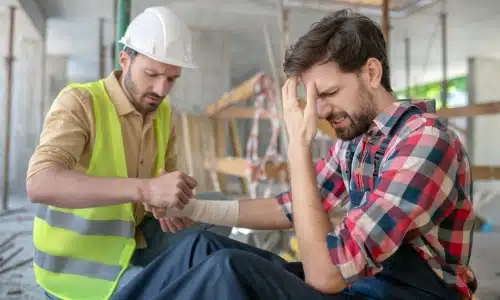 Construction work remains one of the most hazardous occupations in New York, and Brooklyn’s ongoing growth means workers face these risks every day. From large-scale projects along the Atlantic Avenue and Flatbush Avenue corridors to new residential developments in Downtown Brooklyn, the Brooklyn Navy Yard, and Williamsburg, construction sites present dangers that can lead to life-changing injuries.
The CEO Lawyer Personal Injury Law Firm represents injured construction workers and others pursuing construction accident claims in Brooklyn. Whether an injury occurred during a brownstone renovation in Bedford-Stuyvesant, a mixed-use development in Downtown Brooklyn, or a waterfront project in Williamsburg, understanding your legal rights is an important first step.
Why Construction Accidents Are Common in Brooklyn
Brooklyn’s construction industry continues to expand across residential, commercial, and infrastructure projects. High-rise developments in Downtown Brooklyn, redevelopment around the Gowanus Canal, improvements near the Brooklyn Navy Yard, and ongoing renovations in Crown Heights and Sunset Park place workers in fast-changing environments where multiple trades, heavy machinery, and elevated work areas often operate at the same time.
Falls From Heights and Equipment Hazards
Falls remain one of the leading causes of serious construction injuries. Workers performing roofing, façade restoration, steel installation, and exterior renovations may be exposed to falls from scaffolding, ladders, roofs, and unfinished floors when proper fall protection is missing, or equipment fails.
Construction equipment accident injuries may also occur when cranes, forklifts, loaders, hoists, or other machinery malfunction or workers are struck by moving vehicles, suspended loads, falling tools, building materials, or unsecured debris. These accidents frequently result in broken bones, spinal cord injuries, traumatic brain injuries, crushing injuries, or amputations.
Excavation, Electrical, and Other Worksite Risks
Serious construction accidents are not limited to elevation-related hazards. T
rench collapses, exposed electrical systems, defective safety equipment, unstable work platforms, faulty safety harnesses, and hazardous conditions created by multiple subcontractors can all lead to catastrophic injuries that may prevent a worker from returning to the construction industry for months or permanently.
What to Do After a Construction Accident
The hours and days following a worksite accident can affect both your recovery and any future legal claim. Seeking appropriate medical care, documenting what happened, and preserving important evidence can make it easier to establish how the accident occurred and the impact it has had on your life.
Seek Medical Care and Report the Accident
Your health should always come first. Even if your injuries appear minor, seek medical attention as soon as possible because some conditions may not become apparent until hours or days later. You should also report the accident to your employer or site supervisor promptly so that an incident report can be created.
Preserve Evidence From the Jobsite
If it is safe to do so, photograph the accident scene, damaged equipment, and any visible injuries before conditions change. Collect the names and contact information of witnesses, and keep any damaged personal protective equipment or safety gear. It is also helpful to retain copies of medical records, work restrictions, employer incident reports, and any other documents related to the accident.
Depending on the circumstances, a construction accident may also trigger an OSHA investigation. OSHA Construction Industry Standards establish many of the safety requirements that apply to construction worksites.
Avoid Common Mistakes Early in the Process
Many injured workers unintentionally make decisions that can complicate their claims. Giving a recorded statement to an insurance adjuster before understanding your legal rights, delaying medical treatment, posting about the accident on social media, or accepting an early settlement offer may all affect how a claim is evaluated. Losing or discarding important records can also make it more difficult to document what happened.
How New York Construction Accident Laws Affect Your Claim
New York provides construction workers with legal protections that are broader than those available in many other states. Depending on how the accident happened, an injured worker may have the right to pursue workers’ compensation benefits, bring a lawsuit against a negligent third party, or both.
Many construction accident claims in Brooklyn involve a combination of statutory protections under the New York Labor Law and traditional negligence claims. Understanding how these laws work can help injured workers determine their legal options after a serious accident.
Labor Law Section 240(1): Protection From Elevation-Related Hazards
Labor Law Section 240(1), commonly known as the Scaffold Law, protects workers exposed to gravity-related risks. It applies when injuries result from falls from elevated work areas or from falling objects due to the lack of proper safety devices.
The law commonly applies to scaffold collapses, ladder accidents, roof work, falls through unfinished floors, falling construction materials, and safety harness failures. Unlike ordinary negligence claims, Section 240(1) may impose absolute liability on responsible property owners and general contractors, although limited defenses, such as the sole proximate cause doctrine, may still apply.
Labor Law Section 241(6): Violations of Construction Safety Rules
Labor Law Section 241(6) requires owners and contractors to comply with specific safety regulations contained in 12 NYCRR Part 23.
Unlike Section 240, a claim generally requires identifying a specific Industrial Code provision that was violated, such as those governing scaffold construction, ladder safety, fall protection, excavation work, demolition procedures, or construction equipment. When a violation contributes to an injury, it may strengthen a worker’s claim against responsible parties.
Labor Law Section 200 and General Contractor Negligence
Section 200 reflects New York’s common-law duty to provide workers with a reasonably safe workplace. Claims often involve unsafe worksite conditions, dangerous equipment, inadequate supervision, or a failure to correct known hazards. Liability generally depends on whether the property owner or contractor controlled the work or knew, or should have known about it.
Workers’ Compensation and Third-Party Construction Injury Claims
Many injured workers believe that workers’ compensation is their only source of financial recovery after a jobsite injury. In many cases, however, New York law allows an injured worker to receive workers’ compensation benefits while also pursuing a separate claim against another party whose negligence contributed to the accident.
What Workers’ Compensation Covers
Workers’ compensation provides benefits regardless of fault and may cover medical treatment, partial wage replacement, temporary or permanent disability benefits, and, in some cases, vocational rehabilitation. The New York State Workers’ Compensation Board establishes the claims process, including the C-3 Employee Claim form used to report workplace injuries.
While these benefits provide important financial support during recovery, they generally do not compensate injured workers for pain and suffering or other non-economic damages.
When a Third-Party Claim May Be Available
Construction projects often involve multiple companies. If someone other than your employer contributed to the accident, you may have grounds to pursue a third-party construction injury claim against a property owner, general contractor, subcontractor, equipment manufacturer, or another responsible party.
Unlike workers’ compensation, a successful third-party claim may allow recovery for pain and suffering, the full value of lost wages, future earning capacity, and other damages not covered by the workers’ compensation system.
Pursuing Both Types of Claims
Workers’ compensation and a third-party lawsuit are not necessarily mutually exclusive. Many injured construction workers pursue both at the same time when the facts support separate claims.If you’re interested in pursuing a workplace injury claim, understanding how these claims interact can help you evaluate your legal options.
When both claims move forward, the workers’ compensation insurance carrier may have a lien against part of any third-party recovery. Properly addressing these liens is an important part of resolving many worksite accident cases and helps ensure the final recovery is distributed in accordance with New York law.
Filing Deadlines and Municipal Construction Projects
Most construction accident lawsuits in New York must be filed within three years under CPLR 214(5). Claims involving a New York City agency, public property, municipal construction projects, or certain public authorities may also require a Notice of Claim within 90 days under the General Municipal Law.
Jobsite injury lawsuits arising in Brooklyn are generally filed in Supreme Court, Kings County, although some matters proceed in the Civil Court of the City of New York, Kings County, or, in limited circumstances, the United States District Court for the Eastern District of New York.
Evidence That Can Strengthen a Construction Accident Claim
The strength of a construction accident claim often depends on the available evidence. Because construction sites can change quickly after an incident, preserving documentation as early as possible may help prove liability.
Important evidence may include OSHA investigation reports and citations, employer incident reports, photographs or videos of the accident scene, witness statements, medical records, equipment inspection and maintenance records, safety meeting logs, training documentation, site inspection reports, employment records showing lost wages, and documentation of OSHA violation injury claims or New York Industrial Code violations.
How Insurance Companies and Contractors Handle Construction Accident Claims
Insurance companies often begin investigating immediately after a serious jobsite injury. Insurance companies typically begin investigating soon after a serious construction accident, looking for information they can use to evaluate liability and the value of the claim. Adjusters review the available evidence before deciding whether to extend a settlement offer.
Settlement negotiations may begin before a worker reaches maximum medical improvement. In some situations, accepting an early offer could leave future medical expenses or lost earning capacity uncompensated if the full extent of the injuries is not yet known.
When negotiations do not resolve the dispute, the case may proceed through litigation, discovery, expert evaluations, and, if necessary, trial.
Compensation Available After a Construction Accident
The compensation available depends on the specific facts, the severity of the injuries, and the legal claims involved. Successful third-party construction injury claims may allow recovery for financial and personal losses.
Economic Damages
Economic damages compensate injured workers for measurable financial losses caused by a construction accident. Depending on the circumstances, these damages may include past and future medical expenses, lost wages, reduced earning capacity, rehabilitation costs, prescription medications, and the cost of necessary home modifications or assistive equipment.
Non-Economic Damages
Construction accidents can cause lasting physical and emotional harm beyond financial losses. Injured workers may also seek compensation for pain and suffering, emotional distress, loss of enjoyment of life, permanent disability, disfigurement, or scarring when supported by the facts of the case.
Punitive Damages
Punitive damages are available only in limited cases involving particularly reckless or intentional misconduct beyond ordinary negligence. If a construction accident results in a worker’s death, surviving family members may have legal options through a wrongful death claim.
What Happens After Hiring a Construction Accident Lawyer
After a construction accident, an attorney serving Brooklyn will investigate how the incident occurred, identify potentially responsible parties, and gather evidence such as contracts, safety records, inspection reports, medical records, and witness statements. Depending on the circumstances, this investigation may also determine whether workers’ comp for injured workers, a third-party construction injury claim, or both may be available.
Depending on the case, the legal team may consult engineers, workplace safety professionals, or medical experts, negotiate with insurance companies, and file a lawsuit if a fair settlement cannot be reached.
Some construction accident claims resolve through settlement, while others require litigation. The timeline depends on factors such as the complexity of the project, the number of defendants, the severity of the injuries, and whether liability is disputed.
Local Legal Representation Serving Brooklyn Construction Workers
Every construction accident requires a careful investigation into how the incident occurred and who may be legally responsible. Construction projects in Brooklyn often involve multiple contractors, subcontractors, property owners, and equipment suppliers, making liability more complex than many workplace injury claims.
The CEO Lawyer Personal Injury Law Firm helps injured construction workers obtain OSHA investigation records, employer incident reports, subcontractor agreements, safety documentation, and other evidence that may identify every responsible party. Our legal team is also familiar with construction accident litigation in Kings County and the local resources involved throughout the claims process.
Our legal team regularly investigates construction accident claims involving:
- Atlantic Avenue & Flatbush Avenue Corridors: Mixed-use developments, utility work, and active roadway construction.
- Downtown Brooklyn High-Rise Projects: Tower crane operations, structural steel work, and elevated construction.
- Brooklyn Navy Yard Industrial Zone: Manufacturing, warehouse expansion, and marine construction projects.
- Bedford-Stuyvesant & Crown Heights Brownstone Renovations: Roof repairs, façade restoration, and structural rehabilitation.
- Fourth Avenue Through Park Slope & Sunset Park: Residential developments and streetscape improvement projects.
Proudly Serving Brooklyn and Nearby Communities
Whether you were injured on a construction site anywhere in Brooklyn, The CEO Lawyer Personal Injury Law Firm serves construction workers throughout Brooklyn and the surrounding communities. We also represent clients in Williamsburg, DUMBO, Bedford-Stuyvesant, Crown Heights, Sunset Park, Bay Ridge, Bensonhurst, Canarsie, and neighboring areas across Kings County.
Our legal team is familiar with the local resources construction workers often rely on after a serious injury, including treatment at Kings County Hospital Center, Maimonides Medical Center, and NYU Langone Hospital–Brooklyn. We help clients gather OSHA investigation records, employer incident reports, and other evidence while pursuing construction accident claims.
Brooklyn Construction Accident FAQ
Are there exceptions to New York’s construction accident filing deadlines?
Certain circumstances may affect filing deadlines, including accidents involving minors, municipal entities, or claims filed against public authorities. Because these situations can involve different procedural requirements, it is important to determine which deadlines apply before pursuing a claim.
Can workers’ compensation affect my third-party settlement?
Yes. When an injured worker receives workers’ compensation benefits and later recovers compensation through a third-party lawsuit, the workers’ compensation insurance carrier may have a lien against part of that recovery. The amount of the lien and how it is resolved depends on the facts of the case and applicable New York law.
If I fell from scaffolding but my employer says I was not wearing my safety harness, can I still recover damages under New York law?
Possibly. Labor Law Section 240(1) provides significant protections for workers injured in Labor Law 240 scaffold accident cases involving elevation-related hazards. Whether recovery is available depends on the specific facts, including why the safety equipment was not used and whether the worker’s actions were the sole proximate cause of the accident. These issues require a careful review of the evidence and applicable law.
Brooklyn Construction Accident Claims Under New York Law
A serious worksite accident can leave you with questions about your medical care, your ability to return to work, and your financial future. The CEO Lawyer Personal Injury Law Firm serves injured workers and families throughout Brooklyn by evaluating construction accident cases and explaining the legal options available.
Understanding whether workers’ compensation, a third-party claim, or both may be available and which deadlines apply can affect how a case proceeds. Speaking with a construction accident attorney can help you understand the options available under New York law.