


Quick Summary: Brooklyn Rideshare Accident Lawyer
- Most New York rideshare accident claims have a three-year filing deadline under CPLR 214(5).
- New York’s pure comparative negligence law allows recovery despite partial fault, with damages reduced proportionally.
- Pain and suffering damages require meeting New York’s serious injury threshold under Insurance Law 5102(d).
- The $1.25 million TNC limit applies only to trips originating outside New York City.
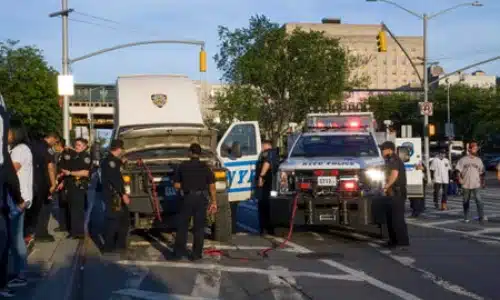 Rideshare accidents can leave passengers, drivers, pedestrians, and other motorists facing unexpected injuries and confusing insurance questions. In Brooklyn, these crashes commonly occur on busy corridors like Atlantic Avenue, Flatbush Avenue, and near major destinations where Uber and Lyft pickups are constant. A Brooklyn rideshare accident lawyer can help determine what legal and insurance options may be available after a collision.
Unlike standard car accident claims, rideshare cases depend on the driver’s status in the app at the time of the crash, which affects the insurance coverage that applies. Early access to trip records, app data, and other evidence can be critical to identifying the responsible parties and pursuing compensation.
Why Rideshare Accident Claims Are Different From Other Car Accidents
A crash involving an app-dispatched car raises a question an ordinary fender-bender never does: whose policy answers for it?
How Uber and Lyft Accidents Can Happen in Brooklyn
Injuries are not limited to people in the back seat. Uber accident claims in Brooklyn come from pedestrians in crosswalks, cyclists in bike lanes, and drivers of other cars, alongside rideshare passenger injury claims brought by riders themselves.
Why Liability Is Often More Complicated
Liability rests on the same negligence principles that drive ordinary motor vehicle collision cases, but the list of defendants is longer. Transportation Network Company (TNC) accident liability New York questions can reach the driver, the vehicle owner, the affiliated base, the platform, and any other motorist who contributed. Every Uber and Lyft driver in Brooklyn is also a TLC-licensed driver, adding a layer of city regulation.
What to Do After a Brooklyn Rideshare Accident
The first two weeks shape most of what follows. Evidence disappears quickly, and one deadline arrives sooner than people expect.
Steps That Can Help Protect Your Claim
- Seek medical treatment immediately. Get evaluated the same day at Maimonides Medical Center, Brookdale University Hospital Medical Center, NYU Langone Hospital-Brooklyn, or another nearby emergency department to document your injuries.
- Save your rideshare trip information. Screenshot the trip details before the app clears the ride history or updates the trip information.
- Report the crash to law enforcement. New York Police Department (NYPD) precincts throughout Brooklyn accept crash reports, creating an official record of the incident.
- File Form MV-104 when required. Drivers involved in an injury crash must submit form MV-104 within 10 days of the collision.
- Apply for No-Fault benefits promptly. No-Fault benefits generally must be requested within 30 days, or the insurance carrier may deny payment of eligible medical bills.
Common Mistakes That Can Affect Your Case
- Giving a recorded statement too soon. Speaking with an insurer before understanding the full coverage picture can lock you into a version of events that may later affect your claim. Statements made early may also be interpreted differently once additional facts or injuries come to light.
- Delaying medical treatment. Gaps in treatment may give insurers an opportunity to argue that your injuries were minor or unrelated to the accident. Prompt medical care also creates records that help document the nature and extent of your injuries.
- Posting about the accident on social media. Photos, comments, or updates may be used to challenge the severity of your injuries or your account of the incident. Even seemingly harmless posts can be taken out of context during an insurance claim or lawsuit.
- Accepting a quick settlement offer. Early offers often do not account for ongoing medical care, lost income, or the full value of your damages. Once you accept a settlement, you may be unable to seek additional compensation for related losses later.
New York Laws That Shape Rideshare Accident Claims in Brooklyn
Three rules shape most Brooklyn cases: the filing deadline, the No-Fault system that pays first, and the serious injury threshold New York applies before anyone can seek pain and suffering.
Filing Deadlines and No-Fault Insurance Requirements
Most injury suits must be filed within three years under CPLR 214(5), while a claim touching a City of New York vehicle needs a Notice of Claim within 90 days under General Municipal Law 50-e and suit within a year and 90 days under 50-i.
No-Fault insurance pays first regardless of blame, and No-Fault PIP benefits rideshare passengers, pedestrians, and cyclists alike. Basic personal injury protection (PIP) runs to $50,000 statewide, though TLC-licensed vehicles in Brooklyn carry $100,000.
How Comparative Fault May Affect Compensation
New York applies pure comparative negligence under CPLR 1411, so a share of the blame does not end a claim. A pedestrian found 70% at fault for crossing mid-block still recovers 30% of proven damages, which matters in Brooklyn, where crashes rarely have one clean cause. Evidence such as traffic camera footage, witness statements, police reports, and vehicle data can all influence how fault is ultimately assigned.
How Insurance Coverage Works After a Rideshare Accident
The rideshare insurance coverage New York requires depends entirely on where the trip began. A pickup in Brooklyn follows a different rulebook than the same ride in Westchester.
Why the Driver’s App Status Matters
Outside New York City, Vehicle and Traffic Law Article 44-B ties rideshare insurance coverage New York mandates to the driver phase: the personal policy when the app is off, 75/150/25 while waiting for a request, and $1.25 million once a trip is accepted.
Trips beginning in Brooklyn sit outside that statute, as the state Department of Financial Services confirms. Here, the car is a for-hire vehicle under app-based transportation rules set by the NYC Taxi and Limousine Commission, and its commercial policy runs continuously.
How Insurance Coverage Is Determined
The TLC minimum for a Brooklyn for-hire vehicle is $100,000 per person and $300,000 per occurrence, above the personal auto floor but short of the upstate figure. Resolving Lyft accident injury cases and Uber claims means identifying the base, the fleet policy, and any excess layer before a demand letter goes out and settlement negotiation begins.
Disputes that survive move to Kings County Supreme Court at 360 Adams Street above $50,000, or the Civil Court of the City of New York, Kings County below it, with appeals to the Second Department.
Establishing a Strong Rideshare Accident Claim
Coverage questions get answered with evidence, not argument, and most of that evidence is time-sensitive.
Gathering Evidence to Support Your Claim
The app record is the spine of the case: trip ID, driver identity, timestamps, and route. Around it sit the police report, scene photographs showing the T-plate and any decal, witness contacts, and the medical file. Claims by people on foot lean harder on independent proof, which is why pedestrian injury representation often begins by canvassing for camera footage.
Documenting Your Damages
Bills and pay records establish the economic side, but proof of limitation over time carries more weight: therapy notes, imaging, and a physician account of what you can no longer do. Such records matter most when the serious injury threshold New York requires is in dispute.
Recovering Compensation After a Rideshare Accident
What a claim is worth turns on the injuries, the proof, and the coverage actually available.
Financial and Personal Losses That May Be Recoverable
Claims are built from economic and non-economic damages: medical costs, lost income, future care, and household help on one side, pain and suffering on the other. The second opens only when the injury clears the serious injury threshold New York sets in Insurance Law 5102(d), which lists nine categories including fracture, significant disfigurement, permanent consequential limitation, and the 90/180-day disability.
How an Attorney Can Help With Your Claim
Representation mostly buys sequencing, meaning the right step taken before a window closes.
- Investigating and locating coverage. Identifying the base, the fleet policy, and any excess layer determines what a claim can reach. That analysis differs for a Brooklyn pickup and a trip that began elsewhere.
- Preserving evidence early. App data, maintenance records, and camera footage have short lifespans. Preservation letters go out before anything is overwritten.
- Handling the insurers. Several carriers may be involved, each with a reason to point elsewhere. Our team manages those communications so you are not negotiating from a hospital bed.
- Litigating when talks stall. Filing suit is sometimes the only way to compel disclosure of policies and records. TLC violation history may become discoverable once a case is in litigation.
Local Legal Representation in Brooklyn & the Corridors Serving It
A rideshare crash in Brooklyn can involve multiple insurance policies depending on whether the driver was offline, waiting for a ride request, or transporting a passenger. At the CEO Lawyer Personal Injury Law Firm, we handle Uber and Lyft claims throughout Kings County, applying New York’s No-Fault and rideshare insurance laws and pursuing civil actions in Supreme Court, Kings County when appropriate.
New York City’s separate TLC regulations may also affect coverage for rides originating within the city. We assist clients with rideshare accident claims involving locations such as:
- Atlantic Avenue and Flatbush Avenue corridor. Rear-end collisions, dooring crashes, and pedestrian impacts in Downtown Brooklyn, Fort Greene, Prospect Heights, and Flatbush, where frequent pickups and drop-offs can increase collision risks.
- BQE, Belt Parkway, and Verrazzano approaches. High-speed crashes involving merging traffic, sudden stops, and distracted rideshare drivers on Brooklyn’s busiest highway corridors.
- Barclays Center and Downtown Brooklyn. Pickup and drop-off collisions, pedestrian strikes, and congestion-related crashes during concerts, sporting events, and periods of heavy rideshare activity.
- Williamsburg, Park Slope, and Ocean Parkway. Passenger, cyclist, and pedestrian injuries along Bedford Avenue, 7th Avenue, and Ocean Parkway.
Proudly Serving Our Neighboring Communities
Whether your crash happened near Barclays Center, on Atlantic Avenue, along the BQE, or elsewhere in Williamsburg, Park Slope, Bay Ridge, Bedford-Stuyvesant, Crown Heights, Flatbush, Sunset Park, or Brooklyn Heights, we represent rideshare accident victims throughout Kings County.
We work to obtain available rideshare trip records, app data, GPS information, and other relevant electronic evidence, request NYPD crash reports when appropriate, address applicable No-Fault and serious injury requirements, and pursue claims through Supreme Court, Kings County when appropriate.
Brooklyn Rideshare Accident FAQ
Three questions come up more than any others, and broader answers sit in our rideshare accident FAQ.
How long do I have to file a rideshare accident claim in New York?
In most rideshare accident cases, you have three years from the date of the injury to file a personal injury lawsuit. However, New York’s No-Fault application generally must be submitted within 30 days of the crash, and claims involving a City of New York vehicle typically require a Notice of Claim within 90 days.
Because different deadlines may apply depending on the circumstances, acting promptly is important.
Can I recover compensation if I was partly at fault for the accident?
Yes. New York follows a pure comparative negligence rule, so your compensation is reduced by your percentage of fault rather than eliminated altogether. For example, someone found 60% responsible may still recover 40% of their proven damages.
Issues such as seatbelt non-use, distracted behavior, or mid-block crossing are common arguments that can affect fault allocation.
Which insurance policy applies after an Uber or Lyft accident?
For a trip that began in Brooklyn, the for-hire commercial policy covering the vehicle generally applies, regardless of the driver’s app status. The rideshare insurance coverage New York requires under its Transportation Network Company (TNC) law, including the $1.25 million coverage limit, applies only to trips that originate outside the five boroughs.
Determining which policy applies depends on where the trip began and the specific facts of the accident.
Understanding Your Legal Options With a Rideshare Accident Law Firm Serving Brooklyn
Every rideshare accident presents different questions about insurance coverage, fault, and the claims process. Reviewing the details of your trip, the parties involved, and the available documentation can help clarify how New York law may apply to your situation.
A review of a Brooklyn rideshare claim generally covers which insurance coverage may apply, the filing deadlines that could affect the claim, and the documentation that may be important based on the circumstances of the crash.