


Quick Summary: Long Island Electric Scooter Accident Lawyer
- Most personal injury claims must be filed within three years under CPLR 214(5).
- E-scooter riders are excluded from No-Fault benefits under Insurance Law 5103.
- Pure comparative negligence allows recovery, with compensation reduced by the rider’s fault.
- Important evidence includes police reports, medical records, photographs, witnesses, and surveillance footage.
- Liability may involve motorists, rental companies, manufacturers, insurers, or government entities.
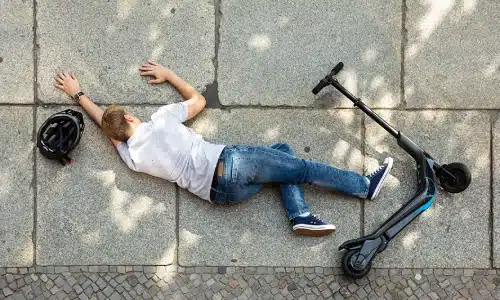 Electric scooters are increasingly common across Long Island, from downtown Huntington Village to the Long Island Expressway service roads. Riders struck near LIE exits, hit in crosswalks in Patchogue or Hempstead, or thrown by potholes may suffer severe electric scooter crash injuries. The CEO Lawyer Personal Injury Law Firm represents injured clients in Long Island from its Queens office.
Rental e-scooters across Nassau and Suffolk municipalities also create risks that differ from ordinary car accidents. Anyone injured by electric scooter use may face traumatic brain injury, fractures, spinal trauma, and complex insurance rules. Severe cases may require treatment at Stony Brook University Hospital, Suffolk County’s Level I trauma center, while an electric scooter accident lawyer serving Long Island helps riders understand their claims and filing deadlines.
Common Electric Scooter Accident Scenarios That Lead Riders to Seek Legal Help
Many e-scooter injury cases involve collisions on LIE service roads and exit ramps, Sunrise Highway through Babylon and Islip, or Hempstead Turnpike, where a Long Island Expressway accident may cause severe injuries. Other incidents include dooring crashes in downtown Huntington Village, road defects, debris, rental scooter liability, equipment malfunctions, and collisions on shared pathways.
Because riders have little physical protection, fault and insurance questions often overlap with Long Island bicycle accident claims. The circumstances of the crash help determine who may be responsible and which insurance coverage may apply.
First Steps After a Crash and the Early Mistakes That Can Undermine a Claim
What a rider does immediately after an e-scooter crash on Long Island can affect both medical recovery and the strength of a future claim. Prompt treatment helps identify injuries, while preserving e-scooter accident evidence can prevent insurers from disputing how the crash occurred or whether the injuries were serious.
Important first steps include:
- Seek prompt medical care and follow all treatment recommendations.
- Photograph the scene, road conditions, injuries, and damaged scooter.
- Preserve the scooter and request surveillance footage before it is erased.
- Obtain witness information and the responding police report.
Common early mistakes include:
- Giving a recorded statement to an insurance adjuster too soon.
- Posting crash details, photos, or recovery updates on social media.
- Allowing unexplained gaps in medical treatment.
- Accepting an early settlement before the injuries are fully understood.
Surveillance recordings, damaged equipment, witness memories, and roadway conditions may disappear or change quickly. Acting carefully during the first days after a crash helps preserve important proof, document the treatment timeline, and protect the rider’s ability to pursue compensation from the responsible parties.
How New York’s Legal Framework Shapes an E-Scooter Injury Case
Electric scooter accident claims differ from standard auto cases. CPLR 214(5) generally allows three years to file, while pure comparative negligence under CPLR 1411 permits recovery even when a rider shares fault, with damages reduced proportionally.
Under Insurance Law 5103, the No-Fault PIP coverage exclusion means riders generally pursue the at-fault party directly rather than receive PIP benefits. When seeking pain and suffering from a motorist, the Insurance Law 5102(d) serious injury categories and the serious injury threshold New York applies may determine whether non-economic damages are available.
New York Traffic Laws That Govern E-Scooter Operation and Liability
VTL 114-e defines electric scooters, while VTL 1282 generally limits riders to age 16 or older, speeds of about 15 mph, and roads posted at 30 mph or less. Sidewalk use is prohibited unless locally authorized, and VTL 1238 and 1286 require helmets for riders ages 16 and 17.
Nassau and Suffolk municipalities may impose additional restrictions, so the applicable electric scooter and bicycle operation rules depend on where the crash occurred. Violations by a rider or motorist may affect fault.
Electric Scooter Liability: Identifying Who May Be Responsible
Electric scooter liability may involve an at-fault driver, rental company, manufacturer, or government entity. Brake, throttle, or structural failures may create rental scooter liability, while dangerous public road conditions may require a Notice of Claim within 90 days under General Municipal Law 50-e and a lawsuit within one year and 90 days under GML 50-i.
Claims involving riders struck in crosswalks or near sidewalks may raise issues similar to pedestrian injury claims on Long Island. Identifying all responsible parties and available insurance coverage helps prevent the claim from relying on one limited policy.
How Insurance Carriers Handle Electric Scooter Accident Claims
The at-fault driver’s liability policy is usually the primary source of recovery in electric scooter accident claims. If the policy limits are insufficient, Supplementary Underinsured Motorist (SUM) coverage may apply, although disputes are often resolved through arbitration.
For crashes involving an unidentified, uninsured, or hit-and-run driver, compensation may be available through MVAIC. A documented demand letter and settlement negotiation can help challenge low offers and support a fair evaluation of the rider’s losses.
Evidence and Documentation That Strengthen an E-Scooter Injury Case
Strong e-scooter accident evidence helps establish fault, connect the injuries to the crash, and respond to insurance disputes. Police reports may be requested from the Nassau County Police Department, Suffolk County Police Department, or the responding village or town agency and are often available within five to ten business days.
Important evidence may include:
- The police accident report
- Photos of the scene, roadway, injuries, and damaged scooter
- Witness names, contact information, and statements
- Medical records documenting the injury and treatment timeline
- Traffic-camera or nearby surveillance footage
- Scooter maintenance or rental records when equipment failure is suspected
Surveillance footage may be overwritten, roadway conditions may change, and witness memories can fade. Preserving this documentation quickly helps build a stronger record before important proof is lost.
Damages Available After an Electric Scooter Accident
E-scooter injury compensation may include economic damages for medical bills, future care, lost wages, and reduced earning capacity. Non-economic damages may cover pain and suffering, loss of enjoyment of life, and permanent scarring. Punitive damages may apply in rare cases involving reckless or grossly negligent conduct.
Electric scooter crash injuries may include traumatic brain injury, spinal damage, fractures, and serious road rash and orthopedic injuries treated at facilities such as Stony Brook University Hospital, Nassau University Medical Center, and North Shore University Hospital. Because federal micromobility safety research notes gaps in national data, documenting current injuries and future losses is important before resolving a claim.
When Working With an Attorney Makes a Difference and What Comes Next
The No-Fault PIP coverage exclusion, serious injury threshold New York applies, and disputes involving multiple insurers can complicate electric scooter accident claims. A legal team may communicate with carriers, preserve evidence, document medical treatment, and handle the demand letter and settlement negotiation while the rider focuses on recovery.
If settlement is not possible, Nassau County claims may proceed in Nassau County Supreme Court in Mineola, while Suffolk County cases may be filed in Suffolk County Supreme Court in Central Islip or Riverhead. Appeals are generally heard by the Appellate Division, Second Department. The legal team serving Long Island can manage the claim from investigation through litigation when necessary.
Local Legal Representation Across Long Island & the Nassau–Suffolk Area
Electric scooter accident claims may involve severe injuries, disputed insurance coverage, defective equipment, and shortened filing deadlines. The CEO Lawyer Personal Injury Law Firm represents injured riders throughout Long Island from its Queens office and helps clients understand their options under New York law.
Nassau County cases may proceed in Nassau County Supreme Court in Mineola, while Suffolk County matters may be filed in Suffolk County Supreme Court in Central Islip or Riverhead. Smaller claims under $15,000 may qualify for county district court, and appeals generally go to the Appellate Division, Second Department. The legal team serving Long Island preserves e-scooter accident evidence, evaluates insurance coverage, and investigates incidents involving:
- LIE service roads and exit ramps: Merging or turning vehicles may cause a serious Long Island Expressway accident.
- Sunrise Highway and Hempstead Turnpike: Heavy traffic and frequent turns increase the risk of electric scooter crash injuries.
- Huntington, Patchogue, Montauk Highway, Jericho Turnpike, and Long Beach: Congestion, roadway debris, and pedestrian activity may affect electric scooter liability.
- Equipment failures: Brake, throttle, or structural defects may create rental scooter liability.
- Municipal hazards: Claims involving potholes or defective signals may require a Notice of Claim within 90 days under GML 50-e and suit within one year and 90 days under GML 50-i.
Proudly Serving Our Neighboring Communities
For crashes across Nassau and Suffolk Counties, the legal team may obtain police reports, preserve surveillance footage, inspect the scooter, collect medical records, and identify liability, SUM, or MVAIC coverage.
The team also explains how the No-Fault PIP coverage exclusion, Insurance Law 5102(d) serious injury categories, pure comparative negligence CPLR 1411, and municipal deadlines may affect liability and e-scooter injury compensation.
Long Island Electric Scooter Accident FAQ
How long do I have to file an electric scooter accident claim in New York?
For most injuries, New York’s statute of limitations for personal injury under CPLR 214(5) gives you three years from the date of the crash to file suit. The deadline can be shorter in specific situations, most importantly, when a government entity is involved; a Notice of Claim is due within 90 days. Because a missed deadline usually ends a case permanently, confirming the exact date that applies to your situation early is essential.
What happens if I was partially at fault for my e-scooter crash?
You can still recover. Under New York’s pure comparative negligence rule, your compensation is reduced by your percentage of fault rather than barred. If you were found 20 percent responsible, an award would be lowered by that share. Insurers often try to assign riders more blame than the facts support, so careful documentation of how the crash happened carries real weight.
Does New York No-Fault insurance cover electric scooter accidents?
No. Under Insurance Law 5103, e-scooters are excluded from New York’s No-Fault system, so PIP benefits are not available to riders the way they are to car occupants. Instead, you pursue the at-fault party’s liability coverage and, when your injuries meet the serious injury threshold, a claim for pain and suffering against the motor vehicle operator. This exclusion is one of the most consequential and least understood parts of these cases.
Reviewing the Options With a Personal Injury Law Firm Serving Long Island
Every e-scooter crash is different, and the right next step depends on the specific facts, where it happened, who was involved, and how serious the injuries are. Understanding how New York’s No-Fault exclusion, comparative negligence rule, and serious injury threshold apply to a particular situation often separates a claim that stalls from one that reflects the full harm a rider suffered.
The CEO Lawyer Personal Injury Law Firm serves injured riders throughout Long Island from its Queens office. Speaking with a legal team that knows the local courts and the New York framework can help an injured rider weigh their options and decide how to move forward while focusing on recovery.