



Quick Summary: Cleveland Commercial Truck Accident Claims
- Cleveland truck accidents often involve multiple parties and complex liability.
- These cases require detailed evidence and involve layered insurance and regulations.
- Ohio’s comparative fault rule affects eligibility and reduces compensation.
- Evidence like driver logs and black box data is critical in determining fault.
- Acting quickly helps preserve evidence and protect legal options.
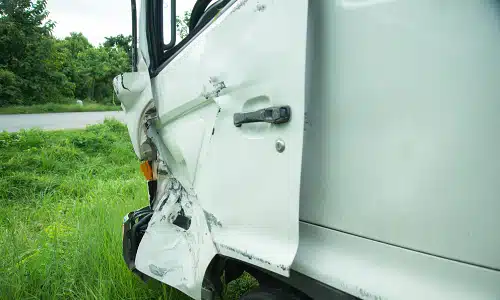 Cleveland is a major transportation and industrial hub in northern Ohio, with heavy commercial truck traffic flowing through key corridors like I-71, I-77, I-90, and I-480. These highways connect the city to regional distribution networks, manufacturing centers, and surrounding states, making them critical routes for freight movement.
At the same time, they are among the most common locations for serious truck-related collisions.
Beyond the interstates, commercial vehicles frequently travel through high-activity areas near Cleveland Hopkins Airport, the Port of Cleveland, and surrounding industrial zones. Delivery trucks, tractor-trailers, and other commercial vehicles often move between warehouses, rail yards, and local businesses, increasing congestion at intersections and on access roads.
These conditions can contribute to collisions involving large commercial vehicles, particularly during peak traffic and shipping hours.
When a crash involves a commercial truck, the situation is often more complex than a typical vehicle accident. The size and weight of these vehicles, combined with multiple layers of responsibility and regulation, can make determining fault and understanding what comes next more complicated. Speaking with a lawyer who handles Ohio commercial truck accident cases can help explain, in general terms, how these laws may apply to different situations.
Understanding how Cleveland commercial truck accident claims work under Ohio law can help clarify what may follow after a collision.
The Role of a Cleveland Commercial Truck Accident Attorney
A Cleveland commercial truck accident lawyer focuses on how Ohio law applies to crashes involving large commercial vehicles, including semi-trucks, delivery vehicles, and freight carriers. Those involved in semi-truck collisions may benefit from working with a Cleveland semi-truck accident lawyer familiar with the federal regulations governing these vehicles.
Mohammad Abdallah, licensed in Ohio, works with individuals navigating truck accident claims in Cleveland and throughout Cuyahoga County. His approach involves analyzing how liability may be apportioned among drivers, trucking companies, and third parties while considering the regulatory framework governing commercial trucking.
Compared to standard vehicle collisions, these cases often require deeper investigation due to the involvement of commercial operations and layered insurance coverage. Working with a Cleveland personal injury lawyer may help explain how different types of injury-related cases are evaluated under Ohio law.
Common Commercial Truck Accident Scenarios in Cleveland
Commercial truck accidents in Cleveland often reflect the city’s role as a major transportation and industrial hub, where highways, freight routes, and urban delivery zones intersect. The combination of heavy commercial traffic and dense local movement creates several recurring accident patterns.
Highway Collisions on Major Interstates
Highway collisions are common along corridors like I-71, I-77, I-90, and I-480, where tractor-trailers and 18-wheelers travel at higher speeds and cover long distances. These crashes may occur due to sudden congestion, merging traffic near interchanges, or reduced visibility caused by weather or road conditions.
Because commercial trucks require longer stopping distances and have larger blind spots, even minor traffic disruptions can have serious consequences. National crash data tracked by the National Highway Traffic Safety Administration (NHTSA) highlights the risks associated with high-speed collisions involving large trucks.
Multi-Vehicle Crashes in Congested Traffic
Multi-vehicle crashes often develop in high-traffic areas, particularly near downtown Cleveland interchanges and busy commuter routes. A single truck collision can trigger a chain reaction involving multiple vehicles, especially during peak travel times.
Determining how each vehicle contributed to the crash may require accident reconstruction and careful review of available evidence.
Delivery Truck Incidents in Urban Areas
Delivery truck incidents frequently occur in downtown Cleveland, residential neighborhoods, and commercial districts. These areas involve tighter streets, frequent stops, and increased interaction with pedestrians and local traffic.
Collisions may happen when trucks are turning, backing into loading zones, or navigating tight spaces where visibility and maneuverability are limited.
Navigating Post-Incident Commercial Truck Accident Cases With a Cleveland Law Firm
After a truck accident, individuals may encounter several challenges that can affect how a claim develops.
Delayed Injuries and Medical Documentation
Some injuries may not appear immediately after a crash. Symptoms such as neck pain, back issues, or internal injuries can develop over time. Delays in treatment may complicate how injuries are connected to the accident.
Missed Work and Financial Pressure
Truck accidents can disrupt employment and create financial pressure through lost wages, reduced earning capacity, and ongoing medical expenses. These losses may play a role in evaluating damages in Ohio truck accident claims.
Insurance Company Interactions
Insurance representatives may contact individuals shortly after a crash to request recorded statements, discuss fault, or ask about injuries before the full extent of symptoms is known. Providing information too early may affect how a claim is later assessed.
Unclear Liability
Commercial truck accidents may involve the truck driver, trucking company, maintenance providers, cargo loading companies, or other third parties. Determining liability can require reviewing contracts, employment relationships, maintenance records, cargo documentation, and other evidence.
Understanding Ohio Truck Accident Laws and Fault Rules
Truck accident claims in Cleveland may be handled through courts in Cuyahoga County as part of Ohio’s broader state court system. Where a case is filed often depends on where the accident occurred and which parties are involved.
Road design, maintenance, and traffic patterns in Cleveland may also be relevant when evaluating accident causation. Infrastructure and roadway data provided by the Ohio Department of Transportation can offer additional context in these cases.
How Ohio Law Applies to Cleveland Truck Accidents
Commercial truck accidents in Cleveland are governed by Ohio personal injury laws and are typically handled through the Cuyahoga County court system. These cases often involve collisions on major freight routes like I-71, I-77, I-90, and I-480, where multiple vehicles and commercial entities may be involved.
As a result, determining how Ohio law applies can depend on the specific facts of the accident, including where it occurred and who was involved.
Ohio’s Modified Comparative Fault Rule
Ohio follows a modified comparative fault system, which plays a central role in truck accident claims. Under this rule:
- An injured person may recover damages only if their share of fault is not greater than 50%.
- Any compensation is reduced based on their percentage of responsibility.
- If their share of fault is greater than 50%, recovery is generally not permitted.
This means that even partial responsibility can affect the outcome of a claim.
Application in Cleveland Truck Accident Cases
In Cleveland commercial truck accidents, fault is often shared among multiple parties. Responsibility may involve the truck driver, the trucking company, third-party businesses, or other drivers. Because of this, assigning fault percentages may require reviewing evidence such as driver logs, black box data, and accident reports.
Why Comparative Fault Matters
Comparative fault can significantly influence how a claim is evaluated. A lower percentage of fault may still allow recovery, but it reduces the total compensation. Understanding how Ohio’s comparative fault rules apply helps clarify how liability and damages are determined in Cleveland truck accident cases.
Liability in Cleveland Commercial Truck Accidents
Determining liability in a Cleveland commercial truck accident often involves looking at several parties connected to the truck’s operation, rather than focusing on a single individual. Responsibility may be shared depending on how each party contributed to the conditions that led to the crash.
Potentially responsible parties may include the truck driver, trucking company, maintenance providers, cargo loading companies, manufacturers, or other entities involved in the truck’s operation. Assessing Ohio trucking accident liability generally requires examining each party’s role and whether their actions contributed to the collision.
Assessing Ohio trucking accident liability generally requires a closer review.
Evidence Considerations in Truck Accident Cases
Evidence in commercial truck accident cases can be time-sensitive and may become unavailable over time. Early documentation can make it easier to understand how the accident occurred and who may be responsible.
Common evidence risks include:
- Missing driver logs: Records tracking hours of service may be incomplete or unavailable, making it harder to evaluate driver fatigue or regulatory compliance.
- Lost electronic data: Black box or electronic control module data can be overwritten if not secured promptly.
- Lack of witnesses: Fewer or unreliable witnesses may make it difficult to confirm key details about the crash.
These risks can affect how liability is assessed and highlight the importance of early documentation in truck accident claims.
Types of Losses in Ohio Truck Accident Claims
The impact of a truck accident is often measured in both financial and personal terms. Losses may include medical costs for emergency care, hospitalization, rehabilitation, and ongoing treatment, as well as lost wages and reduced earning capacity.
Serious truck accidents may also result in long-term effects such as chronic pain, physical limitations, or changes to a person’s ability to work and participate in everyday activities. These factors may be considered when evaluating damages in Ohio truck accident claims.
Timing Considerations in Cleveland Truck Accident Cases
Timing can affect several aspects of a truck accident claim. Driver logs and electronic data may become unavailable, witnesses’ memories may fade, and delays in medical treatment can create questions about the connection between an injury and the crash. Insurance companies may also form early positions about fault before all available evidence has been reviewed.
Public safety initiatives emphasize the importance of timely reporting and documentation after serious crashes. Guidance from the Ohio Governor’s Highway Safety Office reflects how early action can help preserve evidence and improve overall roadway safety awareness.
In Ohio, truck accident claims are generally subject to a statute of limitations, which sets a deadline for filing a case. Waiting too long can affect both legal options and the availability of evidence.
Insurance and Liability Complexities
Commercial truck accidents may involve multiple insurance policies, including commercial liability, cargo, and umbrella coverage. Insurers may also dispute responsibility, particularly when questions arise about whether a driver was an employee or independent contractor.
Determining how coverage applies may require reviewing the trucking company’s relationships, insurance policies, and the circumstances of the collision. Determining how coverage applies can take time and may require detailed analysis. For cases involving both trucks and passenger vehicles, a Cleveland car accident lawyer may also provide insight into overlapping liability issues.
Legal Representation for Truck Accident Victims in Cleveland and the Flats Area
Truck traffic is part of daily life in Cleveland. From the interstate system surrounding downtown to the industrial areas along the Cuyahoga River, commercial vehicles move through the city at all hours carrying freight between warehouses, manufacturing facilities, rail connections, and the Port of Cleveland.
At The CEO Lawyer Personal Injury Law Firm, we understand the local roadways where serious truck accidents frequently occur, including:
- The I-90, I-71, and I-77 Merge Areas Near Downtown: Several major interstates converge near the city center, creating heavy traffic, sudden slowdowns, and challenging lane changes for both passenger vehicles and commercial trucks. Multi-vehicle crashes involving tractor-trailers are not uncommon when congestion builds during morning and evening commutes.
- I-480 Near Cleveland Hopkins International Airport: This corridor carries significant truck traffic serving nearby warehouses, distribution facilities, and airport-related businesses. High traffic volumes, frequent merging, and changing traffic conditions can contribute to serious collisions involving large commercial vehicles.
- The Port of Cleveland and The Flats: Commercial trucks regularly travel between port facilities, industrial properties, and freight terminals throughout this area. Drivers navigating unfamiliar streets, tight turns, and busy industrial routes can create risks for nearby motorists.
- Brookpark Road and Nearby Industrial Routes: Delivery trucks, box trucks, and tractor-trailers frequently use Brookpark Road to access manufacturing facilities, business parks, and logistics operations. Rear-end crashes, turning accidents, and intersection collisions often occur where local traffic mixes with commercial vehicles making frequent stops.
Truck accident cases often involve more than the driver alone. Depending on the circumstances, responsibility may extend to trucking companies, maintenance providers, cargo handlers, or other parties connected to the truck’s operation. Understanding how those relationships affect liability is often a key part of investigating a serious crash.
Proudly Serving Communities Throughout Greater Cleveland
Whether a collision happens on I-90 near Lakewood, along I-480 through Parma, or on a commercial delivery route serving businesses in Strongsville, truck accidents can leave families facing serious injuries, mounting expenses, and uncertainty about what comes next.
Our firm serves clients throughout Cleveland and surrounding communities, including Lakewood, Parma, Strongsville, Brooklyn, Euclid, Garfield Heights, and other areas across Cuyahoga County. We are familiar with the highways, freight routes, and industrial areas that often play a role in commercial truck accident investigations.
When injuries require ongoing medical care, many accident victims receive treatment through major local healthcare providers such as Cleveland Clinic and MetroHealth. Our team works to help clients focus on recovery while navigating the legal and insurance issues that frequently follow a serious truck collision.
Cleveland Commercial Truck Accident Claims FAQ
How does Ohio’s comparative fault rule apply to truck accident claims?
An individual may recover damages if their share of fault is not greater than 50%, with compensation reduced based on their percentage of responsibility.
This means that even partial responsibility can directly affect the amount of compensation available in a claim. In multi-vehicle truck accidents, determining each party’s percentage of fault often requires a detailed review of evidence and accident reconstruction.
Who may be responsible for a commercial truck accident in Cleveland?
Liability may involve multiple parties, including the truck driver, trucking company, maintenance providers, cargo loaders, or manufacturers, depending on the circumstances.
Each party’s role in the operation, maintenance, or loading of the truck may influence how responsibility is assigned. In some Cleveland cases, liability may be divided among several entities based on their contribution to the accident.
How do insurance companies investigate trucking accidents?
Investigations often include reviewing driver logs, black box data, maintenance records, accident reports, and compliance with federal trucking regulations.
Insurance companies may also analyze roadway conditions, driver history, and company safety practices. These investigations are often used to determine fault, evaluate damages, and assess how multiple insurance policies may apply.
What is the deadline to file a truck accident claim in Ohio?
Truck accident claims in Ohio are generally subject to a statute of limitations, which sets a deadline for filing. Delays can affect both legal eligibility and evidence availability.
Filing within the required timeframe is important to preserve the ability to pursue a claim through the Ohio court system. Waiting too long may also make it more difficult to gather documentation and establish how the accident occurred.
Discuss Your Next Steps with a Truck Accident Attorney Serving Cleveland
Truck accidents in Cleveland often involve a combination of legal, medical, and insurance considerations. From highway collisions on I-90 or I-77 to delivery-related incidents near industrial zones and the Port of Cleveland, these cases require a careful look at how Ohio law applies.
Reviewing available documentation, understanding comparative fault, and determining how liability may be shared can help clarify the situation. That’s why working with a truck accident law firm can help individuals better understand how these elements come together.
If you are evaluating your situation after a truck accident, taking time to understand how Ohio law applies and how evidence and timing may affect your claim can provide a clearer path forward.