

Dekalb County is home to multiple bike trails, and its county seat, Decatur, was named the most bicycle-friendly community in Georgia due to its infrastructure improvements for cyclists. There is some danger, however, because while some cyclists take advantage of attractions like the Trolley Line Trail or the South Peachtree Creek Trail, many ride on the roads.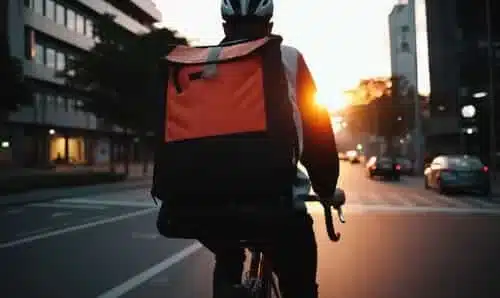
Motorists must be responsible for driving carefully and watching out for bicyclists because a reckless driver can quickly cause a severe bicycle accident, necessitating the assistance of a Dekalb County personal injury attorney. Bicycle-car collisions are especially dangerous for the cyclist, who lacks protective elements found in cars like seatbelts and airbags.
Frequently, bike riders experience significant injuries, including broken bones, soft tissue injuries, internal injuries, facial fractures, eye injuries, head and traumatic brain injuries, and back and spinal cord injuries. These often have long recovery periods and require continued medical care for weeks or months, while the injured rider may be unable to work due to their injuries.
How Can a Dekalb County Bicycle Accident Attorney Help?
When you’re dealing with pain, doctor’s appointments, medical bills, and a loss of income after a bicycle accident, you need help recovering your damages from the at-fault driver’s car insurance company.
The insurance adjuster will immediately look for reasons to turn down your claim or undervalue your damages, leaving you struggling to pay your bills. The driver may also claim you were at fault in the accident, and the insurance adjuster will likely agree with them.
A Dekalb County bicycle accident attorney can help you fight for your right to fair compensation. We’ll review your case, ask about your injuries and losses, and accurately calculate the value of your claim.
We’ll file a claim with the insurance company and negotiate a favorable settlement to cover your needs. With our help, you’ll never have to argue with the insurance company or beg to get essential medical bills paid.
We’ll keep you up to date as we work on your case, and when you’re ready to settle, we’ll review the agreement and answer any questions you have before signing.
What Causes Bicycle Accidents?
There are a number of reasons why cars collide with bicycles. One of the most common issues is that the driver doesn’t see the cyclist, although there can be multiple causes for this, distracted driving, poor visibility, the driver’s failure to look before turning, etc.
If you regularly ride a bicycle, you can’t prevent every instance of a driver overlooking you, but you can reduce the risk by making yourself as visible as possible. One way to do so is by wearing bright or reflective clothing or adding reflective patches to your clothes and bike.
You should also regularly check your bike’s front and back lights to ensure they’re working and meet state requirements, the front light should be white and visible 300 feet ahead, and the backlight should be red and visible for 300 feet.
Here are some other common causes of car/bicycle collisions:
Not Leaving Enough Space or a “Buffer”
We’ve seen many accidents that happened because the vehicle driver got too close to the bicyclist. The driver may have thought they had enough space to pass, but for some reason, they did not, and they sideswiped the cyclist.
Georgia law requires passing vehicle drivers to give bicyclists a berth of three feet between the vehicle and the bike. If you can’t allow that much space, it’s not safe to pass.
Speeding
Speeding increases a driver’s risk of accidents in general. The faster you’re going, the harder it is to stop in time if you suddenly see a bicycle in your path.
Aside from following posted speed limits, it’s also a good idea to slow down if you see a bicyclist on or near the road.
Unsafe Lane Changes or Turns
This often comes back to the problem of the driver failing to see the bicyclist. In these situations, the driver may move into the biker’s lane thinking it’s empty when it really isn’t.
When changing lanes, always turn your head and check your blind spot to be sure the lane is empty before moving over.
A similar issue happens when a driver pulls out of a driveway or turns onto a different street without realizing a bicycle is coming their way. Bikes are small and harder to see than motor vehicles, sometimes even when the cyclist tries to be seen.
Before turning, always look in both directions, including glancing down the road for any sign of a bicyclist or pedestrian. You should do this even with a green light at an intersection.
Running Red Lights and Stop Signs
It’s easy to decide you can run a red light or stop sign if no one’s coming. The problem is that it’s also easy to miss someone coming, especially someone on a bicycle.
Always come to a complete stop at stop signs/red lights and look both ways before proceeding.
Failure to Yield or Confusion About Who Has the Right of Way
The bicyclist and the car driver can fail to yield in different situations. Most people who fail to yield genuinely believe they have the right of way, but confusion on this point has caused numerous accidents.
It’s helpful to understand that Georgia law defines bicycles as vehicles, and in most situations, they have the right of way wherever a car would have the right of way. The biker should signal when changing lanes or turning, keep to the right of the road as much as possible, and always stop at red lights and stop signs.
Motorists should always yield to bicyclists in a bike lane.
Impaired Driving or Biking
Alcohol consumption slows reaction time and reduces hand-eye coordination, balance, and judgment. Most people know that you shouldn’t drive drunk, but some think riding a bike is a safer alternative.
Unfortunately, the effects of alcohol can be just as likely to cause a crash on your bicycle, and you’re more likely to suffer serious injuries than you would be in a car. If you’ve been drinking, it’s better to call a rideshare, get a sober friend to drive you home, or spend the night where you are if that’s an option.
What Happens if the Car Driver Blames You for the Accident?
This happens frequently; even when it doesn’t, the driver’s insurance company might decide the accident was your fault.
It’s often hard to answer questions after you’ve been in a bicycle accident. You might be bleeding, in pain, or in shock, making it difficult to explain what happened; meanwhile, the vehicle driver is unlikely to be hurt and may have a different view of events, which they can articulate clearly.
At the same time, the driver’s insurance company adjuster would love an excuse to deny your claim. Even if they can’t deny that the driver had some fault, they can still say you also contributed to the accident.
Georgia law acknowledges that two parties can bear some responsibility in an accident, but the more responsible party is liable for damages. If you are less than 50 percent at fault, you can still recover compensation, but it will be reduced by your percentage of fault.
Several things can happen in these situations, the first of which is that the insurance adjuster might say you were more than 50 percent at fault so they can justify not paying your claim. In reality, you might have only a small percentage of fault or none at all.
Alternatively, the adjuster may accept that their client is mostly responsible but may insist you have a larger share of fault than you do, so they can pay less than your claim is worth.
The most effective way to protect your rights after a bicycle accident is to consult with a bicycle accident lawyer as soon as possible.
We’ll immediately begin investigating the accident, talking to witnesses, searching for photo or video evidence, requesting data from the car’s event data recorder or EDR, and more. This allows us to build a case showing that you were not at fault or that your contribution to the accident was minor so you can still receive a fair settlement.
What if the Driver Who Hit You Doesn’t Have Insurance or Left the Scene?
We’ll help you explore other options for recovering your damages, including suing the driver directly and using your own uninsured/underinsured motorist insurance (UM/UI). As long as you have uninsured motorist coverage on your car, you may be able to use it for a bicycle accident even though your car was not involved.
How Can You Get Help From a Dekalb County Bicycle Accident Law Firm?
Please contact the CEO Lawyer Personal Injury Law Firm for a free consultation about your accident. We’ll study the police report, answer your questions, and explain your options for seeking compensation.
There is no obligation; if we take your case, you won’t owe us anything until we win or settle it.
Attorney Ali Awad founded the CEO Lawyer Personal Injury Law Firm only a few years ago and quickly made it one of the fastest-growing law firms in the country. With the help of his experienced legal team, he’s recovered millions of dollars in compensation for injured people and their families.
In his spare time, he posts entertaining yet educational videos about accidents and other legal topics for over a million followers on social media. Work with The CEO Lawyer today by calling (470) 323-8779.