

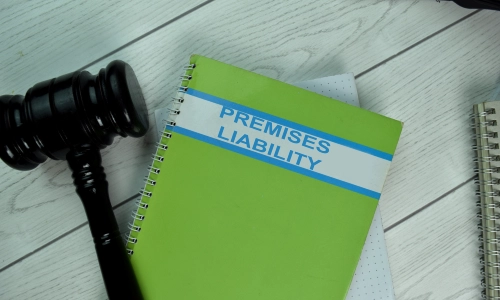
 When you enter someone else’s property, whether it’s a grocery store, apartment complex, or commercial building, you have every right to expect that the environment is reasonably safe. Unfortunately, property owners and managers don’t always meet this basic obligation.
Dangerous conditions like wet floors without warning signs, broken stairs, inadequate lighting, or unmaintained walkways can lead to serious injuries that change the course of your life. If you’ve been hurt on another person’s property in Riverside, California, you may be entitled to compensation for your medical bills, lost wages, pain, and suffering.
A Riverside premises liability lawyer can help you understand your rights and pursue the justice you deserve. Premises liability law exists to hold property owners accountable when their negligence causes harm to visitors.
These cases can involve anything from slip and fall accidents at a retail store to injuries caused by negligent security at an apartment complex. Whatever the circumstances of your injury, having an experienced attorney on your side makes a significant difference in your ability to recover fair compensation.
The Advantage of Hiring a Riverside Premises Liability Attorney
Choosing a premises liability attorney who understands the local legal landscape in Riverside provides distinct advantages when pursuing your claim. California premises liability law contains nuances that require careful navigation, and an attorney familiar with Riverside courts, local procedures, and regional practices can offer insights that benefit your case.
How Local Laws Affect Your Premises Liability Claim
California Civil Code sections 1714 and related statutes establish the foundation for premises liability claims throughout the state, including Riverside. Under these laws, property owners and occupiers have a duty to maintain their premises in a reasonably safe condition and to warn visitors of known hazards that aren’t immediately obvious.
When they fail to meet this duty and someone gets hurt as a result, they can be held financially responsible for the resulting damages. California also follows a comparative negligence system, meaning that if you share some responsibility for your accident, your compensation may be reduced proportionally.
For example, if a court determines you were 20 percent at fault for your slip and fall because you were distracted by your phone, your recovery would be reduced by that same percentage. An experienced Riverside premises liability attorney knows how to counter arguments about comparative fault and present evidence that minimizes any reduction in your compensation.
When to Contact a Riverside Premises Liability Lawyer
The best time to contact a premises liability lawyer is as soon as possible after your injury. While two years might seem like plenty of time, evidence can disappear quickly. Resources such as the California Courts Self Help Guide – Personal Injury can also help you understand how deadlines and legal procedures work in these cases.
Beyond evidence preservation, early legal consultation helps you avoid costly mistakes. Before speaking with any insurance representative, consulting with an attorney protects your interests and ensures you don’t inadvertently say something that hurts your claim.
You should reach out to a Riverside premises liability lawyer if your injury required medical treatment, if you missed work due to your accident, if the property owner or their insurance company has contacted you, or if you’re unsure whether you have a valid claim.
The Advantage of a Riverside Premises Liability Law Firm
Working with a dedicated premises liability law firm in Riverside means partnering with legal professionals who focus their practice on helping injured clients. These firms understand the challenges you face and the strategies that lead to successful outcomes in premises liability cases.
Immediate Steps to Protect Your Health and Rights
Your health comes first after any accident. Seeking medical attention immediately accomplishes two important goals: it ensures you receive proper treatment for your injuries, and it creates a medical record documenting the connection between your accident and your physical condition. A thorough medical evaluation can identify problems before they worsen.
Report the incident to the property owner, manager, or responsible party as soon as you’re able. Request that they create a written incident report and ask for a copy. Be factual in your description of what happened, but avoid speculating about causes or accepting blame for the incident.
If possible, identify any witnesses who saw what happened. Collect their names and contact information while the details are fresh in everyone’s minds. Witness testimony often proves crucial in premises liability cases, particularly when the property owner disputes how the accident occurred.
Preserving Evidence and Documentation
Physical evidence forms the backbone of most successful premises liability claims. If you’re able to do so safely, take photographs or videos of the accident scene immediately after your injury. These images can serve as powerful proof if the property owner later claims the hazard didn’t exist or wasn’t dangerous.
Keep all documentation related to your accident and injuries. Organized records make it easier for your attorney to calculate your damages and present a compelling case for compensation.
Write down your recollection of the accident as soon as possible. A written account created early helps preserve important details for your case.
Speaking With a Lawyer Before the Insurance Company
Insurance companies exist to make money, and they do that by collecting premiums and minimizing payouts. When an adjuster contacts you after your accident, understand that their goal is to settle your claim for as little as possible, not to ensure you receive fair compensation.
Information from the California Department of Insurance can also help you understand how insurers operate and what rules they must follow.
They may ask for recorded statements, hoping you’ll say something that can be used against you later. Speaking with a Riverside premises liability lawyer before engaging with insurance representatives puts you in a stronger position.
Your attorney can communicate with the insurance company on your behalf, ensuring that your interests are protected throughout the process.
Understanding Liability and Riverside Law for Premises Liability Claims
Premises liability cases require proof of specific legal elements. Understanding how liability works under California law helps you appreciate what your attorney must establish to win your case.
Who May Be Held Responsible
Multiple parties may bear responsibility for dangerous conditions on a property.
- Property Owners: The most obvious potential defendant is the property owner, but liability can extend to others depending on the circumstances.
- Tenants and Leaseholders: These parties may be liable if they control the area where your injury occurred. For example, a retail store can be responsible for a spill inside the store even if it doesn’t own the building.
- Property Management Companies: Organizations that handle maintenance and safety for building owners can also face liability when their negligence causes harm.
- Contractors and Builders: In some cases, contractors or maintenance companies may share responsibility. If a cleaning company left a floor dangerously wet without placing warning signs, or if a repair company created a hazardous condition while working on the property, they could be held accountable alongside the property owner.
Your attorney will investigate all potentially liable parties to ensure that responsible entities are identified and held accountable. This investigation sometimes reveals additional sources of compensation that might otherwise go unnoticed.
How Negligence Works Under Riverside Law
California premises liability law is grounded in negligence principles. To succeed in your claim, you must prove four elements.
- First, you must show that the defendant owed you a duty of care. Property owners and occupiers generally owe a duty to maintain their premises in a reasonably safe condition and to warn of known dangers.
- Second, you must demonstrate that the defendant breached this duty, meaning they failed to act as a reasonable property owner would under similar circumstances.
- Third, you must prove causation, establishing that the defendant’s breach directly caused your injuries.
- Fourth, you must show damages, meaning you suffered actual harm as a result.
The standard of care owed to you can depend on your legal status on the property. Historically, California distinguished between invitees, licensees, and trespassers, with different duties owed to each category.
However, California law has evolved to apply a general reasonableness standard in most situations. Property owners must act reasonably under all circumstances, and if you’re unsure how these negligence standards apply to your situation, speaking with a negligence lawyer serving Riverside can provide clarity and guidance on the next steps.
Common Defenses and How an Attorney Responds
Property owners and insurers often argue that the dangerous condition was open and obvious, claiming the plaintiff should have avoided it. An attorney counters this by showing that even obvious hazards can still cause injury based on placement or surrounding distractions.
Defendants may also argue they had no knowledge of the hazard. Your attorney investigates how long the condition existed, what inspection routines were in place, and whether prior incidents should have alerted the owner.
Comparative fault is another common tactic, with defendants claiming you contributed to your injuries. While California’s comparative negligence laws still allow recovery, your attorney works to minimize your share of fault to protect your compensation.
Potential Compensation in a Riverside Premises Liability Case
Successful premises liability claims can result in significant financial recovery. Understanding the categories of compensation available helps you appreciate what your case might be worth.
Medical Expenses and Future Care
Compensation for medical expenses covers all reasonable healthcare costs related to your injury. If your injuries necessitate ongoing medical care, you can also recover compensation for anticipated future medical expenses.
Calculating future medical costs requires careful analysis. Your attorney may work with medical experts who can evaluate your condition, estimate your treatment needs, and provide testimony about the cost of that care over your lifetime.
Ensuring that future expenses are properly accounted for protects you from bearing these costs yourself after your case concludes.
Lost Wages and Loss of Earning Capacity
If your injuries prevented you from working, you’re entitled to compensation for lost wages. This straightforward calculation covers the income you would have earned during your recovery period. Documentation from your employer establishing your regular pay rate and time missed supports this portion of your claim.
More complex situations arise when injuries permanently affect your ability to work. Loss of earning capacity compensation addresses reduced future income when you can no longer perform your previous job or must work in a reduced capacity.
Vocational experts and economists may provide testimony calculating these long-term losses based on your age, education, work history, and the nature of your disabilities.
Pain, Suffering, and Other Non-Economic Losses
Beyond financial losses, premises liability victims can recover non-economic damages that address the human impact of their injuries. Pain and suffering compensation acknowledges the physical discomfort and emotional distress caused by your accident.
This includes acute pain from the injury itself as well as chronic pain that may persist long after the initial healing period.
Other non-economic damages include loss of enjoyment of life when injuries prevent you from participating in activities you previously enjoyed, emotional distress encompassing anxiety, depression, and psychological trauma, and loss of consortium claims that address how injuries affect your relationships with family members.
How the CEO Lawyer Personal Injury Law Firm Helps Riverside Clients
The CEO Lawyer Personal Injury Law Firm brings dedicated resources and experience to premises liability cases in Riverside. Their client-centered approach focuses on achieving maximum compensation while minimizing the stress and burden on injured individuals.
Investigating Your Case and Building Evidence
Thorough investigation distinguishes strong cases from weak ones. The firm’s legal team examines every aspect of your accident, from the physical conditions at the scene to the property owner’s history of maintenance and safety practices.
They gather surveillance footage before it’s deleted, interview witnesses, review incident reports, and consult with experts who can explain how dangerous conditions develop and persist.
Building a compelling evidence file often involves working with accident reconstruction specialists, safety engineers, and medical professionals who can connect your injuries to the hazardous condition you encountered. This comprehensive approach creates a case that’s difficult for defendants to dispute.
Negotiating With Insurers and At-Fault Parties
Most premises liability cases settle before trial, but favorable settlements don’t happen automatically. Insurance companies respect attorneys who prepare cases thoroughly and demonstrate willingness to go to trial when necessary.
The CEO Lawyer Personal Injury Law Firm prepares each case with a trial-ready approach, which strengthens their negotiating position. Support from a personal injury lawyer in Riverside can also clarify the negotiation process and your legal options.
Negotiations involve presenting evidence of liability and damages, countering defense arguments, and persistently advocating for fair compensation. The firm’s experience handling similar cases provides insight into what claims are worth and what strategies prove most effective in securing just outcomes.
Preparing for Litigation When Necessary
When fair settlement isn’t achievable through negotiation, the CEO Lawyer Personal Injury Law Firm is prepared to take your case to court. Trial preparation involves developing persuasive arguments, preparing witnesses for testimony, creating compelling visual presentations of evidence, and anticipating defense strategies.
Courtroom experience matters significantly in premises liability litigation. Juries respond to attorneys who communicate clearly and confidently present their client’s case. The firm’s litigation skills ensure that clients who need their day in court receive powerful representation before judge and jury.
Schedule a Free Consultation With a Riverside Premises Liability Lawyer Today
Premises liability injuries can lead to costly medical bills, missed work, and uncertainty about your future, but you don’t have to handle this alone. The CEO Lawyer Personal Injury Law Firm offers free consultations to Riverside residents injured due to unsafe property conditions.
During your consultation, an attorney will review your case, explain your options, and answer your questions. If you move forward, the firm works on a contingency fee basis, so you owe no legal fees unless compensation is recovered.*
Call (951) 584-3801 to speak with a Riverside premises liability lawyer and take the first step toward protecting your rights and pursuing the compensation you deserve.
*Disclaimer: No fee unless we win refers only to attorney fees. Contingency fee terms apply to qualifying cases only and are governed by a written agreement. Our percentage fee is calculated on the gross recovery before expenses are deducted. Court costs and case expenses are the responsibility of the client and must be repaid regardless of case outcome. Contingent attorneys’ fees refers only to those fees charged by attorneys for their legal services. Such fees are not permitted in all types of cases. Court costs and other additional expenses of legal action usually must be paid by the client. The choice of a lawyer is an important decision and should not be based solely upon advertisements.