

Quick Summary: Columbia Commercial Truck Accident Claims
- Truck accidents in Columbia often involve major roads and multiple vehicles.
- Liability can include drivers, trucking companies, and third parties.
- South Carolina’s comparative fault rule affects claim eligibility and damages.
- Key evidence, like logs and vehicle data, can impact outcomes.
- Acting early helps preserve evidence and strengthen a claim.
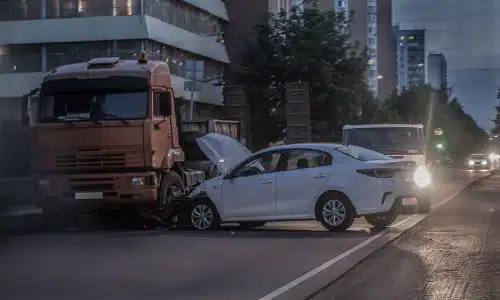 Columbia plays a central role in South Carolina’s transportation network, with major freight corridors like I-26 and I-20 running directly through the city. These highways connect distribution hubs, industrial zones, and regional shipping routes, bringing a constant flow of commercial trucks through Columbia every day.
Areas near Garners Ferry Road, Bush River Road, and routes surrounding Columbia Metropolitan Airport frequently experience heavy truck traffic associated with delivery operations and logistics.
With this level of commercial movement, incidents involving large trucks and other commercial vehicles, including tractor-trailers, delivery vehicles, and freight carriers, can occur in both high-speed highway settings and densely traveled urban intersections.
Roads near Lake Murray access points and commercial districts also see a mix of local and long-haul trucking, increasing the likelihood of multi-vehicle collisions and complex accident scenarios.
When these incidents occur, the legal and insurance issues often extend beyond those of a typical vehicle accident. Understanding how a Columbia commercial truck accident lawyer evaluates these cases can help clarify what factors may influence a claim under South Carolina law. A commercial truck accident lawyer in Columbia may also assess how evidence, liability, and insurance factors interact in these situations.
The Role of a Columbia Commercial Truck Accident Attorney
A Columbia truck accident attorney focuses on how South Carolina law applies to collisions involving commercial vehicles. These cases often require analyzing federal trucking regulations, multi-party liability, and layered insurance policies.
Bassel Zeitouni, licensed in Georgia, works with cases involving commercial trucking issues and brings experience navigating multi-state regulations that frequently apply to interstate trucking routes passing through Columbia.
In a commercial trucking case, this may involve:
- Reviewing compliance with federal hours-of-service rules
- Analyzing driver behavior, including fatigue or distraction
- Examining trucking company policies and oversight
- Evaluating contracts involving third parties, such as cargo loaders
Truck accident cases typically involve more documentation and technical detail than standard injury claims, especially when multiple entities may share responsibility.
For broader injury-related concerns, individuals may also explore how a Columbia personal injury lawyer evaluates different types of claims in the local context.
Common Commercial Truck Accident Scenarios in Columbia
Columbia’s role as a logistics and transportation hub contributes to several recurring types of truck accident scenarios.
Highway Collisions
Highway collisions frequently occur along major routes like I-26 and I-20, where large commercial trucks travel at higher speeds alongside passenger vehicles. These accidents may involve sudden traffic slowdowns, lane changes, or limited stopping distances, which can increase the severity of impact.
Because of the size and weight of trucks, these crashes often result in more extensive damage and complex investigations, as reflected in national crash data tracked by the National Highway Traffic Safety Administration (NHTSA).
Multi-Vehicle Crashes
Multi-vehicle crashes, including 18-wheeler collisions, are common in congested areas such as interchanges and busy roads like Bush River Road and Garners Ferry Road. A single truck-related incident can trigger a chain reaction involving several vehicles, especially during peak traffic hours.
These situations often require detailed analysis to determine how fault is shared among multiple drivers and parties.
Delivery Truck Incidents
Delivery truck accidents often occur in downtown Columbia, residential neighborhoods, and commercial districts where trucks make frequent stops. These environments involve tighter spaces, pedestrian activity, and constant vehicle movement.
Limited visibility and frequent maneuvering can increase the likelihood of collisions, even at lower speeds.
How a Columbia Law Firm Assists With Post-Incident Challenges in Truck Accident Claims
After a truck accident, individuals may encounter several challenges that affect how a claim develops.
- Delayed Injuries: Some symptoms, like soft tissue injuries or head trauma, may not appear immediately. Delays in treatment can complicate how injuries are documented and connected to the accident.
- Missed Work and Financial Pressure: Truck accidents often result in lost wages, ongoing medical costs, and disruptions to daily responsibilities. These factors are considered when evaluating damages in South Carolina truck accident claims.
- Insurance Pressure: Insurance companies may contact individuals shortly after the accident, requesting statements or documentation. Early discussions can influence how fault is interpreted before all evidence is available.
- Unclear Liability: This is common in commercial truck accidents, as a single incident may involve multiple parties, including the driver, the trucking company, maintenance providers, and cargo loading companies, all of whom may share responsibility depending on the circumstances.
Determining responsibility in a truck accident case handled by a law firm in Columbia often requires a detailed investigation.
Understanding South Carolina Truck Accident Laws and Fault Rules
Truck accident claims in Columbia are typically handled within the South Carolina court system, often in Richland County, depending on where the accident occurred. Road design, traffic flow, and infrastructure conditions may also be considered when evaluating fault.
These roadway factors are often tied to planning and oversight from the South Carolina Department of Transportation.
Commercial Truck Accidents in Columbia
Truck accidents in Columbia commonly occur along I-26, I-20, and major roads like Garners Ferry Road and Bush River Road, where freight traffic and local vehicles intersect. These crashes often involve large commercial vehicles and may result in multi-vehicle collisions.
A Columbia commercial truck accident is typically more complex than a standard crash because it can involve multiple parties, including drivers, trucking companies, and third-party contractors, as well as technical evidence such as driver logs and vehicle data.
These factors often make early investigation important in understanding how the accident occurred.
South Carolina’s Modified Comparative Fault Rule
South Carolina applies a modified comparative fault system. An injured person may recover damages only if they are less than 51% at fault, and any compensation is reduced by their share of responsibility. This rule directly affects how damages are calculated in cases involving shared fault.
How It Applies in Truck Accident Cases
Truck accidents often involve shared fault. For example, one driver may contribute to the crash while a trucking company may also share responsibility due to safety violations.
Because liability is often divided, the assignment of fault plays a key role in determining how a claim is evaluated under South Carolina law. Accurate evidence and documentation are often essential in establishing each party’s level of responsibility.
Liability in Columbia Commercial Truck Accidents
Truck accident liability is often more complex than liability in standard vehicle accidents due to the number of parties involved.
Potentially responsible parties may include:
- Truck drivers (fatigue, unsafe driving, distraction)
- Trucking companies (training, scheduling, maintenance practices)
- Cargo loaders (improperly secured freight)
- Maintenance providers (mechanical failures)
In Richland County truck accident claims, liability is often distributed based on each party’s role in the incident. These considerations are often part of broader South Carolina trucking accident liability, where multiple parties and regulatory requirements must be evaluated together
Evidence Considerations in Columbia Trucking Cases
Truck accident cases frequently depend on specialized evidence that may not be immediately available.
Because many commercial vehicles operate under federal safety regulations, records reviewed in these cases often relate to compliance standards established by the Federal Motor Carrier Safety Administration (FMCSA).
Key evidence may include:
- Driver logs documenting hours of service
- Electronic control module (black box data)
- Maintenance and inspection records
- Accident scene documentation
- Witness statements
This type of evidence is often controlled by trucking companies, making early preservation important. Delays can result in lost or overwritten data, which may affect how a Columbia semi-truck accident lawyer evaluates the case.
Types of Losses Evaluated in South Carolina
Truck accidents can lead to a wide range of losses recognized under South Carolina law.
These may include:
- Medical costs: Emergency care, hospitalization, rehabilitation, and ongoing treatment
- Lost wages: Income lost during recovery and potential future earnings impact
- Long-term effects: Chronic pain, reduced mobility, and changes in quality of life
These factors are central to how a truck accident attorney serving Columbia assesses the overall impact of an accident.
Timing Considerations in Columbia Truck Accident Cases
Timing plays a critical role in truck accident claims.
Delays can affect the availability of evidence, including driver logs and black box data, the accuracy of witness recollections, and medical documentation connecting injuries to the accident.
South Carolina generally applies a statute of limitations for personal injury claims, meaning cases must be filed within a specific timeframe. Waiting too long may limit available legal options and make evidence more difficult to obtain.
Insurance and Liability Complexities in Columbia Trucking Cases
Commercial trucking cases often involve multiple insurance policies and parties, which can complicate how claims are handled. Disputes may arise regarding fault, coverage limits, and payment responsibility.
State-level safety initiatives and reporting efforts from the South Carolina Department of Public Safety’s Office of Highway Safety and Justice Programs provide additional context on how trucking risks are monitored across South Carolina.
This may include primary liability insurance, cargo insurance, or umbrella policies.
Disputes can arise between insurers regarding fault determination, coverage limits, and payment responsibility, particularly in commercial trucking cases where multiple policies and parties may be involved.
These complexities are common in Columbia commercial truck accident cases and often require detailed analysis of contracts and insurance policies, particularly in matters involving South Carolina trucking accident liability and multi-party insurance structures.
For situations involving both trucks and passenger vehicles, reviewing how a Columbia car accident lawyer approaches overlapping liability may provide additional context.
Columbia Commercial Truck Accident Claims FAQ
How does South Carolina’s comparative fault rule apply to truck accident claims?
South Carolina follows a modified comparative fault system, which means an injured person may recover damages only if they are found to be less than 51% at fault for the accident. If a person is 51% or more responsible, recovery is generally not allowed.
In many commercial truck accidents, fault is not always clear-cut. For example, a passenger vehicle driver may share partial responsibility for a crash, while the truck driver or the trucking company may also bear responsibility for unsafe practices, such as violating hours-of-service rules or failing to properly maintain the vehicle.
When fault is shared, any compensation is reduced by the assigned percentage. In a multi-vehicle collision on I-20 or I-26, fault allocation can be a key issue, especially when multiple drivers and commercial entities are involved.
Who may be responsible for a commercial truck accident in Columbia?
Liability in a truck accident often extends beyond just the driver. Depending on the circumstances, several parties may be involved, including:
- The truck driver, for actions such as speeding, distraction, or fatigue
- The trucking company, for hiring practices, training, supervision, or scheduling pressures
- Cargo loading companies, if improperly secured freight contributed to the crash
- Maintenance providers, if mechanical issues were not properly addressed
- Manufacturers, if defective parts played a role
In Columbia, where trucks frequently travel through industrial corridors, airport distribution zones, and major highways, these layers of responsibility are common. Determining liability often requires reviewing contracts, employment relationships, and operational practices tied to the trucking company.
How do insurance companies investigate trucking accidents?
Insurance companies typically conduct a detailed investigation, often involving accident reconstruction, to determine how the collision occurred in commercial truck accident cases due to the higher financial exposure and the multiple parties involved.
These investigations may include:
- Reviewing driver logs to check compliance with federal hours-of-service regulations
- Analyzing electronic control module (black box) data for speed, braking, and vehicle activity
- Examining maintenance and inspection records
- Collecting accident reports, photographs, and witness statements
- Evaluating whether company policies or safety violations contributed to the crash
In some cases, insurers may begin their investigation immediately after the accident, sometimes before all injuries are fully known. This early activity can influence how fault is framed and how claims are evaluated, particularly in South Carolina trucking accident liability cases.
What is the deadline to file a truck accident claim in South Carolina?
In South Carolina, personal injury truck accident claims are generally subject to a 3-year statute of limitations from the date of the accident. This means a claim typically must be filed within that timeframe through the appropriate court, often in Richland County for Columbia-based incidents.
However, waiting too long can affect more than just the filing deadline. Delays may result in:
- Loss of critical evidence, such as driver logs or electronic data
- Difficulty locating or relying on witness testimony
- Gaps in medical documentation that may raise questions about injuries
Because commercial trucking cases often involve time-sensitive evidence and multiple parties, early evaluation of the situation can help clarify what legal and practical steps may be available.
Local Commercial Truck Accident Representation in Columbia
A collision with a commercial truck can leave victims facing serious injuries, multiple insurance companies, and questions about who is actually responsible for the crash. At the CEO Lawyer Personal Injury Law Firm, we represent individuals injured in truck accidents throughout Columbia and understand the roadways where these collisions frequently occur.
We are familiar with the traffic patterns and trucking activity that often contribute to serious accidents throughout the Columbia area, including:
- The I-20 and I-26 Interchange: Investigating crashes involving tractor-trailers navigating one of the busiest highway connections in the Midlands. Heavy traffic, sudden slowdowns, and merging vehicles can quickly turn a truck collision into a multi-vehicle accident involving several drivers.
- Interstate 77: Handling accidents involving long-haul trucks traveling through Columbia alongside daily commuter traffic. The combination of high speeds, limited stopping distances, and frequent lane changes can increase the severity of collisions when large commercial vehicles are involved.
- Garners Ferry Road: Representing drivers injured in crashes involving delivery trucks, service vehicles, and commercial traffic along one of Columbia’s busiest east-side routes. Congested intersections and frequent turning traffic can create dangerous conditions for motorists.
- Bush River Road and the Airport Area: Assisting victims injured in collisions involving trucks traveling to and from warehouse properties, cargo facilities, and commercial operations near Columbia Metropolitan Airport, where commercial vehicle traffic is a regular part of the roadway environment.
Proudly Serving Our Neighboring Communities
Truck accidents affect drivers and families throughout the Midlands, not just within Columbia city limits. Our firm proudly represents clients from Lexington, West Columbia, Cayce, Irmo, Forest Acres, Blythewood, and surrounding Richland and Lexington County communities.
Whether a crash occurred on a major interstate, a local commercial roadway, or near one of the area’s industrial and shipping centers, our team works to secure crash reports, preserve critical trucking records, investigate potential safety violations, and manage communications with insurance companies. By taking immediate steps to protect important evidence, we help clients focus on their recovery while their claim moves forward.
Evaluating Your Next Steps After a Truck Accident in Columbia
Truck accidents in Columbia often involve a combination of legal, medical, and insurance considerations. From highway collisions along I-26 and I-20 to delivery-related incidents in commercial districts, each case presents unique factors that influence how South Carolina law applies.
Reviewing available documentation, including medical records, accident reports, and any preserved evidence, can help clarify the situation. Understanding how fault is determined, how liability may be shared, and how timing affects a claim are all important when evaluating next steps.
Speaking with a Columbia commercial truck accident lawyer can provide insight into how these elements come together, particularly in cases involving interstate trucking, multiple parties, and complex insurance structures.
Reviewing these factors with an attorney who handles commercial trucking cases can help clarify what options may be available under South Carolina law.