

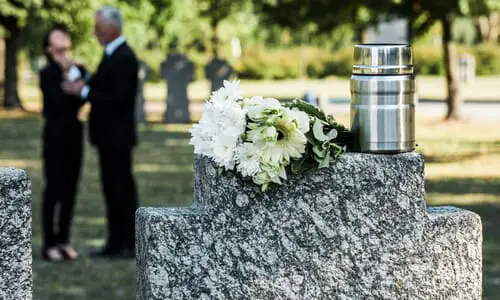
 The death of a loved one is always devastating, but sometimes grieving family members are also plagued by questions.
Was the death an accident? Could it have been prevented? Should criminal charges have been filed? Do you have any recourse if someone else’s negligence led to your family member’s death?
A Kennesaw Wrongful Death Attorney Can Help Address Your Questions and Concerns
If you need answers, a wrongful death attorney can help you find them. In situations where we find evidence of negligence in your loved one’s death, we can also explain your options for pursuing a civil suit against the responsible party.
We know that in many situations, family members are not only dealing with a painful loss but also struggling with medical bills, final expenses, and a loss of income. A wrongful death claim can provide financial compensation so that you can care for your family and fulfill your loved one’s wishes.
Who Can File a Wrongful Death Claim?
It depends on the specific relationships that existed at the time of the death. The first priority is the decedent’s spouse, followed by their children if they didn’t have a spouse.
When the decedent didn’t have a spouse or children, their parents may make a claim. If there are also no surviving parents, the estate’s representative (sometimes called an executor) can file a claim on behalf of other relatives or heirs to the estate.
How Long Do You Have to File a Wrongful Death Claim in Georgia?
In most cases, you have two years from the date of the death. However, in a few situations, you may have more or less time, depending on the circumstances.
A wrongful death lawyer can advise you on your specific situation, and it’s a good idea to contact one as soon as possible. Remember that if you decide to file a claim, your lawyer will need to compile evidence and build a strong case first, so you shouldn’t assume that there is plenty of time left.
What is a Wrongful Death?
Any death can feel unfair and wrong, but in a legal sense, a wrongful death is one where a person or entity fails in their duty of care and causes a death in the process. The duty of care is different depending on the situation, but it usually means taking reasonable precautions to avoid injuring others.
Here are some examples of common situations that may result in wrongful death:
Motor Vehicle Accidents
Unfortunately, car accidents lead to a large number of deaths in Georgia. Data from the state’s Department of Public Health shows that motor vehicle crashes were the leading reason for injury deaths and the second leading cause of hospitalizations in 2020.
Nationally, Georgia had the fourth-highest incidence of traffic deaths (1,664) for the same year.
If another driver caused a car accident that led to your family member’s death, you may be able to file a wrongful death claim against them. It will be essential to collect evidence and show that the other driver was responsible, or at least primarily responsible, for the accident.
The other driver’s insurance company may fight your claim and try to show that the victim was all or partly to blame. This can be very upsetting for family members, but your lawyer will work to refute these claims and seek compensation for your loved one’s damages.
Motor vehicle accidents can involve cars, trucks, buses, motorcycles, bicycles, or pedestrians. We will usually seek damages from the negligent party’s auto insurance first, but in some cases, we’ll consider other options, such as suing the driver directly or using uninsured/underinsured motorist (UM/UI) coverage.
Boating Accidents
Although safety measures like life jackets and boater education courses have helped to reduce injuries and fatalities on the water in recent years, Georgia’s lakes and rivers can still turn deadly when someone acts recklessly. In one tragic case from 2022, a man was arrested and charged with boating under the influence after an accident on a river left five people dead.
It can be difficult to determine fault in a boating accident because some evidence may have sunk or suffered damage, but your attorney will still work to identify the negligent party and pursue damages.
Medical Malpractice
Many people don’t think about medical malpractice when a loved one dies from an illness or complications after surgery. Many of these deaths are indeed the result of natural causes.
However, in some cases, a healthcare provider’s negligence may have contributed to the decedent’s decline and eventual death. In these situations, we will look for evidence that the provider acted outside of the professional standards of their specialty.
Because it is difficult to know if your loved one’s passing was inevitable or if a doctor’s mistake caused it, we recommend speaking with a wrongful death lawyer if you even suspect medical malpractice or negligence.
Defective Drugs, Medical Devices, and Other Products
Defective product cases often involve medical products, such as harmful medications or malfunctioning medical devices. When these cases occur, the problem may not be a negligent healthcare provider but a company that produced a defective drug or device.
Sometimes, people come to us suspecting a family member’s doctor was negligent, but we find the problem was actually a dangerous medication or implant, and the healthcare provider was unaware of the issue. A wrongful death lawyer can discern what kind of case you might have and explain your options.
However, not all defective product claims involve medical products. We also see cases regarding defective vehicles or vehicle parts (including cars, trucks, boats, golf carts, ATVs, etc.), household appliances, safety equipment, and more. Under Georgia’s strict liability laws, you may have a defective product claim if:
- The defendant or negligent party manufactured the product.
- The product was in a defective or dangerous condition when it left the manufacturer’s control. (In other words, it didn’t become defective because it was damaged in transit or by the end user.)
- The product’s defect caused the victim’s fatal injury.
Premises Liability
These cases most often involve situations where a person was murdered or died during a crime, but they can happen in any circumstance where a dangerous property condition causes death. If your loved one passed in any kind of accident or crime on another party’s property, we recommend speaking with a finjury attorney in Kennesaw about how the death occurred.
Negligent security is a common issue in premises liability cases. If the decedent was attacked at a business like a store or gas station, it’s possible the business owner was negligent in taking reasonable security measures.
Examples of negligence might include failing to provide adequate lighting in a parking lot, making no effort to improve security after a previous robbery or crime at the business, not hiring enough security staff for the venue’s size, lack of safety training for employees, lack of alarm systems and security cameras, and more.
Aside from criminal actions, many people also die in accidents on another party’s property. For instance, if the decedent slipped and fell and suffered a fatal head injury, the property owner might have been negligent in failing to address the hazardous floor condition.
What if You Believe the Defendant’s Actions Were Criminal?
We encourage you to request a copy of the police report on your loved one’s death if there was one. (In car crashes and many other kinds of accidents, or in any death deemed “suspicious,” there should be a police report.
However, there often isn’t one in medical malpractice or other cases that appear natural or accidental.) We will review any official report to get a better idea of what happened.
In many situations, we meet people who believe the negligent party’s actions were criminal. They may be right, but that doesn’t mean the police can make an arrest or that the District Attorney will pursue charges if they do.
The criminal justice system operates on the principle that everyone is innocent until proven guilty “beyond a reasonable doubt.” Often, we see cases where the defendant may very well have been guilty of a crime, but there simply isn’t enough evidence to expect they will be found guilty beyond a reasonable doubt.
We understand how frustrating these situations can be, but criminal charges may not be a viable option.
However, that doesn’t mean that a civil suit would be unsuccessful. Civil cases only require the jury to decide if the defendant is more likely than not guilty based on a “preponderance of evidence.”
This is a lower burden of proof, so you may be able to win a civil suit even if the District Attorney didn’t have enough evidence to win a criminal case. Some people feel this provides a measure of justice, even if a criminal conviction isn’t possible.
How Can You Get Assistance From a Kennesaw Wrongful Death Law Firm?
Please contact the CEO Lawyer Personal Injury Law Firm for a free, confidential consultation about your case. We’ll review the details, answer your questions, and lay out your options for pursuing a claim.
There is no obligation, and if we do take your case, you don’t owe us anything until we win or settle it.
Attorney Ali Awad founded the CEO Lawyer Personal Injury Law Firm to help injured people and their families secure the compensation needed to move forward. He quickly turned it into one of the fastest-growing law firms in the country and has recovered millions of dollars in damages for his clients.
When he’s not working on a case, he discusses legal topics with his millions of followers on social media. You can start working with him by calling (470) 323-8779 today.