

Quick Summary: Dog Bite Injury Lawyer Serving Chattanooga Residents
- Dog bite incidents in Chattanooga can happen in neighborhoods, public areas, and rental properties.
- Tennessee law limits recovery if the injured person is 50% or more at fault.
- Responsibility may involve dog owners, property owners, or others in control of the animal.
- Insurance issues and missing evidence can affect claim evaluation.
- Medical documentation and early reporting are important in assessing legal options.
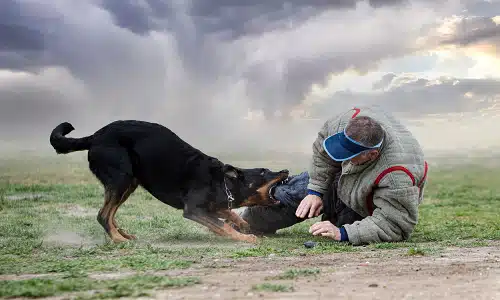 Across Chattanooga, dog bite incidents can arise in everyday settings, from residential neighborhoods across Hamilton County to public parks and walking trails near the Tennessee River, apartment complexes, and commercial districts with pet-friendly spaces.
In Hamilton County, situations involving unrestrained dogs, shared property areas, or inadequate supervision can quickly lead to injuries that raise questions about liability, safety standards, and insurance coverage.
After a dog bite, an attorney can review how the incident happened, who had control of the dog, and how Tennessee law may apply.
How a Dog Bite Attorney Can Help After an Injury in Chattanooga
Dog bite cases in Chattanooga are evaluated under Tennessee’s dog bite statute, which can impose strict liability when a dog is running at large, as well as under negligence and premises liability principles. Claims are often filed in Hamilton County civil courts, where judges assess fault, liability, and damages based on the specific facts of each case.
That review may include:
- Whether the dog owner exercised reasonable control over the animal
- If leash laws or containment rules were violated
- Whether a property owner allowed unsafe conditions
- How the incident was documented and reported
Natori Arrindell is licensed to practice in Tennessee and can help individuals understand how liability and available evidence may affect a dog bite claim. These cases often overlap with broader negligence matters handled by a personal injury lawyer serving Chattanooga.
Common Dog Bite and Animal Attack Scenarios in Chattanooga
A dog bite claim may depend on the circumstances leading up to the attack, including who was responsible for the dog and whether there were earlier signs that it could pose a danger.
- Residential Dog Bite Incidents: Unrestrained dogs in neighborhoods can lead to bites involving neighbors, delivery personnel, or visitors. These cases often involve questions about prior behavior and owner responsibility.
- Attacks in Public Spaces and Walking Areas: Sidewalks, parks, and trails near the Tennessee River are common locations for dog encounters. When dogs are not properly controlled, injuries may occur in shared public environments.
- Apartment and Rental Property Incidents: Dog bites in apartment complexes or rental housing may involve both the pet owner and the property manager, especially if there were known risks or policy violations.
- Unleashed or Uncontrolled Dog Attacks: Failure to follow local leash or containment expectations can create liability concerns, particularly when injuries occur in areas where public safety is expected.
- Multi-Party Liability Situations: Some incidents involve overlapping responsibility between dog owners, landlords, or property managers, making liability more complex.
Prior complaints or dangerous dog incidents may influence how liability is evaluated. In some cases, an animal attack lawyer serving Chattanooga may evaluate injuries involving more severe or repeated incidents.
Common Challenges After a Chattanooga Dog Bite Incident
After a dog bite, individuals often deal with immediate and delayed challenges that complicate next steps. General animal safety and bite prevention practices are also discussed by organizations such as the American Veterinary Medical Association (AVMA).
- Delayed infection or complications: Dog bites carry infection risks that may not appear immediately
- Emergency medical treatment needs: Some injuries require urgent care or surgical intervention
- Confusion about responsibility: Identifying the dog owner or responsible party may not be straightforward
- Insurance communication pressure: Insurers may reach out quickly after an incident
- Uncertainty about reporting requirements: Questions often arise about animal control or official reports
Some cases involve negligence in animal control, particularly when local safety rules are not followed. Guidance on infection risks and treatment considerations is available through the Centers for Disease Control and Prevention.
Individuals may search for a dog bite lawyer serving Chattanooga, TN, to rely on when evaluating these situations.
Key Tennessee Laws That Affect Dog Bite Injury Claims
Tennessee law plays a central role in how dog bite injury claims are evaluated, particularly when determining dog bite liability, shared responsibility, and how compensation may be affected.
These cases are typically handled as civil injury claims in Hamilton County courts, where legal standards focus on whether negligence, unsafe conditions, or failures in animal control contributed to the incident.
In many situations, liability is not always limited to the dog owner. Questions may arise around property owner responsibility, leash law compliance, or whether there was negligence in animal control, especially in cases involving prior complaints or dangerous dog incidents.
Tennessee’s Modified Comparative Fault Rule (50% Bar Explained)
Tennessee follows a modified comparative fault system, which directly affects whether a claim may proceed. Under this rule, an injured person may recover damages only if they are found to be less than 50% at fault for the incident.
If fault is shared, any compensation may be reduced based on the injured person’s percentage of responsibility. For example, if someone is found partially responsible, such as ignoring warnings about a dog or entering a restricted area, their recovery may be adjusted accordingly. However, if fault reaches 50% or more, recovery is not permitted under Tennessee law.
This rule often becomes a central issue in dog bite cases, particularly when insurers or opposing parties attempt to shift blame.
Filing Deadlines for Dog Bite Claims in Tennessee
Dog bite injury claims in Tennessee are generally subject to a one-year statute of limitations. This means that legal action must typically be filed within one year of the incident date.
This relatively short deadline can create challenges, especially when:
- Injuries worsen over time
- Infection or complications develop after the initial incident
- Key evidence, such as witness statements or animal control reports, becomes harder to obtain
Delays in taking action may limit the ability to evaluate or pursue a claim under Tennessee law.
How Shared Fault Affects Liability and Compensation
Dog bite incidents often involve multiple contributing factors, which can complicate liability determination. Responsibility may be shared between:
- The dog owner.
- A property owner or landlord.
- A caretaker or third party responsible for the animal.
For example, a landlord may be involved if they were aware of prior dangerous conditions but failed to act, while a dog owner may be responsible for failing to properly restrain the animal.
Because Tennessee law allows for apportionment of fault, each party’s role is evaluated individually. This can influence not only who may be held responsible but also how potential compensation is calculated.
Common Insurance Disputes in Chattanooga Dog Bite Cases
Dog bite claims often involve insurance-related disputes and layered liability issues, especially when more than one party may be responsible. These situations can affect how insurance coverage disputes are handled and how liability is ultimately determined.
Common friction points include:
- Homeowner’s or renter’s insurance coverage disputes: Insurance policies may provide coverage for dog bite incidents, but insurers may question whether the event falls within policy terms or attempt to limit payouts.
- Questions about who had control of the animal: Liability may depend on who owned, handled, or had control over the dog at the time of the incident, which is not always immediately clear.
- Policy exclusions or limitations: Some policies include exclusions related to prior incidents or specific conditions, which can complicate whether coverage applies.
- Multi-party liability involving property owners: In certain cases, landlords or property owners may also be involved, particularly if they were aware of potential risks but failed to address them.
These disputes can affect both the available insurance coverage and how responsibility is evaluated.
For related negligence issues, these cases may also intersect with a negligence lawyer serving Chattanooga.
Common Evidence Issues in Chattanooga Dog Bite Claims
Strong documentation is often central to evaluating a dog bite claim, but gaps are common. Reporting requirements and public safety standards related to animal incidents may also be outlined in Tennessee state regulations and local Hamilton County ordinances addressing animal control.
Key challenges include:
- Missing animal control or incident reports: Without official reports, it may be harder to confirm how the incident occurred or whether prior complaints or dangerous dog incidents existed.
- Lack of witness statements: Witness accounts can help clarify what happened, especially in public or shared spaces, but they are often not collected at the time of the incident.
- Delayed medical documentation: Waiting to seek care can create gaps in records and make it more difficult to connect injuries to the incident. Early medical treatment for dog bites is also important in addressing infection risks and documenting the extent of injuries.
Preserving evidence early, such as photographs, medical records, and reports, can help clarify how the incident occurred and who may be responsible. A dog bite injury lawyer representing clients in Chattanooga may also review how documentation gaps affect claim evaluation.
The quality of the available evidence can influence how the claim is evaluated.
Losses and Impacts Evaluated in Tennessee Dog Bite Matters
Dog bite injuries can have both immediate and long-term consequences.
Potential impacts include:
- Medical expenses and reconstructive treatment.
- Infection-related care and follow-up visits.
- Lost wages or missed work.
- Emotional distress or trauma.
- Long-term scarring or impairment.
Immediate medical treatment for dog bites is often necessary to reduce infection and complications.
When to Take Action After a Dog Bite Incident
Timing plays an important role in how dog bite cases develop.
Important considerations include:
- When to seek legal guidance
- Preserving photographs and medical documentation
- Identifying the dog owner or responsible party early
- Avoiding delays that may affect evidence collection
An attorney such as Natori Arrindell, familiar with Hamilton County courts and Tennessee liability standards, may help guide individuals through these considerations while evaluating available legal options.
Avoiding delays that may affect evidence collection can be important when evaluating what information is still available.
Chattanooga Dog Bite Injury FAQ
Who may be responsible for a dog bite injury in Tennessee?
Responsibility for a dog bite injury in Tennessee may involve more than just the dog owner. Depending on how the incident occurred, liability may also extend to a property owner, landlord, or another individual who had control over the animal.
Courts typically evaluate factors such as who owned the dog, who was responsible for controlling it, and whether unsafe conditions or prior dangerous dog incidents were known but not addressed. In some cases, multiple parties may share responsibility under Tennessee law.
How does Tennessee’s 50% fault rule apply in dog bite cases?
Tennessee follows a modified comparative fault rule, which means an injured person may recover damages only if they are found to be less than 50% at fault.
If fault is shared, any compensation may be reduced based on the person’s percentage of responsibility. For example, if someone is partially at fault, by ignoring warnings or entering a restricted area, their recovery may be adjusted. However, if fault reaches 50% or more, recovery is not permitted under Tennessee law.
What evidence is important in a dog bite claim?
Several types of evidence may be important when evaluating a dog bite claim. This can include medical records, photographs of injuries, animal control or incident reports, and witness statements.
Early medical treatment for dog bites is often important not only for health reasons but also for documenting the injury. Additional evidence, such as proof of prior complaints or dangerous dog incidents, may also help clarify how the event occurred and who may be responsible.
What is the deadline to file a dog bite injury claim in Tennessee?
Dog bite injury claims in Tennessee are generally subject to a one-year statute of limitations. This means a claim must typically be filed within one year of the date of the incident.
Because this deadline is relatively short, delays can make it harder to gather evidence, identify responsible parties, and evaluate legal options. Acting within this timeframe is an important part of preserving the ability to pursue a claim under Tennessee law.
Legal Representation for Dog Bite Injury Victims Throughout Chattanooga
Dog bite incidents often happen during routine activities walking through a neighborhood, visiting a park, or spending time in a shared apartment community. While many dogs are well-trained and properly controlled, a single lapse in supervision or containment can lead to serious injuries.
At The CEO Lawyer Personal Injury Law Firm, we help individuals and families throughout the Chattanooga area who have been injured in dog attacks and animal-related incidents.
We understand the local environments where dog bite injuries commonly occur throughout the Chattanooga area, including:
- Northshore and Coolidge Park Areas: Handling incidents involving unleashed dogs, unexpected animal encounters, and injuries occurring in some of Chattanooga’s most active walking and outdoor recreation areas.
- Hamilton Place and the Surrounding 37421 Area: Investigating dog bite claims arising in apartment communities, residential developments, and shared common spaces where residents, visitors, and pets frequently interact.
- Residential Neighborhoods in Hixson and East Brainerd: Addressing injuries involving loose dogs, neighborhood incidents, and attacks that occur on sidewalks, driveways, and other residential properties.
- The Tennessee Riverwalk and Community Walking Paths: Representing individuals injured while walking, jogging, or using public trails where pet owners are expected to maintain control of their animals.
- Apartment Communities and Rental Properties Throughout Chattanooga: Evaluating situations where questions arise about animal control policies, prior complaints, or whether property owners were aware of ongoing safety concerns.
Proudly Serving Chattanooga Families and Communities
Dog bite injuries can be especially traumatic when they involve children, neighbors, or incidents that occur close to home. Our firm proudly serves individuals and families throughout Chattanooga, including Hixson, East Brainerd, Ooltewah, Red Bank, St. Elmo, and surrounding Hamilton County communities.
Because dog bite claims often depend on evidence gathered shortly after an incident, early documentation can be important. Photographs, witness statements, animal control reports, and medical records may all help establish how the attack occurred and who may be responsible.
More serious injuries, particularly those involving children, may require treatment at Children’s Hospital at Erlanger before follow-up care and recovery can begin.
Understanding Your Options After a Chattanooga Dog Bite Injury
Dog bite incidents in Chattanooga often involve multiple factors, including timing, documentation, and identifying who may be responsible. Evaluating these elements under Tennessee law can help clarify what options may be available.
An attorney can review the medical records, incident reports, available evidence, and questions about who owned or controlled the dog.
If you are considering the next steps, speaking with an attorney familiar with Tennessee law and Hamilton County court procedures can help you better understand how these cases are evaluated.