

Firm News
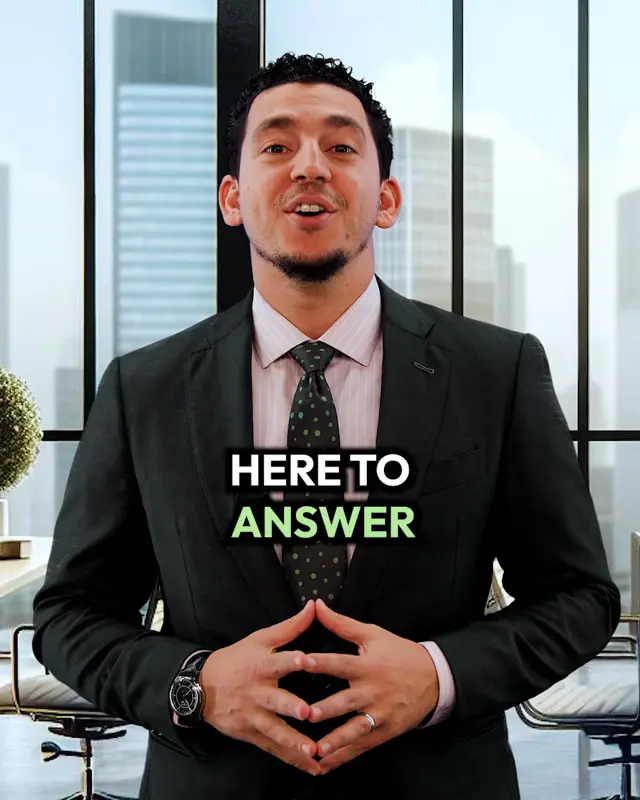
CEO Lawyer is pleased to spotlight Bassel Zeitouni, Esq., Chief Legal Counsel overseeing litigation strategy across the Carolinas and beyond. Born in Lebanon, raised in North Carolina, and trained across some of the most demanding legal environments the system has to offer, Bassel brings to CEO Lawyer a background that is anything but conventional, and a philosophy about the law that is entirely his own.

From the Other Side of the Law
Bassel did not start his career as an attorney. He started on the opposite side of the law entirely, in law enforcement. It was there, working within the system and watching it operate up close, that something shifted for him. He wanted to move the needle on justice.
He believed in what the word meant. But the more he saw, the more he came to understand that the most effective form of justice, at least the kind that could be delivered consistently and concretely to people who had been wronged, came in the form of compensation.
“Whether a lot of people agree or not, I come to find out that the ultimate form of justice, in a nutshell, is money, at least to try to compensate somebody in the form of money,” Bassel says. “So that was why I then transitioned into personal injury. Kind of doing the same thing, but on behalf of clients.”
That transition required going back to school, sitting through law school, and rebuilding his professional identity from the ground up. He earned his Juris Doctor from North Carolina Central University School of Law. Along the way he also gained experience with Criminal Law and the Equal Employment Opportunity Commission, developing a multidimensional understanding of the legal system that few attorneys carry into personal injury practice.
He grew up in North Carolina, specifically the Raleigh and Charlotte area, after moving from Lebanon at around eight years old. He practiced for a period in Florence, South Carolina, and has since built a legal footprint that now spans North Carolina, South Carolina, Texas, and Arizona, with additional licenses in the works.
How an Instagram Post Changed Everything
Bassel’s path to CEO Lawyer did not begin with a job posting or a referral. It began with a video that popped up on his social media feed about eight years ago, while he was still in law school.
“The first thing I thought was, who in the hell is this Arabic version of Tony Robbins?” he says, laughing. “That was Ali. Ali popped up and immediately I was captivated. That’s one thing about Ali, he knows how to communicate.”
That video was the seed. Bassel did not know when or how, but he knew their paths would eventually cross. A couple of years passed. They connected. And from there, a working relationship slowly took shape, one that eventually led to Bassel joining CEO Lawyer and opening the firm’s Carolinas practice.
From that first video, Bassel followed Ali’s journey closely. What captivated him was not just the content, but the consistency, an attorney who showed up, communicated clearly, and built something real from the ground up.
A couple of years passed before they officially connected, but when they did, the conversation confirmed everything Bassel had already sensed. This was someone building at a different level.
“I personally believe that everything happens for a reason. Just like that happened, me seeing that video was the seed that needed to happen, that was written to happen.”
What Litigation Strategy Actually Looks Like
As Chief Legal Counsel, Bassel oversees litigation strategy across the firm’s Carolinas operations, but his involvement in a case does not begin at the litigation stage. It begins the moment a case comes through the door.
The first and most critical priority, he says, is evidence preservation. It is a step that many firms, and many attorneys, move past too quickly in the rush to get a case moving. For Bassel, it is non-negotiable from day one.
“What kind of truck is it? Is it a truck that moves interstate? Because now they’re governed by a different federal law. And legally they have to collect information on these truck drivers, drug testing, amount of crashes, inspections. Being able to pull that up early is critical.”
Alongside that, his team sends out non-spoliation letters, formal notices directing opposing counsel not to destroy or remove any evidence. It is a protective measure that most firms skip, but one that pays dividends later if the case goes to litigation and a sanctions argument needs to be made before a judge.
Bassel is proud of the team he has built around these standards. His case managers and paralegals, he says, understand the importance of evidence preservation at a level that rivals attorneys at other firms.
Don’t Be a Yes Man. Be a Real Man.
If there is one thing Bassel will not do, and will not allow his team to do, it is sugarcoat a case for a client. Setting expectations honestly and immediately from day one is, in his view, the single most important thing an attorney can get right.
“A lot of attorneys sugarcoat. And just remember this: if somebody’s sugar coating, then it ain’t sweet. That’s why they’re sugar coating.”
Cases, he explains, are ultimately decided by twelve random people in a jury box. No attorney can tell you with certainty what that jury will decide. What can be controlled is the quality of the case: the evidence preserved, the medical treatment documented, the story told completely and accurately. That is where the focus belongs.
“Don’t be a yes man. Instead, be a real man. Be honest with your clients.” It is a standard he holds himself to, and expects from everyone on his team.
What Still Drives Him
Ask Bassel what keeps him going after years in this field, and he points to the very name of the practice area he has built his career around.
“It’s in the title. Personal injury. What’s the first word? Personal.”
In an era of AI-generated documents, automated workflows, and increasingly impersonal legal processes, Bassel believes the human connection between attorney and client remains irreplaceable. He has a rule across his entire team: at minimum, outgoing contact with every client at least once every one to two weeks. Not waiting for clients to call in. Reaching out. Checking in. Making sure they feel the presence of someone in their corner.
“How much more important is it to have this with a client who’s been injured, who sees my face, who sees my emotions, who understands that I’m not just an attorney chasing a check.”
He acknowledges that AI will continue to reshape the front end of legal work, document creation, demand drafting, case management workflows. That is inevitable, and he does not resist it. But he is equally certain that no system, no matter how advanced, will be able to replace the attorney who sits across from a client, listens to their story, and fights for them as a person, not a file number.
That is what keeps Bassel Zeitouni at his desk. That is what has kept him in this field since the day he crossed from one side of the law to the other, and it is what will keep him here long after the industry around him continues to change.