



 From minor fender benders to serious collisions, car accidents can happen unexpectedly at any time and anywhere.
A car accident is an inconvenience in the least, but it can quickly become a life-threatening and traumatic experience. Serious accidents can result in temporary injuries, permanent disfigurement, or even death. A seasoned Dalton personal injury lawyer can help you seek justice and compensation.
The expenses related to an accident can be almost as painful as the injuries, so it is critical that a crash victim acts fast and diligently to protect their financial recovery.
If you’ve been in a recent crash that resulted in property damage or injury, The CEO Lawyer Personal Injury Law Firm may be able to help. When you retain the support of a car crash attorney, you’ll have a team of professionals in your corner that aims to fight for your needs as a crash victim.
Our goal is to seek as much money as possible from all at-fault parties, helping you repay medical bills, your lost work income, and other damages. Schedule a free case review to discuss your legal options and the types of compensation you could recover with our Dalton car accident lawyers when you call (706) 307-4676 or contact us online.
How Will a Dalton Car Accident Attorney Identify Fault and Prove Negligence?
A car accident attorney will use a composition of many resources and types of evidence to prove negligence and forward their client’s case, including:
- Related evidence: The specific details regarding your accident will play the most important role in determining negligence and proving if another party holds fault for any damages you incurred. This evidence includes medical records, police reports, cell phone records, camera footage, and more.
- Witness statements: Other people who saw how your accident played out can provide official statements to the responding officer at the scene. These statements oftentimes provide additional insight into how an accident happened, corroborating or clarifying important aspects of the story. Be sure to get their contact information so that you can corroborate their statements later.
- Past precedents: Past legal case outcomes can have an effect on the ability to recover after a recent car accident. Legal standards are set by the cases that have been judged before, and the outcomes that result from these cases act as guidelines for the future. For example, a car accident case may be affected by the reasonable person standard, the principle of proximate cause, etc.
- Expert witnesses: An attorney can retain the outside help of professionals across various fields to help build a solid legal argument for your case. Medical professionals, reconstruction analysts, and engineers can all be beneficial expert witnesses to prove negligence in a car accident case.
What Are The Most Common Causes of Car Crashes In Dalton?
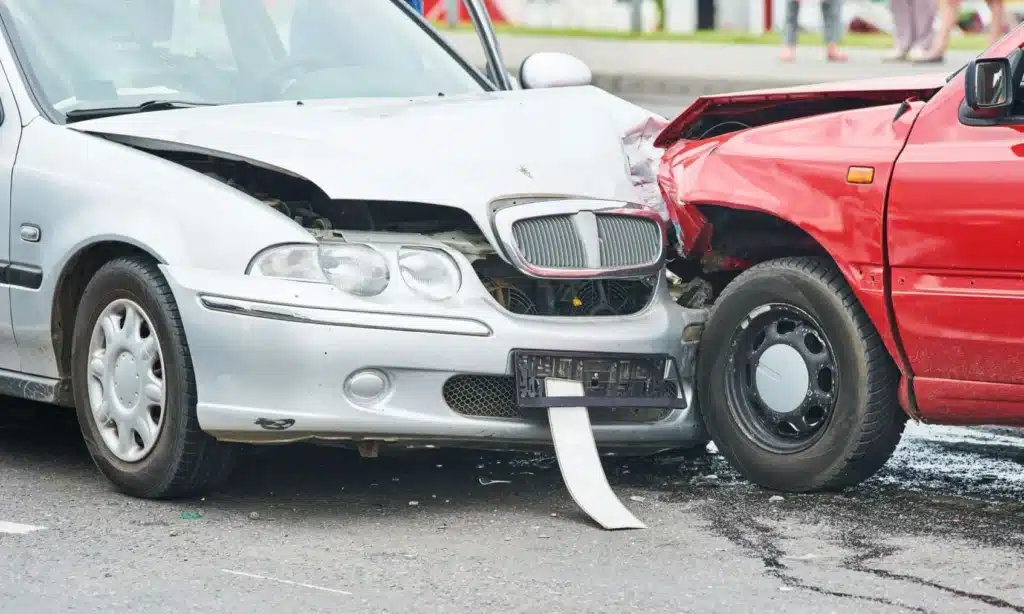 Motor vehicles can be dangerous, especially when operated improperly.
Some of the most common causes of car accidents include the following:
- Distracted driving: Multi-tasking while operating a vehicle is a dangerous habit. A driver who is crunching time or overconfident in their driving abilities may try adding tasks to their commute, like having a quick meal or sending an important message. Simple things like changing the stereo or talking to a passenger can also be distracting enough to cause an accident.
- Driving under the influence: On average, Georgia sees 200,00 DUI arrests every year. Operating a vehicle while intoxicated is incredibly risky and leads to thousands of fatal accidents annually. A person who is under the influence of drugs or alcohol will be limited by their impaired judgment, reflexes, and overall function, making their actions on the road unpredictable and, therefore, dangerous.
- Driver fatigue: Driving while drowsy is considered to be just as dangerous as driving while under the influence of drugs or alcohol. This is because being overly tired can inhibit some of the same cognitive abilities that intoxicating substances will. The majority of accidents with drowsy drivers will occur in the late hours of the night and early morning, but one can happen anytime.
- Road rage: An angry driver is going to use more aggressive driving maneuvers than a motorist in a clear head space. This can lead to serious accidents because a driver in a fit of rage is less likely to consider safety a priority, road rage factors into over 50% of fatal accidents, according to AAA. Road rage can seem justifiable in the moment it occurs, but it is generally regrettable afterward, as the consequences may outweigh the satisfaction.
- Bad weather: A driver must understand how the weather in their local community can affect their safety on the road. Georgia usually sees intense storms around the spring and summer months, so motorists prepare to have wet, slippery roads during those seasons. Improper maintenance, like worn tires or brakes, can be even more dangerous in adverse weather, leaving the motorist with limited control over their vehicle.
The Steps of Filing an Auto Accident Claim
Filing an insurance claim will consist of the following steps:
- Report the damage
- Document the scene
- Investigation process
- Submit a list of damages
- Review settlement offer
What Can a Claimant Recover From a Car Accident Settlement?
Every accident settlement will be different, but most will include reimbursement for a combination of the following damages:
- Medical expenses, including the cost of continued treatment
- Lost work income, present and future
- Permanent disability
- Property damage
- Psychological trauma
- Loss of consortium
- Punitive damages
- Wrongful death
What Are The Most Common Types of Car Crashes In Dalton?
In Georgia, the most commonly reported types of accidents are as follows:
- Rollover accidents: This type of accident occurs when a vehicle tips onto its side or the hood. Many factors can contribute to a rollover accident, including speed, tire performance, oversteering, road hazards, and manufacturing flaws. Most commonly, a tire will hit something like the curb, causing the vehicle’s weight to shift and the driver to oversteer, ultimately leading to a rollover.
- Single-vehicle crashes: ‘Single-vehicle accident’ is an umbrella term for any crash that happens involving just one vehicle. Manufacturing errors, road hazards, and driver errors are all common causes of these accidents. Impaired, distracted, or drowsy drivers are more likely to cause this type of accident.
- Speeding-related collisions: Speeding is a common but dangerous practice. Accidents that involve one or more speeding motorists can create serious injuries because of the force of the additional speed upon impact. Speed limits are enforced to limit the opportunity for serious accidents by creating a steady flow of traffic at a safe pace. Speeding also doesn’t save as much time as most drivers think it does. If you are traveling at a consistent speed of 50 mph, you’ll travel 15 miles in 18 minutes. If, instead, you drive at 60 mph, you’ll only save about 3 minutes.
- Rear-end accidents: This type of accident occurs when the front of one vehicle collides with the back of another. Rear-end accidents are oftentimes the result of a distracted driver not anticipating the brake time or an aggressive driver tailgating too close. Speeding and poor weather conditions also play a role in rear-end crashes.
- Multi-vehicle pile-ups: One irresponsible maneuver can cause significant damage to multiple other vehicles. This type of accident is technically multiple crashes happening in a chain reaction. Most common on highways or freeways where motorists are driving at high speeds, these pile-ups may cause serious property damage and injuries or even fatalities.
- Collisions with pedestrians: Pedestrian accidents are not uncommon in Georgia. Swerving into the bike lane, failing to yield to pedestrians in a crosswalk, or backing into a person in a parking lot are all common scenarios. Pedestrians generally have the right of way, but jaywalking or poor visibility may relieve some of the fault from a motorist’s shoulders.
- Hit-and-runs: Drivers are supposed to pull over and exchange insurance information after an accident occurs. Speeding off without offering proper identification is illegal, and in the case of hit-and-run accidents, a victim will generally need to involve the local police department for further assistance.
Frequently Sustained Injuries After a Car Crash
A car accident can lead to unpredictable injuries, but some of the most commonly treated injuries from serious collisions include:
- Traumatic brain injuries (TBIs)
- Spinal cord injuries
- Chest trauma
- Internal injuries
- Soft tissue injuries
- Burns
- Fractures and broken bones
- Amputations
- Paralysis
- Permanent disfigurement
These Tips Can Protect Your Claim Before It Starts
The moments following a car accident are critical, and there are a few things that a claimant can do independently to protect the coming steps of their financial recovery:
- Always report the accident
- Do not neglect seeking medical attention
- Thoroughly document the scene of the crash
- Document your injuries
- Commit to follow-up care upon doctor’s orders
- Find an attorney
Call Our Dalton Car Accident Law Firm If You’ve Been in a Wreck
An attorney can be an invaluable resource while you manage the aftermath of a car accident by using litigation strategies to maximize your damage settlement.
Seeking financial compensation after an accident can be daunting, but avoiding the task will only jeopardize your future, and potentially allow the negligent driver to ignore facing the extent of their responsibility. Your lawyer is concerned with your case’s success, and so they will know how to exhaust every method of recovery possible so that you can walk away with a settlement covering all damages you have suffered.
The CEO Lawyer Personal Injury Law Firm is a dedicated Georgia firm with offices all over the state. To schedule a free case review with our Dalton car accident attorneys, call (706) 307-4676 or contact us online today.