

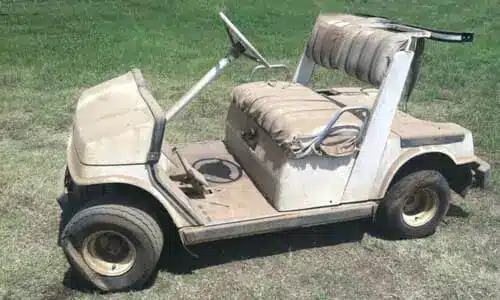
 Golf carts are popular at the hundreds of golf courses in Georgia but are also frequently used to get around parks, festivals, and other outdoor activities.
In 2012, Georgia passed a law designating a new “personal transportation vehicles” (PTVs) category that includes most golf carts weighing less than 1,375 pounds. They must also have a maximum speed of 20 MPH and meet other criteria.
Georgia law also permits PTVs to be driven on public roads where local ordinances allow it. These municipalities will set their own rules about how and when golf carts can be used on the roads, so you should check local laws before riding your cart on the street.
In most cases, you must have a valid driver’s license and ensure your cart meets all safety requirements, such as working headlights and taillights. Some municipalities, like Peachtree City, also have multiple paths available for golf cart use.
Do You Need a Georgia Golf Cart Accidents Attorney?
If you’ve been hurt in a golf cart accident, figuring out who is at fault or how to get your damages covered can be a complicated process, but a Georgia golf cart accidents lawyer can help you cut through the confusion. Depending on the situation, there can be one or more liable parties:
- The golf cart driver
- The golf cart owner
- The facility where you were using the golf cart (which may or may not also be the golf cart’s owner)
- A vehicle driver, if your accident happened on a street
- A third party whose actions caused or contributed to the accident, such as a manufacturer who produced a defective part for the golf cart
Accidents with Rented Golf Carts
Many facilities rent golf carts, and not just golf courses – some parks and outdoor venues that cover a wide area also rent them to guests. Golf courses sometimes rent carts for a “cart fee,” but some may allow you to bring your own cart.
In any case, facilities where golf carts will be used often attempt to protect themselves from litigation by asking cart users to sign a release or waiver. This document essentially says that the facility isn’t responsible for your injuries if you get hurt using the golf cart.
Frequently clients ask us if this means they are out of luck when it comes to collecting damages for their accident. The answer depends on the specific situation, but not necessarily.
What Does a Liability Waiver Really Mean?
A waiver or release does not mean that you can never sue the other party under any circumstances. It means that you accept the usual risks of using a golf cart, and the facility is not liable if you have an accident due to bad luck or your own driving errors.
For instance, if you get hit by lightning while in a golf cart or decide to race another golf cart driver and crash into a sand trap, you would have a hard time making a case against the facility. After all, they didn’t make you drive recklessly, and they can’t control the weather.
But the facility could still be held accountable for things they can control if they were grossly negligent.
A waiver means accepting the normal risks of riding in a golf cart. But you probably accepted those risks with certain assumptions in mind.
For example, you probably assumed that the facility was keeping their carts in good running condition. You also probably assumed that there were no major hazards on the grounds that the facility failed to fix or at least provide a warning.
Now let’s say that you sign your waiver and get into the golf cart. You drive around for a little while, and suddenly one of your wheels sinks into a large hole in the ground that you can’t see due to the landscaping.
This causes your cart to tip over, and you suffer injuries. The facility employees who help you out of the cart tell you they keep complaining about that hole, but management doesn’t want to fix it or put up a sign calling attention to it.
You go to the hospital, and even with health insurance, you wind up with hundreds of dollars in bills for your broken arm. You can’t work until your arm gets better and your bills start to pile up.
In this case, the facility was negligent in refusing to fix the large hole or put up a sign warning golf cart users to steer clear of it. The fact that you signed a waiver shouldn’t matter because a waiver doesn’t give the facility the right to negligently put their guests at risk.
As a result, you might be able to seek damages for your medical bills and lost wages despite the waiver.
Another situation we often see is when the facility doesn’t bother maintaining their golf carts, and a mechanical problem causes the accident. Again, the facility is responsible for providing a safe, properly maintained cart to its guests whether or not you sign a release.
Sometimes an accident is caused by the actions of another golf cart driver on the facility grounds. If the other driver was reckless, you might have a case against them personally.
However, if the facility rented them a golf cart in a situation they shouldn’t have, they could also be liable. For example, if the user was clearly intoxicated at the time, the facility may have been negligent in renting them the cart.
If you were injured in a golf cart accident on a commercial property and you signed a waiver, please talk to a Georgia golf cart accident lawyer to learn if you might have a case against the facility, another party, or both.
Accidents on Streets and Roads
If your golf cart is hit by a vehicle on the street, liability will depend on the situation.
Georgia uses modified comparative negligence statutes; in some cases, both the golf cart driver and the vehicle driver may have made errors. The driver who was less than 50 percent responsible can collect damages from the driver who is more than 50 percent responsible.
These damages will be adjusted by the victim’s percentage of fault. So if you were 10 percent at fault, you would lose 10 percent off whatever award you ultimately received.
Your injury lawyer in Georgia will first examine the accident report from your golf cart accident and go over the details with you. It’s essential to make sure everything on the report is correct.
If you had the right of way when the crash occurred, there’s a good chance that the other driver was all or mostly at fault. However, the other driver might claim that you were at fault, and their insurance company will be inclined to believe them – so they don’t have to pay your claim.
Your attorney will help you by gathering evidence and building a solid claim that will be harder for the insurance company to reject.
We can also negotiate with the insurance company if they offer a settlement that doesn’t cover all your expenses (this is also common in accidents with larger vehicles).
Additionally, your lawyer will go over all your losses and calculate your damages – many people underestimate what their claim should be worth!
Understanding Golf Cart Accident Risks
Unfortunately, while golf cart usage is convenient in many situations, it’s not without risk. You may think golf carts are safer than cars because they’re slower, but don’t let that give you a false sense of security.
Here’s what you need to know:
- Research from the National Electronics Injury Surveillance System (NEISS) shows that in a ten-year period, more than 156,000 people in the US visited the emergency room for golf-cart-related injuries.
- The NEISS data also suggests that children and older adults are at the highest risk of injuries when riding on golf carts.
- The American Academy of Pediatrics (AAP) reports that golf cart injuries are rising in children, affecting about 6,500 kids yearly.
That doesn’t mean you shouldn’t use golf carts, but it is essential to take precautions. It’s true that lower speeds of 20 MPH or less reduce the risks, but they don’t eliminate them entirely.
Additionally, some golf carts lack seatbelts, so if you do have an accident, even at lower speeds, you have a higher risk of being ejected from the cart. Another problem is that thinking golf carts are safe may lead some people to drive more recklessly…increasing the risk of an accident.
Here are some tips to help you stay safe when using golf carts:
- Don’t drive a golf cart when you’ve been drinking. A surprising number of people get DUIs on golf carts – in fact, you can be cited for a golf cart DUI even on private property in Georgia because the state’s DUI laws apply to both public and private roads. Some people mistakenly think that driving a golf cart is safer if they’ve been drinking, but it’s still a bad idea. Consider calling a rideshare service, getting a friend to drive you, or using a delivery option instead.
- Don’t overload a golf cart. Read the instructions to determine the maximum weight or number of people you should be carrying, and don’t decide to “make room for one more.” Overloading a golf cart increases the risk of the cart tipping over – which is already high due to the boxy design of the cart.
- Be careful going around curves and downhill. These are situations where you’re more at risk of flipping a golf cart, so go slowly.
- Use the parking brake and take the key out of the ignition whenever you stop and get out.
- Keep all your limbs inside the cart and let your passengers know to do the same. We’ve seen some unfortunate injuries that occurred because a person’s foot or arm got caught on something outside the cart. You should also ensure no one stands or leans out of the cart while you’re driving.
- Avoid taking young children on a golf cart if at all possible. They don’t have the right safety features to keep small children safe.
- Don’t teach your kids to drive a golf cart before the age of 12. No one younger than 12 is allowed to operate a golf cart under Georgia law. Youths 12 or older can drive a golf cart if accompanied by a licensed driver who is at least 18. Teenagers can drive a golf cart alone if they have a valid driver’s license or permit.
- Don’t text and drive. If it’s not safe when driving a car, it’s not safe when driving a golf cart, either. Even at the low speeds of a golf cart, taking your eyes off your driving to look at your phone can lead to a serious accident.
- If you see lightning or it looks like a storm is coming, get off the golf cart and go inside the nearest building. Golf carts aren’t safe in thunderstorms.
- Georgia requires headlights and taillights for golf carts that will be driven on the road, but you should always use lights when it’s dark or visibility is low, regardless of where you’re driving the golf cart.
How Can You Get Help From a Georgia Golf Cart Accidents Law Firm?
Please contact the CEO Lawyer Personal Injury Law Firm for a free consultation about your golf cart accident. Even if you’ve signed a waiver, think you were at fault, or aren’t sure what happened, we can review your case, answer your questions, and explain the options.
If we take your case, you won’t pay anything until we win or settle it, so you have nothing to lose. The sooner you call, the sooner we can get to work collecting evidence for your claim.
Attorney Ali Awad founded the CEO Lawyer Personal Injury Law Firm just a few short years ago and quickly turned it into one of the fastest-growing law firms in the country.
When he’s not negotiating with insurance companies or fighting for clients in the courtroom, he can be found dispensing no-nonsense legal advice to more than a million followers on social media.
Call the CEO Lawyer today at (470) 323-8779.