

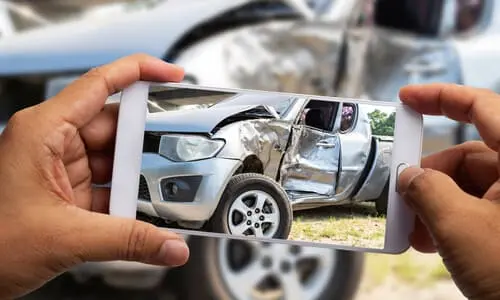
 The city of Tucker was initially developed as a railroad community in the late 1800s, but today, it has plenty of motor vehicle traffic. With cars come car accidents and the potential for severe injuries.
If a negligent driver causes an accident, you could be forced to deal with chronic pain, mounting medical bills, lost income, car repairs, and more complications. Worse, the at-fault driver and their insurance company might try to blame you for the collision or otherwise undermine your claim.
How can you protect your rights after a car accident?
Contact a Tucker Car Accident Attorney Today
Insurance companies prioritize their financial interests above all else. While the adjuster might claim their job is to assist with your accident expenses, their primary objective is to minimize costs for the company.
This can involve shifting responsibility for the crash in your direction, undervaluing your damages to reduce the settlement amount, or both.
While it’s tempting to attempt negotiations with the insurance adjuster yourself, it can be risky. Adjusters are adept at navigating legal intricacies and intensely knowledgeable about company policies, making it difficult for claimants to sway their decisions.
In fact, trying to negotiate with the insurance company often backfires. Instead, we recommend seeking assistance from a seasoned car accident lawyer who understands Georgia laws and insurance practices.
At the CEO Lawyer Personal Injury Law Firm, we’re dedicated to addressing your car accident inquiries and worries. Contact us for a complimentary consultation to discuss your accident, receive guidance, and explore avenues for compensation.
Who Is at Fault in Your Car Accident?
This question is pivotal, but finding the answer is more complicated than you might think. Depending on the situation, there could be several potentially liable parties:
- One or both drivers. Overwhelmingly, the most common cause of car accidents is human error by at least one driver. However, it’s possible for both drivers to contribute to the collision. In these cases, Georgia law allows a party who is less than 50 percent at fault to seek damages from the more responsible party. The injured person’s damages are then reduced by their share of fault. For instance, if you were 10 percent at fault, you could recover 90 percent of your damages.
- A defective product manufacturer. Occasionally, we do see accidents where both drivers insist they did nothing wrong, and they’re correct. If a faulty vehicle component causes the crash or worsens your injuries, you might have a claim against the manufacturer. An accelerator that sticks to the floor, an airbag that doesn’t deploy when it should, and brakes that unexpectedly lock up when needed are all examples of possibly defective car components. If you experienced an accident in which your car did not respond as expected, or you are confused about what caused the collision, an attorney can help you determine if a defective product might be to blame.
- Another third-party company. Sometimes, a mechanic or business that worked on one of the cars could have caused a problem that led to the collision.
- A governmental entity or contractor. In a few cases, we find that an accident was caused by a poorly designed road or lack of road maintenance. When this happens, you might have a case against a governmental entity or the private company they hired to create or maintain the road.
- A bar or restaurant that overserved a clearly intoxicated patron. This applies only to specific situations involving drunk drivers. Most of the time, we will simply pursue a liability claim against the intoxicated motorist’s car insurance. However, if they are uninsured or their policy limit is significantly lower than your damages, we will look for other options. It’s not always possible to sue an establishment that served the drunk driver, but it may be a possibility in some situations. We would need to show the bartender continued to serve someone who they knew or should have known was already intoxicated, and they knew that person was likely to drive soon.
When Can You File a Claim After a Car Accident?
In Georgia, you have a two-year window from the accident date to file a personal injury claim. But in practice, most people don’t wait this long to file a claim unless they are convinced they don’t have a case.
Speaking to a personal injury attorney in Tucker as soon as possible after a car collision is crucial because your attorney will need time to investigate the accident thoroughly, compile evidence, and construct a solid strategy. If you aren’t sure who was at fault or if you can seek damages, an attorney can help you understand your options.
Will Car Insurance Cover Your Damages After an Accident?
Most successful car accident claims are ultimately paid by an insurance company, and sometimes multiple insurance companies. However, despite existing to pay claims, insurance companies work very hard to pay as few claims as possible for as little money as possible.
There are several ways this can present challenges for the injured person:
The Car Insurance Company Disputes Fault
One of the most common scenarios we see involves a claim against the at-fault driver’s car insurance. The insurance company rejects the claim or reduces its value based on their opinion that the injured person was at fault, at least partially.
Remember from our earlier discussion that you can still recover damages if you contributed to the collision but were less than 50 percent at fault.
The insurance adjuster can take advantage of this law by saying that you were more than 50 percent responsible, so they don’t have to pay anything. Or, they could exaggerate how much fault you had if your contributions were more limited.
Sometimes, they may believe you contributed when you did nothing wrong.
All of these situations are tricky for the injured party to navigate on their own. The average person is not an professional on traffic laws, car insurance, or personal injury cases.
They may feel it isn’t worth arguing with the insurance company about how much fault they had, or they might believe the adjuster’s estimate of their culpability. Some people are relieved if they can recover any of their damages.
As a result, the insurance company often saves money due to poorly estimated fault calculations or incorrect assumptions about how an accident happened. For the injured person, this can lead to losing thousands or tens of thousands of dollars in damages and, in some cases, even more.
Fortunately, a seasoned car accident lawyer can help you determine if your contributions have been calculated fairly. If not, we’ll fight to show the other driver was at fault, or more at fault, so you can receive the settlement you deserve.
The Car Insurance Company Undervalues Your Damages
When we talk to a new client, we ask them questions about their injuries, expenses, difficulties related to their injuries, and other problems resulting from the accident. This is so we can accurately calculate all their damages and arrive at an approximate amount of compensation to seek.
Many people are surprised to learn about damages they hadn’t considered because we are very thorough and want our clients to receive a reasonable payment.
Here are some of the damages we’ll consider:
- Medical bills and related expenses. Beyond your hospital bills, you may have to pay out-of-pocket for physical therapy, mobility aids, making your home more accessible, traveling to see a medical professional, and more. It’s also essential to consider future medical care if you are still in treatment, and we will usually wait to settle until your treatment is finished. In situations where the client is severely injured and will likely need lifelong care, we can estimate their future costs.
- Lost income and earning potential. Missing work for even a few days can cost you money, and using PTO still counts as a loss because that paid time is no longer available to you. If you’re out of work for weeks or months, you could run out of PTO and be forced to take unpaid time off. In more severe accidents, you might not be able to return to work at all due to a permanent disability. We’ll help you determine how much income you’ve lost and, if necessary, calculate lost earning potential.
- Permanent disability or disfigurement. You can also seek compensation for any permanent injury significantly impacting your life and happiness.
- Pain and suffering. We’ll ask about both mental and physical pain and suffering and how long they lasted to estimate what you should receive. Insurance companies often use formulas to calculate pain and suffering, but the adjuster may need to assign a value to the severity of your injuries. If this number is too low, you might not receive as much as you deserve.
- Property damage. You can seek repair or replacement costs for your vehicle and any other property damaged in the crash, such as a phone or laptop. Most insurance policies will also cover reimbursement for a rental car of similar style and quality to yours for a reasonable amount of time while your vehicle is being repaired.
- Wrongful death. When you’re grieving the loss of a loved one in a car accident, dealing with everyday issues like expenses and finances can be challenging. Yet you may be inundated with medical bills, funeral or burial costs, and sometimes, the loss of income from your family member. We can pursue compensation for these economic damages, as well as your own loss of companionship and emotional pain.
When an insurance company undervalues a claim, they may neglect to consider some of the above damages or underestimate the value of others. Your attorney will ensure all your damages are covered, and if the insurance company’s offer falls short, we’ll negotiate for a more equitable settlement.
The At-Fault Driver Doesn’t Have Any Insurance, or the Policy Limit Is Substantially Lower Than Your Claim’s Value
More than 12 percent of Georgia drivers are uninsured , and many of those who are insured only have the minimum required liability policies, $25,000 in bodily injury liability per person and $25,000 in property damage liability. If you suffer severe injuries in an accident, your medical bills alone could be far more than $25,000.
How can you recover your damages? There are several options we’ll explore in an effort to find the most effective solution:
- Sue the other driver directly. If we have significant evidence they are at fault, we can probably win a judgment in court. The problem is that they may not be able to pay it. If the other driver has no assets we can seize, we will likely advise against this course of action because it may not serve the client’s interests effectively.If you have uninsured/underinsured motorist protection (UM/UI) on your car insurance, this is often the most straightforward and effective solution.
- Sue a third party. As discussed above, sometimes a defective product or negligent business owner has contributed to the collision somehow, but this is only an option in a small percentage of cases.
- Seek damages from your own insurance policy. If you have uninsured/underinsured motorist protection (UM/UI) on your car insurance, this is likely the most straightforward, easiest solution. Your car insurance company will pay for your damages up to the limit of your own policy. They may try to recoup their expenses from the other driver in a process called subrogation, but whether or not they recover any money from the at-fault driver, they still have to pay your claim.
Unfortunately, if you do not have UM/UI and the other options are unsuitable for your situation, you may be unable to recover anything. This is why we always recommend buying as much UM/UI insurance as possible.
How Can You Get Help From a Tucker Car Accident Law Firm?
Please contact the CEO Lawyer Personal Injury Law Firm for a free consultation about your accident. We’re always available to review your case and explain your options for seeking compensation.
Attorney Ali Awad founded the CEO Lawyer Personal Injury Law Firm a few short years ago and has since expanded it into one of the fastest-growing law firms in the country. He and his team have recovered millions of dollars in compensation for injured people and their families.
When he isn’t busy fighting for clients in the boardroom or the courtroom, you can find him on social media, delivering down-to-earth legal advice to over a million followers. Work with him and his professional team when you call (470) 323-8779.